

The ballroom houses that built families when society shut people out
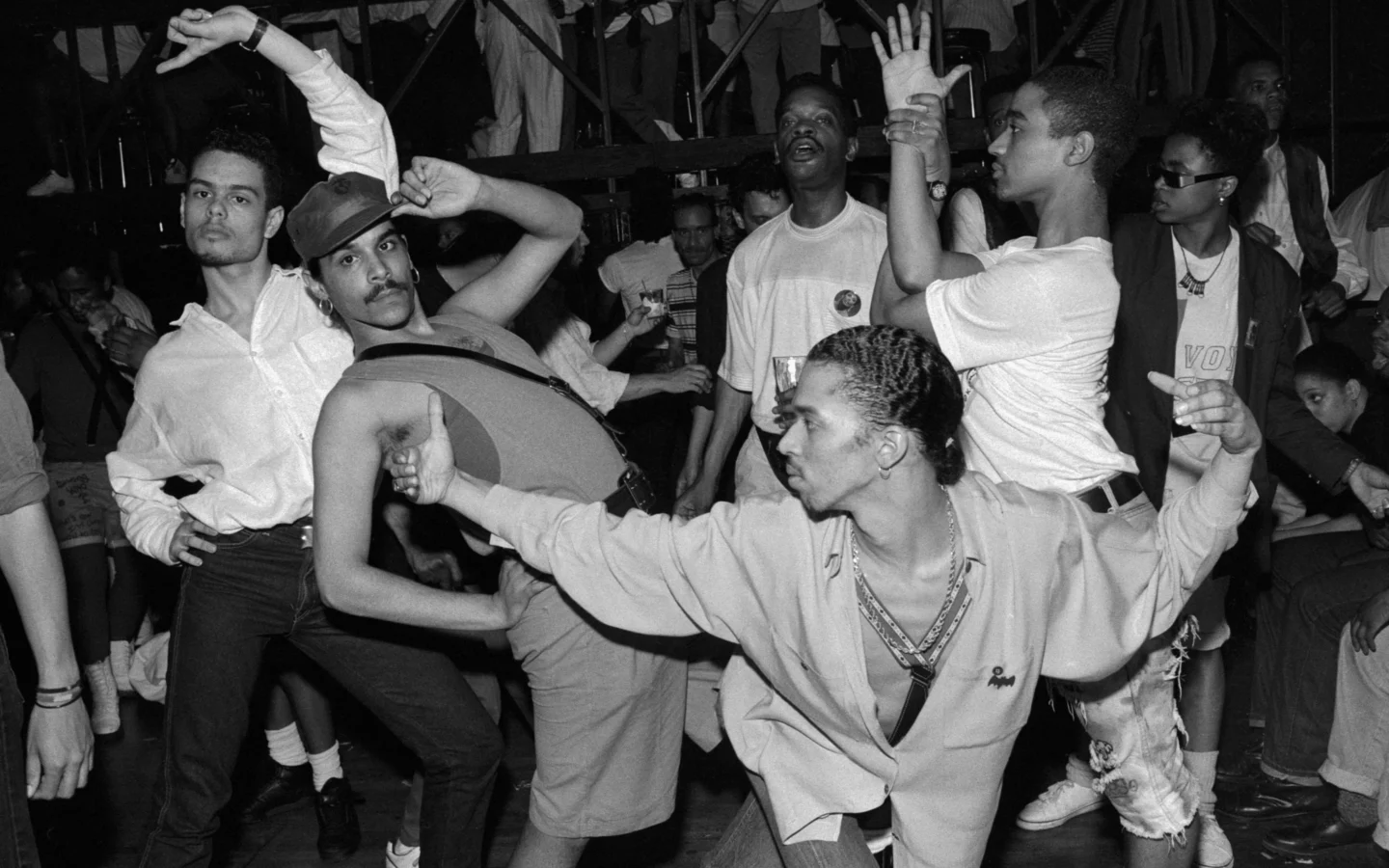

Before it became known for voguing, runways, and competitions, ballroom served, above all, as a space for community. This culture took its modern form in New York between the late 1960s and the 1970s. Particularly within Black and Latino LGBTQ+ communities, which transformed a long tradition of drag balls and pageants into venues where people could compete, forge their identities, and build a sense of belonging.
In a city marked by racism, homophobia, transphobia, and economic exclusion, many Black and Latino LGBTQ+ people faced family rejection, discrimination, and a lack of opportunities.
The ballroom offered something they didn’t necessarily find elsewhere: a place where they could be recognized for their identity, their creativity, and their presence. From this emerged a fundamental concept: the Houses.
They were not simply dance groups. Many functioned as chosen families, especially for young people who had been kicked out of their homes or had been left without support networks. The ballroom didn’t just create a stage for competition; it created a structure of belonging.
What is ballroom culture? How houses became chosen families
The ballroom is a culture and a community built around balls: competitions in which members of different Houses compete in categories such as dance, runway, fashion, appearance, and performance. The Houses also function as networks of belonging, mentorship, and chosen family. Furthermore, the New York Public Library’s historical collection on House/Ballroom summarizes this structure based on two inseparable elements: the Houses and the balls.
Voguing is part of that culture, but ballroom and voguing are not synonymous. Voguing is a form of dance developed within the scene; ballroom also includes categories that are independent of it, such as runway, fashion, gender codes, community hierarchies, Houses, judges, commentators, and support networks. Furthermore, the Smithsonian’s National Museum of African American History and Culture notes that voguing is part of a much broader ballroom tradition.
These dynamics did not emerge out of nowhere either. In fact, drag balls have a documented history dating back to the late 19th century. The Smithsonian’s National Museum of American History refers to celebrations associated with Hamilton Lodge dating back to 1869. It also shows how, by the early decades of the 20th century, these gatherings had already become important spaces for LGBTQ+ socializing in Harlem.
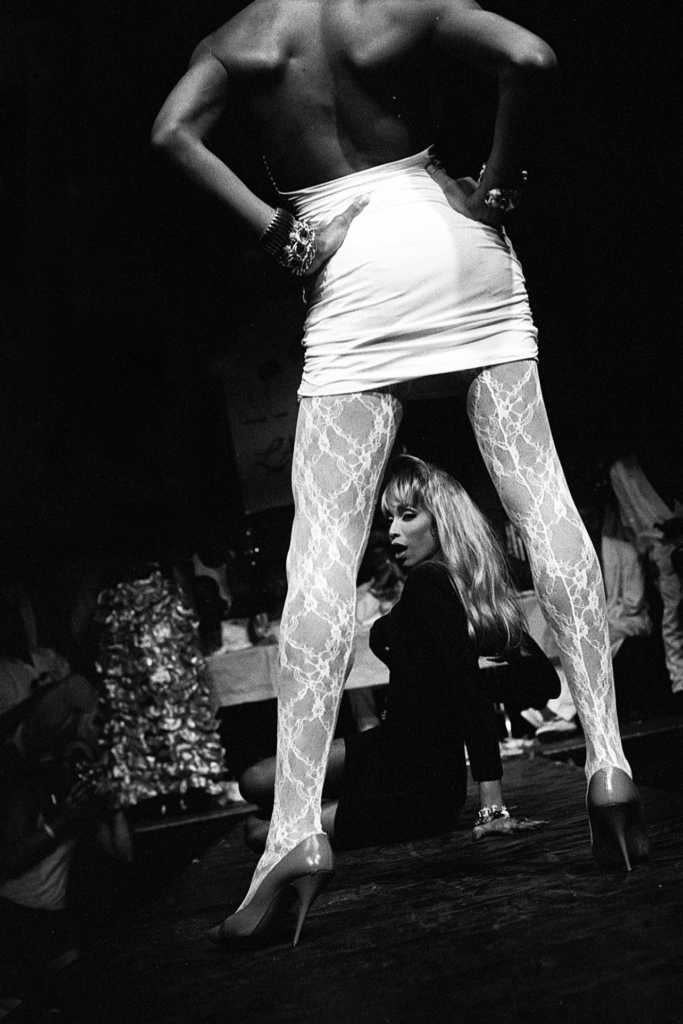
In the early 20th century, northern Manhattan also became one of the major cultural hubs of the African American community in New York. The so-called Harlem Renaissance spurred a creative explosion that transformed literature, music, and the arts. At the same time, it opened up new ways of thinking about the identity and lives of Black people in the United States.
The balls held at venues like Hamilton Lodge are part of that earlier history. Decades later, Black and Latina LGBTQ+ participants reorganized the competitions through the “Houses” system that would define modern house ballroom culture.
In that process, Paris Dupree, the founding mother of the House of Dupree, became one of the central figures of the scene. She is also linked to one of the best-known accounts of the development of voguing: the story compiled by Ballroom Throwbacks and Destination Tomorrow shows her striking poses inspired by the pages of Vogue magazine. However, voguing developed collectively over years of competitions and exchanges among participants. Therefore, its origin cannot be reduced to a single person or a single moment.
The Houses: Families When Blood Ties Aren’t Enough
The Houses are the heart of the ballroom. They are groups organized under a name that functions as a symbolic surname and a lineage of belonging.
The House of LaBeija occupies a central place in this history, but its formation must be understood as a process. On February 13, 1967, Crystal LaBeija participated in the Miss All-America Camp Beauty Contest in New York. She placed fourth and walked off the stage, denouncing the racial bias of a competition in which white participants were favored over Black competitors. Incidentally, the scene was captured in the documentary *The Queen*. The history of the Royal House of LaBeija encompasses both this episode and the events that followed.
After that experience, Lottie LaBeija encouraged Crystal to organize her own event. In 1972, the two hosted the “1st Annual House of LaBeija Ball” in Harlem, designed for people of color who faced exclusion within the pageant circuit. This moment is central to the consolidation of the modern House system. Likewise, the House/Ballroom archive at the New York Public Library also dates the beginning of the House ballroom culture organized around LaBeija to 1972.
From there, the House system began to expand and take on new forms. Houses such as House of Xtravaganza, House of Ninja, House of Dupree, and House of Corey emerged, among many others, each with its own members, leadership, and legacy. Consequently, the Houses ceased to be merely teams competing in balls: they became chosen families, support networks, and spaces where people could build a collective identity.
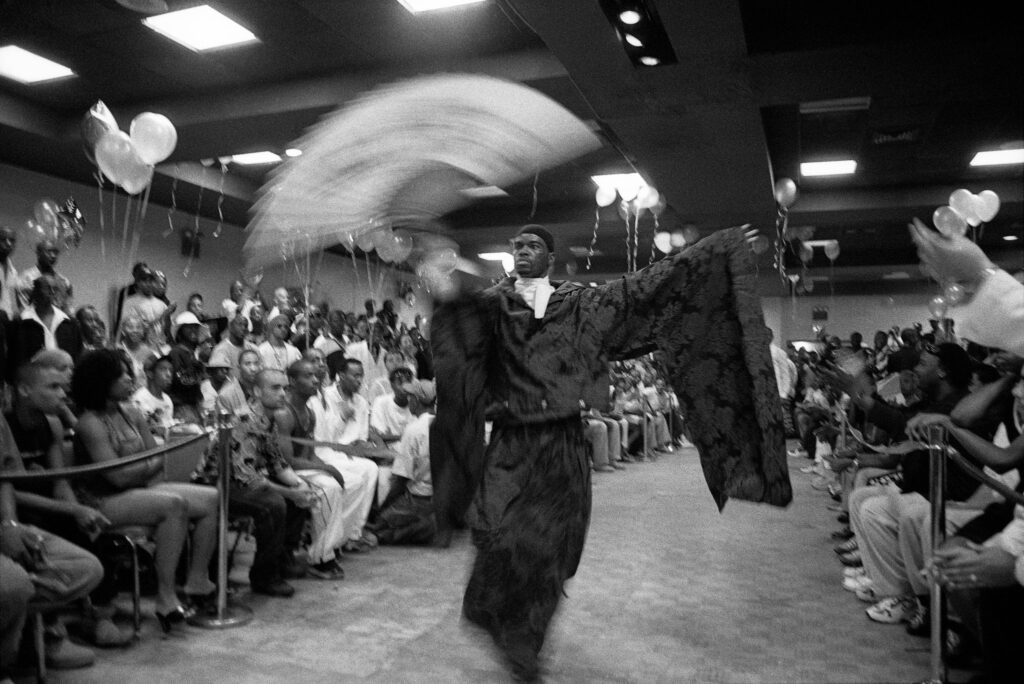
More than just competitive teams, the Houses are networks of survival, support, and recognition. In fact, ethnographic research on the ballroom community and HIV found that the Houses can function as symbolic—and, in some cases, literal—homes. Furthermore, they offer friendship, companionship, information, and practical support to their members.
Amid racism, homophobia, transphobia, and economic exclusion, they offer what the outside world often denies: a name by which to be recognized, brothers and sisters with whom to share the journey, and a place to belong. Because in the ballroom, it’s not just about competing for a trophy. It’s also about building a family and claiming the right to exist, to be seen, and to be celebrated.
Mothers, Fathers, and Chosen Families
Within the Houses, House Mothers and House Fathers hold a role that goes far beyond leadership.
They can teach how to walk categories, offer advice, organize practice sessions, prepare for balls, pass down the history of the scene, support personal decisions, and share the knowledge they’ve gained through their own experiences. They can also address the practical and emotional needs of younger members. Roles are not rigidly divided by gender and vary depending on each House, its members, and the way that family has built its own bonds.
Research on ballroom family structures shows precisely that mothers and fathers fulfill mentoring and leadership roles within networks that foster intergenerational learning.
They are caregivers who teach others how to navigate the world when that world has done everything in its power to exclude them. Being a House Mother or a House Father is, in a way, opening the door and saying: here is a place for you. Here you can be who you are. Here your name matters, your body matters, your story matters. And, whether for one night or a lifetime, no one has to convince you that you deserve to belong.
For many LGBTQ+ people, especially those who had been kicked out of their homes, these figures represented something as simple and yet as powerful as having someone to turn to, someone to call family, and someone to learn from how to survive in a world that had so often turned its back on them.
This network took on an even deeper meaning during the HIV/AIDS crisis. Beginning in the 1980s, the epidemic hit LGBTQ+ communities hard and was accompanied by immense stigma and discrimination. For some people, the Houses became spaces of companionship and care just as their family or social networks were weakening.
Studies on ballroom culture and HIV have documented support in finding housing, medical care, testing, support groups, and prevention information. These structures did not replace the state nor were they identical for all members, but they did allow many people to find a support network when abandonment could be as dangerous as the disease itself.
Much More Than Voguing
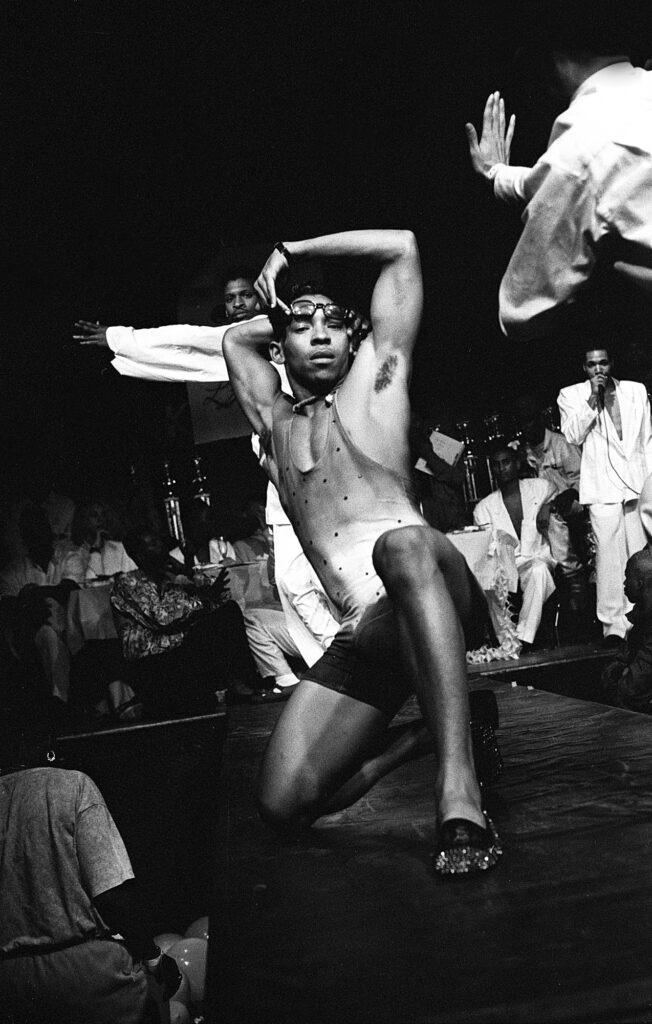
Fashion plays a fundamental role. At balls, clothing isn’t merely an outfit: it can be a statement, a fantasy, or a way to construct an identity. The categories allow participants to explore different codes of beauty, elegance, femininity, masculinity, and presence. Dressing up could also be a way to imagine another life. In a category, someone could become a model, a celebrity, a wealthy person, or a figure of power. The ball allowed them, even if only for a few minutes, to inhabit that possibility.
Music and performance set the atmosphere for these gatherings. The beat, the DJ’s voice, and the commentator’s calls (the lead voice guiding the event) accompany those who take the floor to compete and transform the body into a tool for expression. Every movement can convey attitude, identity, desire, or defiance.
And it is precisely the body that is one of the great realms of ballroom. For communities whose bodies had historically been monitored, stigmatized, or excluded, these spaces allowed them to take center stage. The body is dressed up, moves, is exaggerated, is transformed, and, above all, is celebrated.
Gender identity and expression also find a space for experimentation here. In a category, a person can become what the outside world has told them they cannot be: a queen, an elegant man, a powerful woman, a celebrity, or an imagined version of themselves.
Categories such as Realness take this game even further. Here, it is important to distinguish the competitor’s identity from what is being evaluated. In Femme Queen Realness, for example, trans women compete, and they are judged on their ability to be socially read within conventional codes of femininity; Butch Queen Realness typically evaluates how a gay or bisexual man can be read through codes associated with heterosexual masculinity. Butch Queen Up in Drag Realness belongs to another historical category of female performance, while Executive Realness draws on visual codes associated with the professional and business worlds.
These categories have changed over time and may vary across scenes, but research by Marlon M. Bailey on gender and Realness in the ballroom shows that their functioning is linked to the ability to be read within dominant norms of gender, sexuality, and class.
Behind the spectacle, then, lies a deeper question: What does it mean to be “read” as a man, as a woman, or as someone who belongs to a particular world?
Realness can be play, performance, and competition, but historically it has also been linked to safety and the ability to navigate spaces where being identified as queer or trans could lead to discrimination or violence. The category engages with social codes that exist outside the ball: clothing, gestures, bodies, professions, class, and forms of masculinity or femininity. A contemporary examination of “Realness” also addresses the discussions taking place within the community itself regarding the limits and contradictions of these codes.
All of this takes place within ballroom competitions, known as balls. Participants compete in different categories and are evaluated by judges according to specific criteria. They compete for trophies, recognition, and prestige, but also for something less tangible: to be seen and recognized by the community itself.
Because in a society that might tell you that you weren’t beautiful, masculine, feminine, rich, elegant, or successful enough, the ball created a space with its own rules. Outside, they might tell you that you didn’t belong; inside the ballroom, you could win a category.
The ballroom is not just a dance or a competition. It is a cultural language built around the body, the imagination, and the possibility of being recognized.
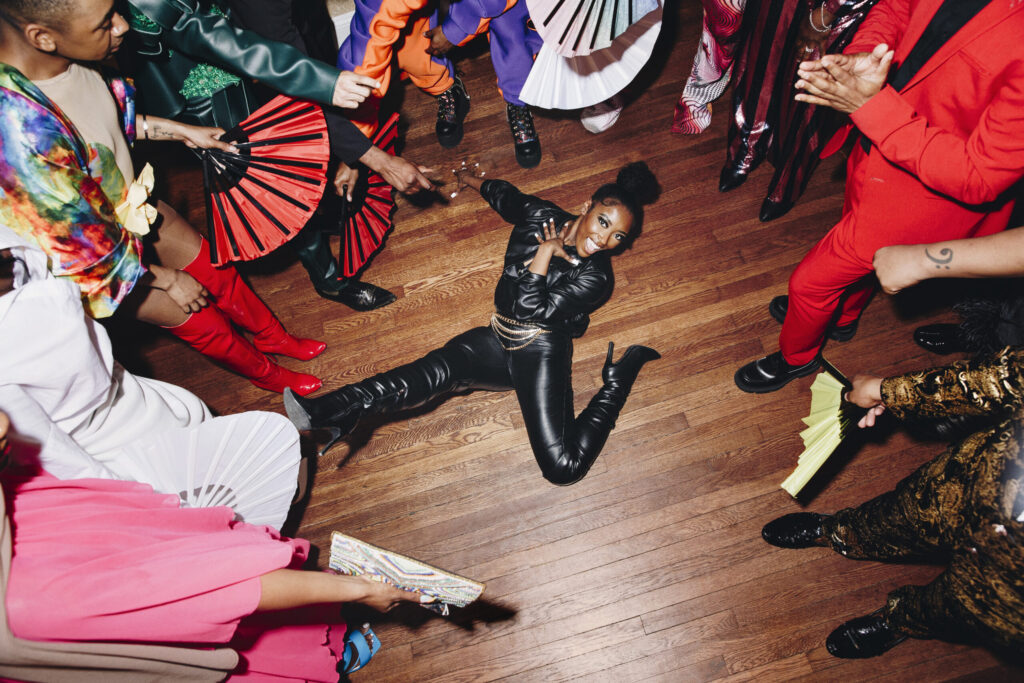
Why is ballroom still important?
Ballroom is not a relic of the past: it is a living, expanding, and constantly evolving culture. More than fifty years after the consolidation of the modern House system in New York, it remains relevant because it addresses needs that persist. Furthermore, it has demonstrated an extraordinary ability to adapt without losing its history.
Ballroom remains relevant because its core has not lost its urgency. In a world where discrimination based on gender, sexual orientation, race, or class remains a daily reality, balls continue to offer what they have always offered. Thus, they provide a family, a runway, a dance floor, and a space of their own.
Some of the language associated with ballroom and other Black queer communities has also made its way into popular culture. Expressions such as “shade,” “werk,” or “yass” circulate today far beyond those spaces. However, their genealogies are not always identical, nor can they all be traced back to a single point of origin. This expansion of vocabulary is part of the same process through which gestures, dances, and forms of performance developed in racialized LGBTQ+ communities eventually found their way into mainstream entertainment.
What began in New York also gave rise to scenes outside the United States. In Paris, for example, Lasseindra Ninja explained to Vogue how a small community began learning and organizing its own balls in the mid-2000s. In Mexico, the Mexico City scene has had its own Houses and competitions for years. Additionally, a report by UNAM on the Mexican ballroom scene features testimonies from members who helped shape it.
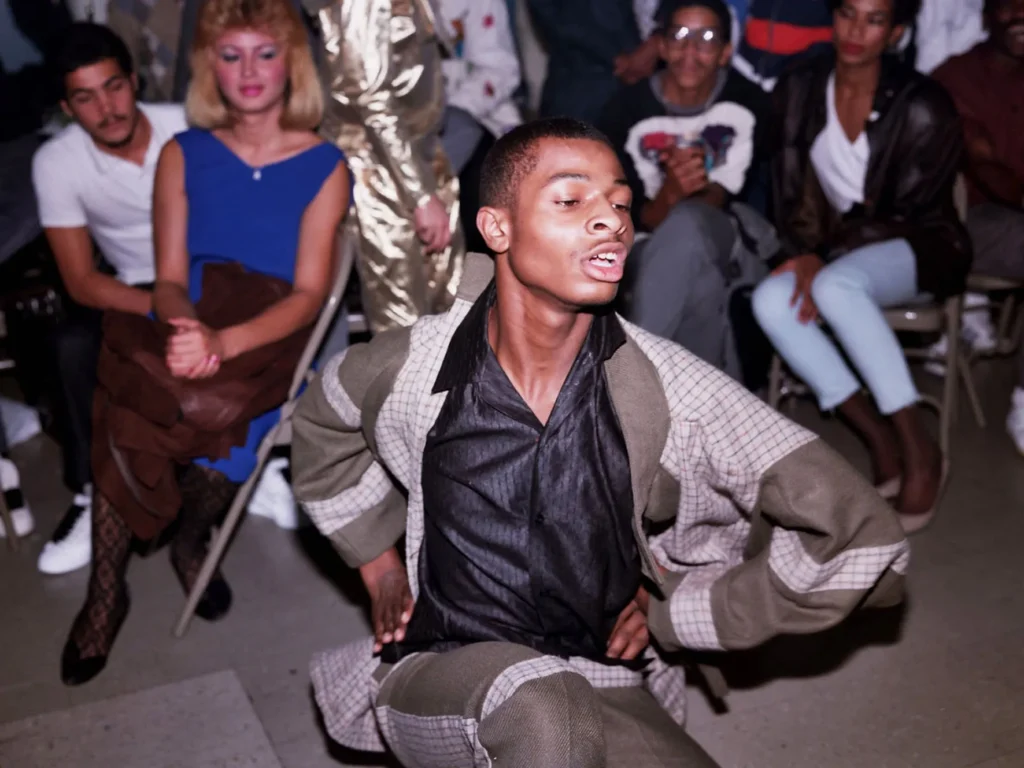
The internet and social media helped spread videos, competitions, archives, and classes, and facilitated connections between distant scenes. That does not mean that a digital platform “founded” these communities. In reality, local contexts, their members, and those who directly passed on ballroom knowledge were fundamental to each scene taking on its own form.
This internationalization is not only geographic; it is also generational and digital. Young people who have never set foot in a ball in New York can now discover its categories, steps, and history. From there, they can reach out to local communities. Ballroom has become a global language, but one with its own distinct accents in every city.
Influence on Popular Culture: From the Underground to the Mainstream
Ballroom has shaped pop music, fashion, film, and television. From Madonna’s “Vogue” (1990) to later productions that incorporate poses, dips, catwalks, and other elements of the scene, its influence can be found across various areas of popular culture. Thus, series such as *Pose*, *My House*, and *Legendary* brought different aspects of ballroom to much wider audiences.
Fashion has also embraced ballroom: runways, campaigns, and editorials have adopted the attitudes, walking styles, and visual references developed within the scene. This has sometimes occurred with the direct participation of its members and other times without the same level of context or acknowledgment.
But this growing visibility comes at a cost. As ballroom enters the mainstream, the risk increases that its elements—voguing, language, fashion, and categories—will be separated from the communities that developed them.
The most frequently cited example is Madonna. “Vogue” popularized voguing on a global scale, and the project featured dancers directly connected to the scene, including José Gutiérrez Xtravaganza. In an oral history published by Vogue, Xtravaganza himself recounts how he introduced Madonna to voguing. He later worked with her. At the same time, the song’s massive visibility sparked a debate—one that continues to this day—about cultural appropriation, credit, participation, and the ease with which a practice created by Black and Latinx LGBTQ+ communities can be consumed out of context.
There is no single interpretation of that debate. A *Vogue* feature marking the 30th anniversary of “Vogue” acknowledges both the song’s pivotal role in bringing the ballroom scene to a mass audience and the discussions surrounding appropriation and visibility. The problem isn’t simply that an influence spreads. What matters is who receives recognition, opportunities, and benefits when that happens.
The community has also developed strategies to share its culture without losing the history that underpins it. Workshops, discussions, panels, and educational spaces allow participants to learn about categories and movements alongside their context. In Mexico, for example, Cultura UNAM has organized conversations with members of the scene dedicated specifically to explaining the history, the structure of a ball, the categories, and what it means to belong to the ballroom.
This visibility has also opened up professional opportunities for performers, dancers, choreographers, and key figures in the scene. The challenge lies in maintaining a balance: celebrating growth without allowing the culture to be stripped of its meaning. It also involves opening doors without erasing those who built them and acknowledging influence without overshadowing its creators.
The ballroom remains important because, at its core, its purpose hasn’t changed: to create spaces where marginalized people can take center stage. It doesn’t matter that today there are balls outside of New York or that voguing appears in pop music videos. The core remains the same—a community that says “here I am” through the body, through clothing, through attitude, through voice.
And as long as there are people who need a place where they can be recognized, where their name matters, where their body is celebrated, the ballroom will continue to be necessary. Not as a relic, not as a trend, but as what it has always been: an act of resistance, a language of survival, a way of saying—with every pose, every dip, every shout from the audience—“I’m here, and I deserve to belong.”