

Who Was Cristina Velazco? Recovering the Story of a Trans Guitarist in Mexico’s 1980s Punk Underground
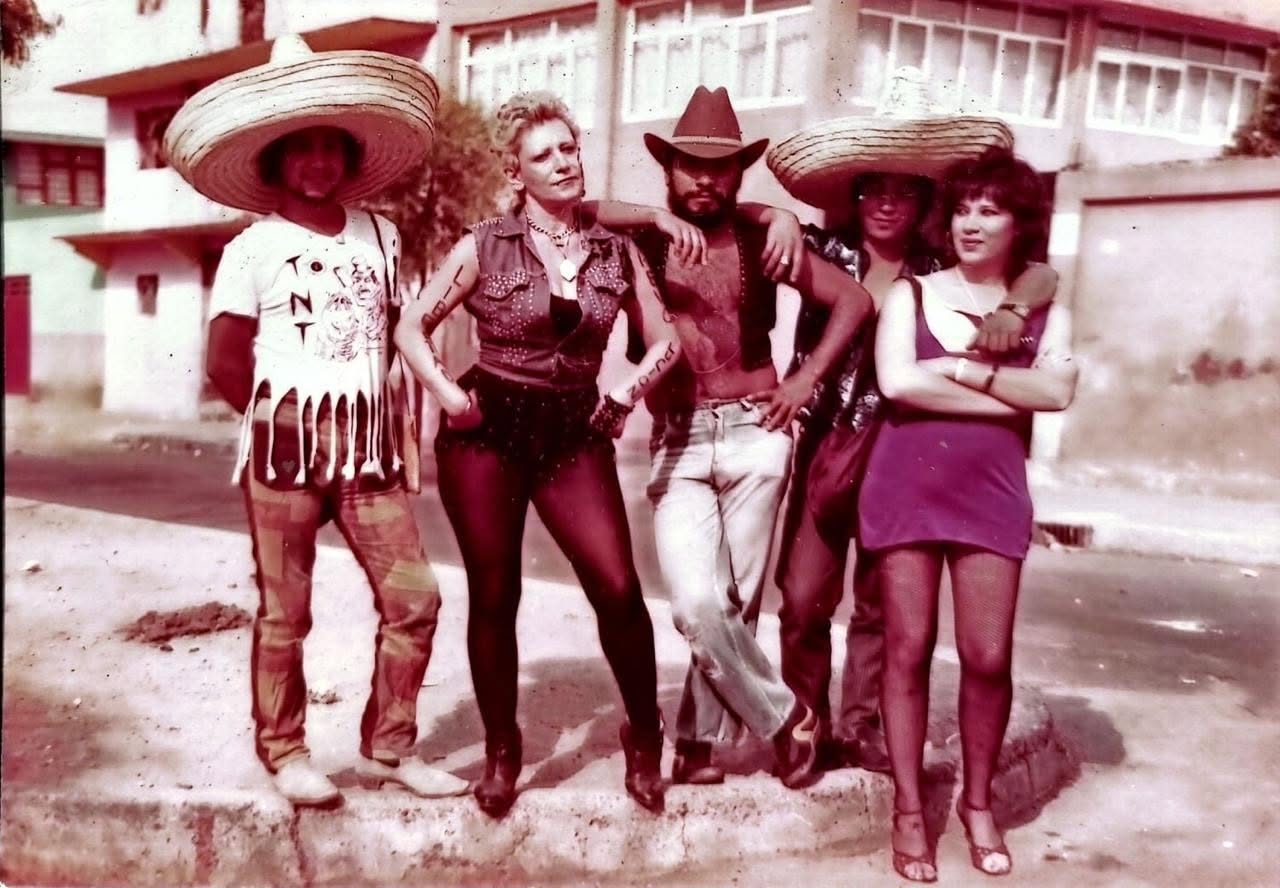

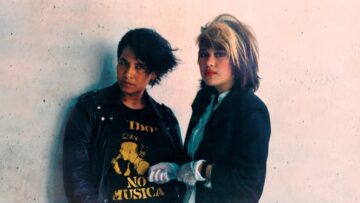
On August 4, 2026, Mexican rock band TNT announced the death of Cristina Velazco, a guitarist who had played with the group during one of its most active periods in the 1980s. Her years with TNT coincided with a remarkably productive stretch that included Caos and ¿Por qué canto? in 1984 and Serpiente in 1985, part of a discography that moved freely between punk, blues, hard rock, progressive rock and politically engaged songwriting. A history of the band published by Revista 13 de Abril documents that run of releases and emphasizes that TNT resisted being confined to a single genre.
Velazco’s own story is much harder to find. She was a trans woman playing guitar in a Mexican underground rock environment at a time when women were already poorly represented in many surviving accounts of the scene and trans musicians were even less likely to be documented. One surviving record offers an important piece of evidence: a review made from an original 1985 pressing of Serpiente lists “Cristina Aul Velazco” on guitar alongside vocalist Ángela Martínez, guitarist and singer Andrés Mejía, bassist José Luis Estevez and drummer Rubén Zampallo.
Much of the rest of her history survives through people who knew her. To reconstruct that period, Yaconic spoke with TNT founder Andrés “El Ingeniero” Mejía and with Cristina’s son, Héctor Velazco. Their accounts provide details about her childhood, her musical tastes, her arrival in TNT, the period in which she began presenting publicly as Cristina, and the music she continued making after leaving the band. The resulting portrait is not only about representation in Mexican punk; it is also the story of a musician whose recorded legacy remains only partially catalogued.
Who Was Cristina Velazco Before TNT?
According to Héctor Velazco, Cristina was born in Mexico City and grew up in the Del Valle neighborhood with her brothers José Luis and Frankie. She attended Centro Universitario México, where Héctor says she faced harassment related to her appearance and gender expression, sometimes resulting in confrontations with other students. Music became an important part of her life early on, and she learned largely on her own while listening to artists including Johnny Winter, the Rolling Stones, John Mayall and Captain Beefheart, whom Héctor remembers as one of her favorites.
She played in a band during her teenage years and later studied dentistry at the National Autonomous University of Mexico, or UNAM. Her interest in blues continued alongside that professional training, eventually bringing her to Radio 620. Héctor recalls that Cristina appeared on the station under the name “Dr. Blues,” presenting Mexican rock and giving airtime to bands that struggled to find space elsewhere. That radio work would eventually bring her into contact with TNT.
The combination of dentistry, radio and underground music might seem unusual in retrospect, but it also illustrates how little Cristina’s life fit into a single category. Héctor remembers her as someone whose musical interests ranged widely and who never treated genre boundaries as particularly important. That openness would later make sense inside TNT, a band whose own catalogue moved far beyond the punk label most often attached to it.
How Cristina Velazco Joined TNT
Cristina’s arrival in TNT came during a period of transition for Andrés Mejía, who had previously played with the project Maraca and wanted to build a band around original material and social concerns. Before recording its first LP, TNT had already made two songs for a single under the management of Mrs. Nava, the mother of Armando Nava of Los Dug Dug’s. Those sessions took place at the studio of Rafael Acosta, a member of Los Locos del Ritmo, establishing some of the connections through which the band developed its early recordings.
By the time TNT approached Cristina, she was already using her Radio 620 program to promote Mexican groups that received little attention in mainstream media. Ángela Martínez, who joined TNT in 1983 and later became widely known as the “Grandmother of Mexican Punk,” was also part of the band during this period. Academic research on women in Mexico City punk identifies Martínez as an important figure for the scene’s first generation of women and notes TNT’s politically engaged discourse and connection to social struggle.
Mejía recalls that the musical relationship with Cristina worked immediately, leading TNT to invite her in as a second guitarist. Both he and Héctor reject the idea that the decision was intended as a provocation or as a symbolic gesture connected to her identity. In their telling, the reason was simpler: they played well together, shared musical interests and wanted to make rock. That distinction is important because Cristina’s identity is part of the historical circumstances in which she performed, but it should not replace the musical role for which she was invited into the group.
According to both Héctor and Mejía, her years with TNT also coincided with an important change in how she presented herself publicly. During a show in Guanajuato, Cristina told the band that she wanted to go onstage as Cristina, and her bandmates supported her. The account comes from people directly involved in her life rather than from contemporary press coverage, which remains scarce, but it helps explain why the history of this period cannot be reconstructed from record sleeves and published archives alone.

Cristina Velazco’s Recorded Years With TNT
Cristina was part of TNT during one of the band’s most prolific periods. Revista 13 de Abril dates Caos and ¿Por qué canto? to 1984 and Serpiente to 1985, while describing a group that could move from rhythm and blues and punk to progressive rock, heavy metal and folk rock without considering those shifts contradictory. The article also emphasizes the political and urban themes running through TNT’s songs, including poverty, labor exploitation and social marginalization.
The surviving credits, however, require precision. Interviews with Héctor and Mejía place Cristina with the band during the period surrounding those releases, but among the publicly accessible record credits reviewed for this article, Serpiente provides the clearest documentary confirmation of her work as an instrumentalist. A review based on the original 1985 LP lists “Cristina Aul Velazco” on guitar, together with Ángela Martínez on vocals, Mejía on guitar and vocals, José Luis Estevez on bass and Rubén Zampallo on drums.
Caos (Música de la ciudad) appeared in 1984 and mixed rock and blues with strongly social material. “Guerra,” a song that would remain closely associated with Cristina in the memories of her family and bandmates, opens the album. ¿Por qué canto?, also released in 1984, continued TNT’s emphasis on original songs and social observation, while Serpiente in 1985 made the band’s stylistic range particularly visible through tracks including “Malinchismo,” “Dale cariño,” “Tengo fe,” “Rockandroleando,” “Odisea” and the title track. The original-LP review classifies the album simply as rock, a useful reminder that the band’s later association with punk describes only part of what it actually played.
Mejía identifies himself as the principal songwriter during this stage and remembers Cristina’s guitar playing as particularly important on material closer to blues. That recollection describes her musical contribution without automatically creating a formal songwriting credit where none has been documented. This distinction between testimony, performance and published credits becomes especially important in the case of “Guerra.”
“Guerra” and the Difference Between Memory and Formal Credit
“Guerra” opens Caos and remains one of the songs TNT associates with the period when Cristina played with the group. After her death, the band brought the track back to its social media channels and dedicated it to her memory. For Héctor, the connection is more specific: he remembers Cristina playing the requinto on the song, using the term in the Mexican rock sense of a melodic or lead-guitar part rather than the rhythm accompaniment.
The family’s memory and Mejía’s recollections both support the idea that Cristina contributed instrumentally to the song, but that does not in itself revise the formal composition credits. Mejía describes himself as the principal writer of TNT’s material from the period, and there is no publicly available discographic documentation reviewed for this article that would justify assigning Cristina an additional songwriting credit. Preserving that distinction is essential when oral history supplies details that surviving record documentation does not.
The importance of “Guerra” is therefore not dependent on rewriting the credits. Its significance lies in the way both the band and Cristina’s family remember her relationship to the piece, and in TNT’s decision to use it when commemorating her. In a history with relatively few surviving written sources, those memories matter, but they must remain clearly identified as testimony.
Cristina Velazco in Mexico City’s 1980s Punk Underground
TNT has long been associated with Mexican punk, although Mejía does not describe the group as belonging exclusively to that genre. For him, rock encompassed a much wider field, and TNT could move between rock and roll, blues, hard rock, progressive rock, heavy metal and other styles. The band’s connection to punk came as much from its political lyrics, audiences, performance spaces and proximity to social movements as from any fixed musical formula; Revista 13 de Abril similarly describes a catalogue that shifted among rhythm and blues, punk, progressive rock, heavy metal and folk rock.
One of the clearest examples of that relationship with Mexico City’s counterculture involves the Tianguis Cultural del Chopo. A UNAM thesis on the marketplace records one version of its 1985 eviction in which a TNT performance was used by authorities as a justification after the concert was characterized as having turned into a left-wing political forum. The thesis is careful to present this as one account among several surrounding the eviction rather than as an uncontested explanation.
A separate academic study published in the Revista Mexicana de Sociología confirms that a TNT performance took place during a critical moment in September 1985. According to the research, police prevented young people from reclaiming the sidewalks after the crowd around the TNT show disrupted traffic, and the resulting confrontation contributed to the organization that followed the market’s displacement. The study frames the episode primarily around regulation of public space, showing why it is more accurate to speak of several overlapping explanations for what happened than to reduce the Chopo story to a single cause.
Mejía remembers many TNT performances being organized by collectives connected to housing struggles, popular movements and campaigns against social injustice. He also recalls documentation about TNT in Mexico’s General Archive of the Nation related to political surveillance of the band’s activities. That archival claim remains supported by Mejía’s testimony rather than by an independently verified file reference, so it cannot yet be presented with the same level of documentary certainty as the Chopo research.
The participation of women in this environment is better documented. Tanja Wälty’s Herstories del punk: tres generaciones de mujeres punks en la Ciudad de México places Ángela Martínez in TNT from 1983, describes the band’s discourse as inspired by social struggle and identifies Martínez as a major point of reference for women in the first generation of Mexico City punk. Cristina entered this environment as a guitarist and as a trans woman whose story appears to have remained almost entirely outside the written histories available today.
Mejía remembers that Cristina’s appearance drew attention from audiences and musicians in other bands, but he insists that her place within TNT was not built around a symbolic role. She was there because she could play with them. Héctor remembers his mother in similar terms: she did not want to be reduced to a label, but to be recognized as Cristina, as a woman and as a guitarist. Her identity matters historically because of the environment in which she made music, but it does not exhaust the meaning of her work.
Life and Music After TNT
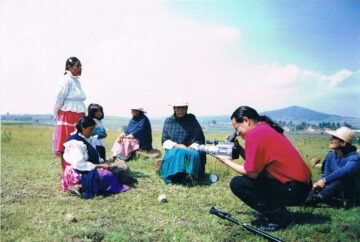
After leaving TNT, Cristina moved with members of her family to Cancún, where some of her siblings had businesses and where she eventually made her home. Héctor remembers that she developed ties with a Maya community in the region, although he did not specify which community. As with other parts of her later life, this information currently comes from family testimony rather than a published documentary record.
Music did not end when Cristina left TNT. According to Héctor, she continued composing and working on projects of her own, moving among rock, salsa, reggae and other styles rather than settling into a single genre. His description is consistent with the musical curiosity he remembers throughout her life, from her early interest in blues and Captain Beefheart to the stylistic openness she shared with TNT.
The family is now trying to recover a substantial body of material that could expand what is known about those later years. Héctor says he and his sisters have approximately 50 hard drives that belonged to Cristina and contain demos and other musical files. The collection has not yet been fully catalogued or heard, so neither the number of songs nor the range of projects can be established with confidence. At this stage, it is more accurate to describe the drives as an unprocessed family archive than as a finished collection of unreleased albums or songs.
That archive could eventually become one of the most important sources for understanding Cristina beyond TNT. For now, it establishes only that her musical activity appears to have continued long after the period for which she is publicly documented. What the material contains, how complete it is and whether any of it was intended for release remain questions for the family’s ongoing recovery work.
The Legacy of Cristina Velazco
Andrés remembers Cristina as an important member of a particularly active phase of TNT’s history. He also remembers her as a guitarist with whom they “clicked really well” during years of musical collaboration and performances linked to social causes.
Her time with the group lives on in the testimonies of those who played with her. Additionally, she is listed in the credits of *Serpiente*, where she appears as Cristina Aul Velazco on guitar. This period also coincides with albums such as *Caos* and *¿Por qué canto?*. However, the available credits do not allow for her instrumental participation to be attributed with the same certainty.
The name “Cristina Aul Velazco” appears on *Serpiente*, while her family and the band refer to her as Cristina Velazco. Without additional documentation explaining the use of “Aul,” it is most accurate to use Cristina Velazco as her primary name. It is advisable to retain the full form only when reproducing the album credit.
Another part of her history remains in the hands of her family. The approximately fifty hard drives mentioned by Héctor are currently being reviewed, and the exact scope of this material is not yet known.
Cristina was a guitarist for TNT during the 1980s; she is credited on *Serpiente* and was part of a period of intense live activity on the capital’s rock and punk scenes. After leaving the band, she continued working in music. On the one hand, part of that career lives on in the memories of her bandmates and her family; on the other hand, another part may still be among the recordings that her children have begun to recover.
What Remains of Cristina Velazco’s Musical Legacy
Cristina’s documented legacy is still incomplete. Andrés Mejía remembers her as an important member of a particularly active TNT lineup and as a guitarist with whom the band developed a strong musical connection over years of performances, many of them linked to social causes and the underground circuits of Mexico City. The strongest surviving discographic evidence is Serpiente, where the 1985 LP credits “Cristina Aul Velazco” on guitar.
The fuller form “Cristina Aul Velazco” appears in that record credit, while her family and TNT refer to her as Cristina Velazco. Without additional documentation explaining the use of “Aul,” the most precise editorial choice is to use Cristina Velazco as her primary name and preserve “Cristina Aul Velazco” when discussing the original Serpiente credit. That avoids turning an unexplained variation in a record sleeve into a biographical conclusion.
Her history also exposes a larger problem in cultural memory. Mexico City punk has generated scholarship about women, political organizing, the Tianguis del Chopo and the social conditions surrounding the scene, yet Cristina’s name remains largely absent from those published accounts. Her story now has to be assembled from an LP credit, the memories of a band founder, the testimony of her son and a family archive that has not yet been processed. That scarcity does not make the story less important; it explains why documenting it carefully matters.
Cristina Velazco played guitar with TNT during the 1980s, is explicitly credited on Serpiente and participated in a period when the group was performing heavily across the rock and punk circuits of Mexico City. After leaving the band, she continued making music, at least according to the family members now recovering her recordings. Part of her history survives in the records and in the people who played beside her; another part may still be sitting on those hard drives, waiting to be heard.