


Where to Start With Kate Bush: The Essential Songs and Albums for Beginners
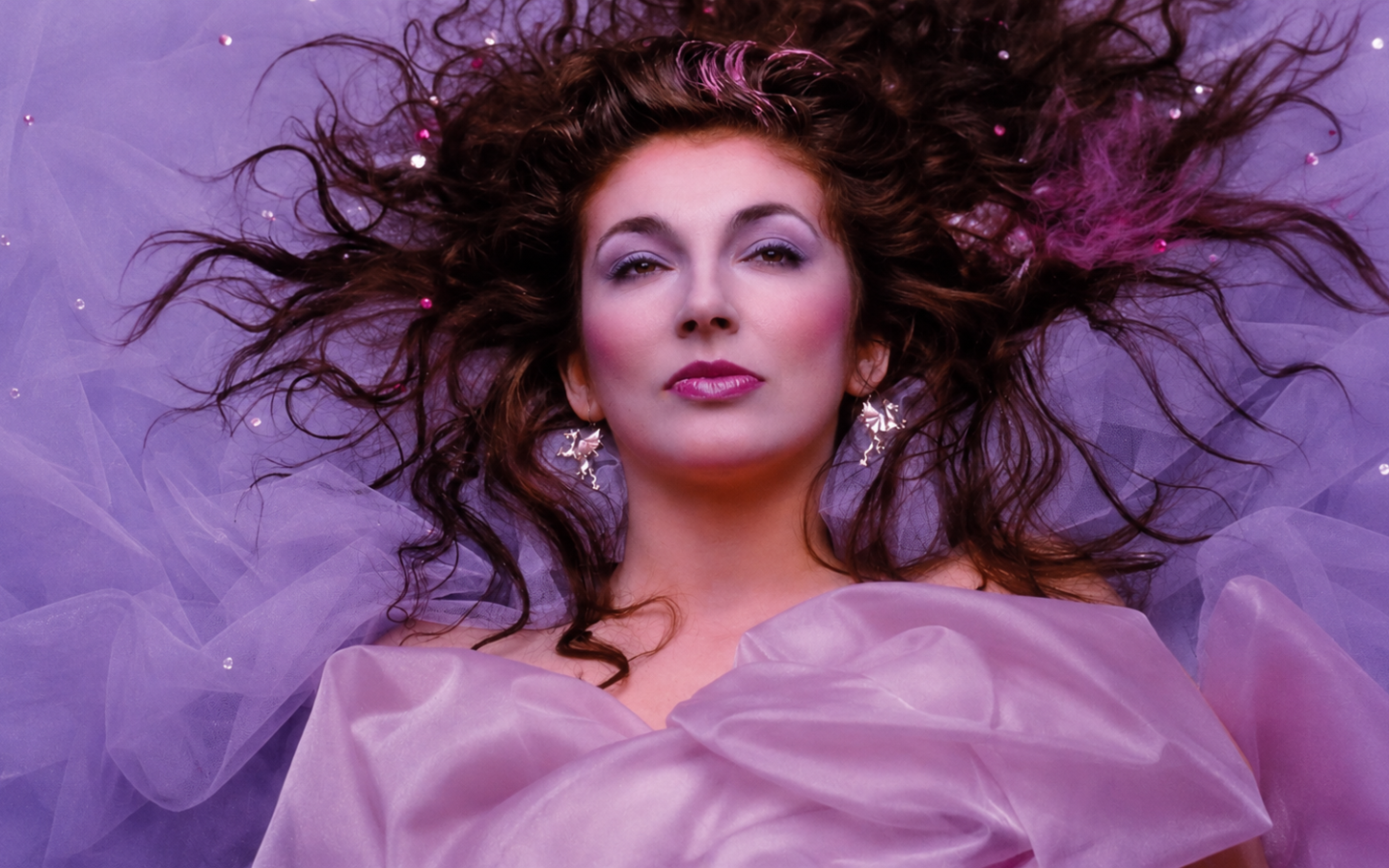

If “Running Up That Hill” was your introduction to Kate Bush, the best way into the rest of her catalogue is not necessarily to work through it in chronological order. Start with Hounds of Love, the 1985 album that brings together some of her most immediate pop songwriting with the elaborate storytelling and studio experimentation that made her unlike almost anyone else working in British music at the time. From there, songs such as “Wuthering Heights,” “Babooshka,” “Cloudbusting,” “This Woman’s Work” and “Sat in Your Lap” open different doors into a body of work where literature, dance, technology, myth and theatrical performance are inseparable.
For millions of younger listeners, “Running Up That Hill” became the obvious entry point after its central role in the fourth season of Stranger Things in 2022. The revival sent a song released in 1985 to No. 1 in the United Kingdom 37 years later and created a 44-year gap between Bush’s two UK chart-toppers, “Wuthering Heights” and “Running Up That Hill.” Those milestones were confirmed by the Official Charts Company, but the more interesting story begins when that one song leads into the rest of her music.
Which Kate Bush Album Should You Start With?
For most new listeners, Hounds of Love is the strongest starting point because it presents both sides of Kate Bush without forcing a choice between pop accessibility and experimentation. The first half contains “Running Up That Hill,” “Hounds of Love,” “The Big Sky” and “Cloudbusting,” four independent songs that show how effectively she could build memorable melodies without simplifying her ideas. The second half, a seven-song suite called The Ninth Wave, moves into darker and more demanding territory, following a woman stranded in the sea overnight as memory, hallucination, fear and the will to survive begin to blur together.
The album also captures Bush at the point where complete artistic control and technological experimentation had become fundamental to her writing. After the demanding production of The Dreaming, she built a studio in a barn beside her family home and recorded Hounds of Love there, using instruments including the Fairlight CMI sampler as part of the compositional process rather than simply as studio decoration. A detailed account of those sessions in MusicTech’s history of the making of Hounds of Love describes the home studio as central to the freedom with which she developed the record.
If Hounds of Love works for you, the next record depends on which part of it you want to follow. Go to The Kick Inside for the theatrical and literary songwriting of early Kate Bush, The Dreaming for her most confrontational production experiments, The Sensual World for a warmer and more mature version of her art-pop, or Aerial for the spacious, meditative music of her later career.
How Kate Bush Built Her Own Musical World
Kate Bush grew up at East Wickham Farm in Kent in a household where music was part of everyday life. Her father played piano, her Irish mother had a strong connection to traditional music and dance, and her older brothers John Carder “Jay” Bush and Paddy Bush were themselves involved with music and the arts. Bush began writing poetry and composing at the piano while still a child, gradually building a substantial collection of songs before anyone in the recording industry knew her name.
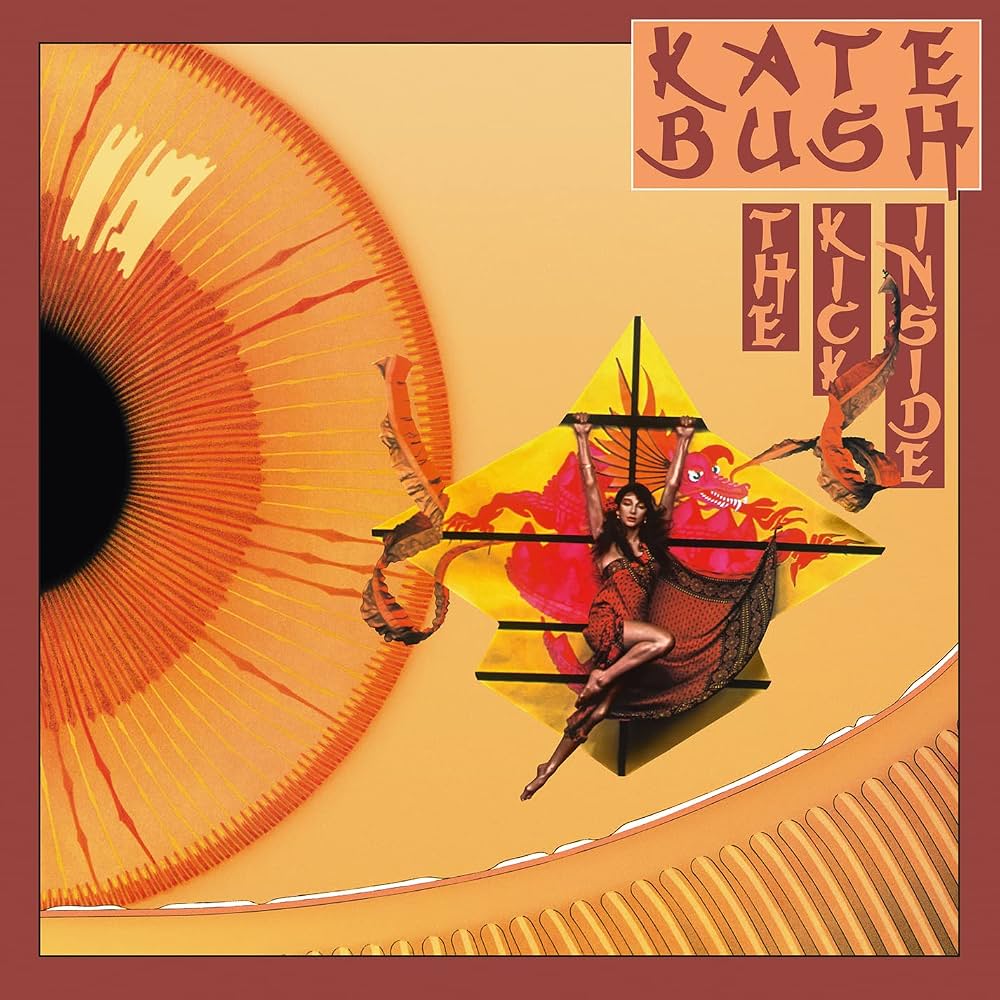
Her route into that industry came through family friend Ricky Hopper, who helped bring her demos to Pink Floyd guitarist David Gilmour. Gilmour recognized her potential and financed more professional recordings that could be presented to record companies, eventually leading to a deal with EMI while Bush was still in her teens. She was 19 by the time The Kick Inside appeared in 1978, but the record already contained material written several years earlier. Pitchfork’s retrospective on The Kick Inside notes that Bush had signed to EMI at 16 and spent the intervening years developing before releasing her debut.
That development was not limited to songwriting. Bush trained in dance and mime with figures including Lindsay Kemp, and movement became integral to the way she conceived performance. Her songs frequently feel theatrical because they were built by someone thinking not only about melody and lyrics, but also about gesture, character, physical movement and visual storytelling.
Start With “Wuthering Heights” to Hear Kate Bush at Her Most Theatrical
If you want to understand the theatrical side of Kate Bush, “Wuthering Heights” remains essential. Inspired by Emily Brontë’s novel after Bush encountered a television adaptation of the story, the song is sung from the perspective of Catherine Earnshaw, transforming a literary ghost into the narrator of an unusually dramatic pop single. Bush’s high register, eccentric phrasing and physical performance style made the song immediately distinctive, but the more important point is that she was already doing something she would continue throughout her career: stepping inside characters rather than treating every song as autobiography.
Bush also fought for “Wuthering Heights” to be released as her first single when EMI preferred the more conventional “James and the Cold Gun.” Her judgment proved decisive. The song reached No. 1 in Britain and made her the first female artist to top the UK singles chart with a song she had written herself, a landmark documented by both Pitchfork’s account of The Kick Inside and the Official Charts Company.
“The Man with the Child in His Eyes” reveals another side of the same debut. Bush wrote the song when she was remarkably young, and its restrained arrangement contrasts with the supernatural intensity of “Wuthering Heights.” Heard together, the two tracks explain why The Kick Inside remains a useful second step after Hounds of Love: one shows the extreme theatricality for which she became famous, while the other demonstrates how controlled and direct her songwriting could already be.
Then Hear How Kate Bush Became Her Own Producer
Bush’s albums became increasingly adventurous as she gained greater control over their production. Never for Ever, released in 1980, marked an important transition as she co-produced the record with Jon Kelly; The Dreaming in 1982 was the first album she produced entirely herself. That change was not merely about receiving a production credit. It allowed decisions about rhythm, sampling, vocal treatment, texture and silence to become part of the act of writing itself.
The Fairlight CMI became one of the tools associated most closely with this period. One of the first digital sampling workstations available to musicians, it allowed recorded sounds to be manipulated and played like instruments. Bush embraced the possibilities of sampling long before it became standard practice in pop production, turning found and recorded sounds into components of her arrangements. By the time of Hounds of Love, the Fairlight was deeply integrated into her process.
For a new listener, “Babooshka” provides an accessible bridge into that experimentation. Its story concerns a woman who tests her husband’s fidelity by writing to him under an invented identity, and Bush performs the narrative almost like a miniature drama with multiple versions of the same character. “Sat in Your Lap” moves considerably further into rhythmic intensity, while “Get Out of My House,” the final track on The Dreaming, pushes voice, percussion and psychological tension to an extreme. Moving through those three songs in sequence makes it possible to hear how the theatrical instincts of The Kick Inside evolved into a much more aggressive approach to studio construction.
Why Hounds of Love Is the Best Full Album for Beginners
Hounds of Love is often treated as Kate Bush’s defining album because it makes experimentation feel immediate rather than academic. “Running Up That Hill (A Deal with God)” is built around a persistent rhythmic pulse and the idea of two people being able to exchange places in order to understand each other completely. The production remains recognizably rooted in the technology of the 1980s, yet it has aged remarkably well, which helps explain why its appearance in Stranger Things could introduce the song to listeners born decades after its release without making it feel like a period novelty.
“Hounds of Love” turns fear of emotional surrender into something physical, with strings and percussion pushing the song forward as if its narrator were being chased. “Cloudbusting,” inspired by the relationship between psychoanalyst Wilhelm Reich and his son Peter, expands a personal memory into one of Bush’s most cinematic songs. Together with “The Big Sky,” these tracks make the first side of the album unusually approachable, but the transition into The Ninth Wave reveals how much further Bush wanted the record to go.
That second half begins with a woman alone in dark water and gradually moves through dreams, memories, supernatural images and imagined futures. “Waking the Witch” turns fear into a fractured nightmare, while “Jig of Life” brings Irish instrumentation and family memory into the narrative. By placing these pieces on the same record as some of her best-known singles, Bush built an album that does not require beginners to choose between “accessible Kate Bush” and “experimental Kate Bush.” Both are part of the same work, which is precisely why Hounds of Love remains such an effective introduction.
Where to Go After Hounds of Love
Once Hounds of Love has established the basic vocabulary, The Dreaming is the record to choose if the strange details are what interest you most. Released in 1982, it is denser, more abrasive and less immediately inviting, but it also shows Bush fully committed to treating the recording studio as an instrument. Songs such as “Sat in Your Lap” and “Get Out of My House” can feel overwhelming at first, yet they reveal how far she was willing to push rhythm, vocal character and sound design before finding the more balanced approach of Hounds of Love.
If you prefer the literary and melodic side of her work, The Kick Inside is the logical next move. It contains “Wuthering Heights,” “The Man with the Child in His Eyes” and “Moving,” as well as the youthful intensity of a songwriter whose voice and imagery had already arrived almost fully formed. Pitchfork’s retrospective assessment of the album describes the debut as playful, experimental and defiant, qualities that remain audible even when the production sounds markedly different from Bush’s later records.
For listeners drawn to the warmer, more sensual qualities in her music, The Sensual World offers another route. Released in 1989, it incorporated influences ranging from Bulgarian vocal music to Irish instrumentation and included “This Woman’s Work,” originally written for the film She’s Having a Baby. Aerial, released in 2005 after a 12-year gap between studio albums, represents yet another Kate Bush: slower, more patient and fascinated by domestic life, nature, birdsong and the passage of time.
The Years Away and Kate Bush’s Return
After The Red Shoes in 1993, Bush withdrew from the familiar cycle of albums, interviews and promotion for more than a decade. The gap generated endless speculation about why she had disappeared, but Bush’s own explanation was far less mysterious. She wanted space for a more ordinary private life after spending much of her youth and early adulthood working continuously, and motherhood became an important part of the years between records. In a rare 2005 interview with The Guardian, she spoke about how valuable that period of relative normality had been.
She returned with Aerial in 2005, a double album divided into A Sea of Honey and A Sky of Honey. Rather than trying to recreate the urgency of her 1980s records, Bush embraced long forms, repetition and observation, making music about family life, nature, art and time. In 2011 she revisited older material on Director’s Cut and released 50 Words for Snow, a sparse collection of long compositions linked by winter imagery, extending a later style that had become increasingly uninterested in conventional pop structures.
The unexpected return of “Running Up That Hill” to the charts in 2022 created a different kind of comeback. Bush herself responded to the new audience on her official website, expressing surprise at the scale of the song’s revival, while the Official Charts Company documented its rise to No. 1 37 years after its original release. The moment was an extraordinary reminder that a production once considered unusual enough to belong unmistakably to Kate Bush could still sound immediate to listeners encountering it for the first time.
10 Essential Kate Bush Songs for New Listeners
“Running Up That Hill” remains the easiest entry point for listeners coming from contemporary pop because its rhythm, electronic production and emotional premise are immediately legible. From there, “Wuthering Heights” should come next: it reveals the theatrical voice, literary imagination and willingness to sound strange that distinguished Bush from the beginning. “Hounds of Love” offers a more compressed form of that emotional drama, while “Cloudbusting” shows her cinematic storytelling at its most expansive.
“Babooshka” is essential for understanding how Bush could turn a compact pop song into a story with shifting identities, and “This Woman’s Work” demonstrates the opposite extreme: emotional intensity achieved through restraint rather than eccentric production. “The Man with the Child in His Eyes” belongs on any introductory list because it shows how accomplished her songwriting already was as a teenager, while “Sat in Your Lap” marks the point where rhythm and production begin to take over the compositional process.
The final two choices should take the listener outside the safest part of the catalogue. “Breathing,” from Never for Ever, imagines nuclear catastrophe from the perspective of an unborn child and demonstrates how disturbing Bush’s storytelling could become without abandoning melody. “Get Out of My House,” which closes The Dreaming, is more confrontational still, turning psychological defence into an almost nightmarish performance. Together, these ten tracks make a better introduction than a conventional greatest-hits sequence because they show not only which Kate Bush songs became famous, but how dramatically her methods changed from one period to another.
Why Kate Bush Still Matters
Kate Bush’s influence is difficult to reduce to a single musical style because later artists inherited different parts of what she made possible. Some followed her combination of performance, character and electronic production; others took inspiration from the degree of control she exercised over songwriting, arrangement, recording and visual presentation. The Rock & Roll Hall of Fame lists artists including Björk, Tori Amos, Florence Welch, St. Vincent, Fiona Apple, Lady Gaga, Joanna Newsom and Big Boi among those influenced by her work, a remarkably diverse group that reflects the breadth of her legacy.
What connects those artists is not an easily imitated “Kate Bush sound.” Her larger contribution was proving that pop music could accommodate eccentric voices, literary narratives, new technology, choreography, conceptual albums and uncompromising artistic control without requiring those elements to exist outside popular culture. That is why “Running Up That Hill” could return almost four decades later and sound less like an archaeological discovery than a song that had simply been waiting for another generation to catch up with it.
For anyone starting now, Hounds of Love remains the most convincing first destination. Follow it with The Kick Inside if you want theatrical songwriting, The Dreaming if you want to hear Bush at her most experimental, The Sensual World if you prefer a more mature and sensual palette, and Aerial if her quieter later work appeals to you. “Running Up That Hill” may have opened the door for millions of listeners, but the real reward begins once you walk through it.