


LSD: Dream Emulator: What It Is, How to Play, and Its Free Fan Remake

Originally published on October 30, 2025. Updated on September 1, 2026, with editorial revisions, new sources, and historical context.
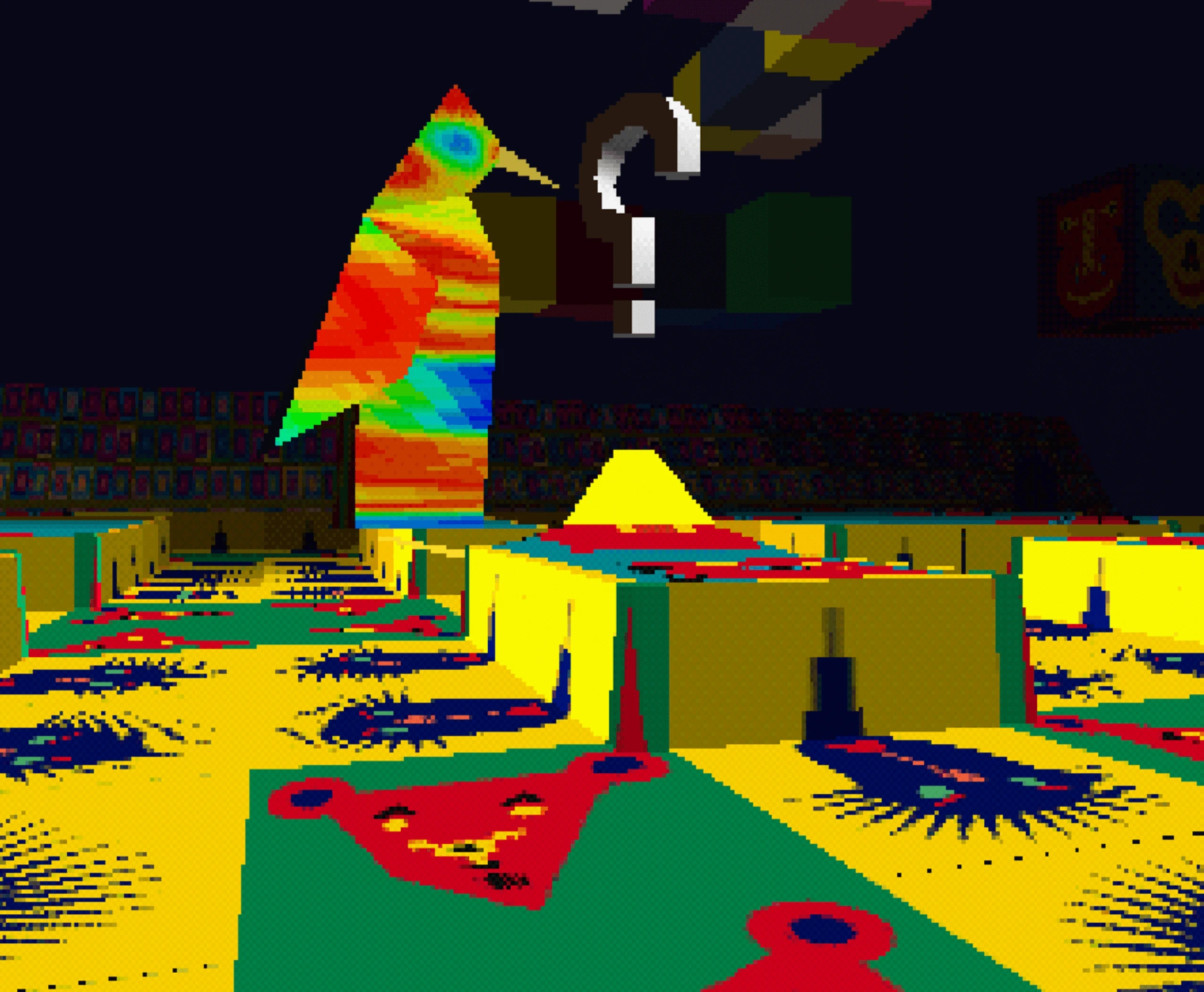
LSD: Dream Emulator was released in Japan on October 22, 1998, for the original PlayStation, developed by OutSide Directors Company and published by Asmik Ace Entertainment. Directed by Japanese artist Osamu Sato, the game’s concept was unusual even within the PS1’s experimental catalog: exploring dreams in first person without missions, enemies to defeat, or a conventional story to complete. The player walks, observes, and interacts with objects that can transport them to another setting without warning.
The project was inspired by the dream journal that Hiroko Nishikawa kept for approximately ten years, which also served as the basis for the book *Lovely Sweet Dream*. Long after its Japanese release, gameplay videos, forums, and communities dedicated to obscure video games brought *LSD* to an international audience. Today, there is also LSD: Revamped, a free fan-made remake for modern systems.

What is LSD: Dream Emulator?
LSD: Dream Emulator is a first-person exploration video game released exclusively in Japan in 1998. It has no score, no combat, no inventory, no puzzles to solve, and no narrative campaign to drive progress. Exploration is at the heart of the game: spaces change, certain figures reappear, and interacting with specific elements can instantly transport you to another location.
Sato associated the name LSD with the drug, the psychedelic culture of the 1960s, and the historical links between that counterculture and the computer culture of the U.S. West Coast. *Lovely Sweet Dream* is the title of the book associated with the project.
The dream journal that inspired LSD: Dream Emulator
The raw material was a journal that Hiroko Nishikawa kept for about a decade. Part of those entries appeared in 1998 as *Lovely Sweet Dream*, a volume that brings together her dream entries and artwork by 80 artists from different countries.
The video game does not turn every entry into a level. Some situations and figures are drawn from those records; certain dreams appear as text or audiovisual sequences, while other ideas were translated into three-dimensional spaces, characters, textures, sounds, and connections between spaces.
Nor do the settings form a continuous territory. A Japanese village may give way to mechanical installations, open spaces, corridors, or urban areas without any narrative explanation linking one point to the next. Associations, repetitions, and abrupt changes replace the spatial continuity that typically structures an exploration video game.
Lovely Sweet Dream, the video game, and the album *LSD and Remixes* were part of the same project around the time of *LSD*’s release in 1998. The book and the game are dated October 22; some discography references place the album on the 21st. Text, image, music, and interaction all drew on the same source material across different formats.

Osamu Sato and the idea of using PlayStation as an artistic medium
Before LSD, Osamu Sato was already working with graphics, photography, electronic music, computers, and interactive projects. One of his earlier works, *Eastern Mind: The Lost Souls of Tong Nou*, had been released on CD-ROM and distributed outside of Japan.
In a 2017 interview with Red Bull Music Academy, Sato explained that he wasn’t a regular gamer, rejected several conventions of the medium, and approached his interactive projects from the perspective of his artistic practice. When he developed LSD, he wanted to use the PlayStation as a platform to produce contemporary art or music. In that conversation, he also discussed the origin of the links between stages, his failed attempt to release LSD in the United States, and the game’s rediscovery years later on the internet.
LSD does away with rewards, combat, and lengthy instructions. Instead of preparing the player to master a set of rules and overcome increasingly difficult obstacles, it forces them to navigate spaces whose behavior can change from one session to the next, recognize locations, and find them again under different conditions.
How do you play LSD: Dream Emulator?
The game progresses day by day. At the start of each day, the player enters a dream and appears in one of the available three-dimensional spaces. The perspective is first-person, and virtually all interaction depends on movement: walking, running, looking around, and interacting with certain elements.
The core mechanic is called “linking.” Contact with walls, animals, characters, or objects can instantly transport the player to another location. The connection does not need to follow any obvious spatial logic; a surface that in another video game would mark the boundary of the scene can here lead to a place with no visible connection to the previous one.
After each dream, a graph appears organized along the Upper/Downer and Static/Dynamic axes. LSD shows the position reached by the session, but does not explain all the internal operations that determine it. Years of community analysis and reverse engineering made it possible to reconstruct in greater detail the relationship between the graph’s coordinates, certain starting points, link types, and some events. These associations are part of the knowledge developed later around the game, not rules that LSD directly teaches the player.
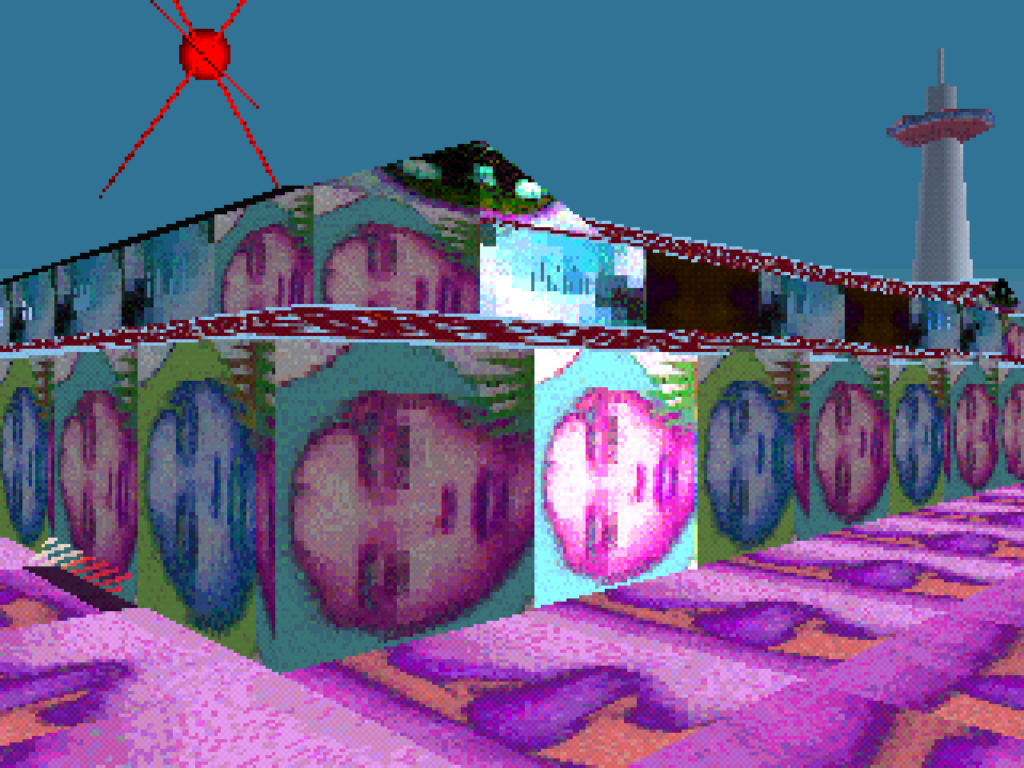
As the days pass, the appearance of the environments also changes. Familiar locations may reappear covered in patterns, symbols, faces, or different color combinations. Not every day leads to an explorable space: sometimes brief texts or audiovisual sequences appear. Later on, “Flashback” can be enabled—a feature that retrieves stored fragments from previous dreams.
Although the sequence of images may seem random at first, there are persistent locations, scheduled events, and characters with specific behaviors. The variation lies primarily in the order of encounters, the connections between spaces, and the way the settings reappear.

Grey Man and the Strangest Images in LSD
Among the recurring figures is Grey Man—also known as Gray Man or Shadow Man—a humanoid dressed in gray who can appear without warning in various settings and approach the player. Contact with him erases the data accumulated for Flashback and can cause the option to disappear from the menu until enough events have been gathered again.
LSD never identifies the character or offers an official interpretation of its meaning. On the other hand, theories developed by players suggest that the Grey Man represents a specific trauma experienced by Nishikawa, an antagonist, or a figure with a defined narrative identity.
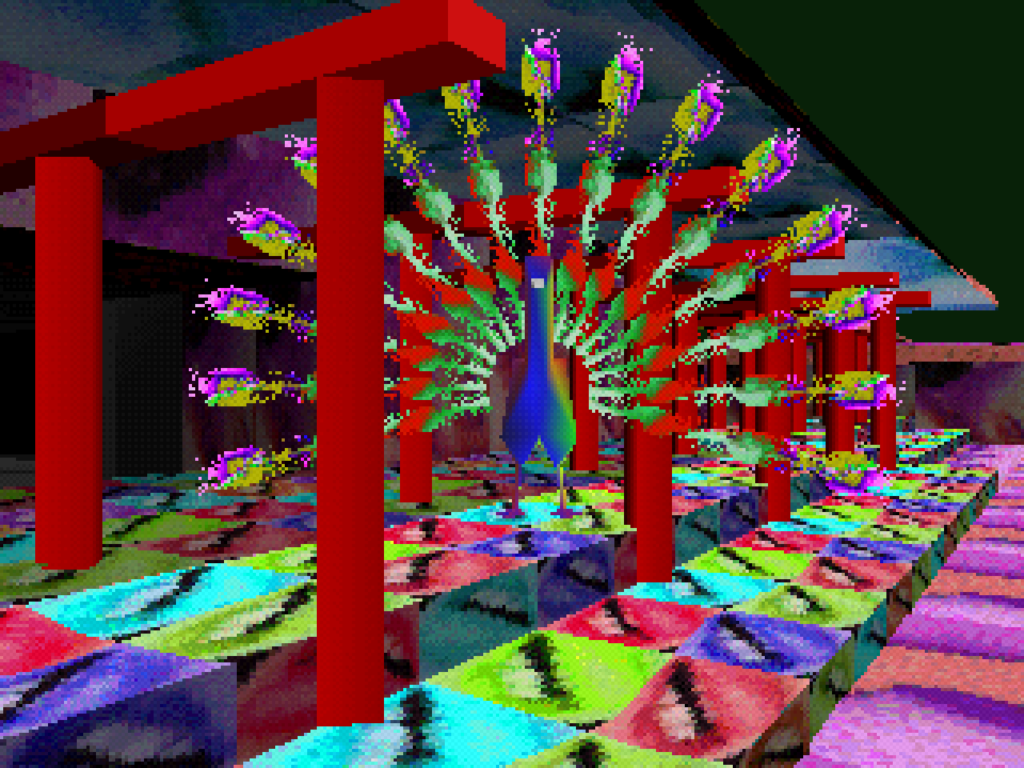
Other images that made the game recognizable operate with a similar ambiguity: animals appearing out of context, human figures, monuments, Japanese streets, hallways, machinery, and organic spaces. Furthermore, many scenes take on an unsettling tone because the player returns to a familiar place and finds something that wasn’t there before.
The music changes along with these visits. Sato produced the project’s musical score, and *LSD and Remixes* brought together his original pieces with remixes by Ken Ishii, Jimi Tenor, µ-Ziq, and Morgan Geist. Furthermore, versions and motifs from this material also appear within the game.
Why did LSD: Dream Emulator become a cult classic?
LSD had a limited reach in 1998. It was released only in Japan, and the U.S. launch that Sato had envisioned never happened. Furthermore, over the years, physical copies became difficult to find. The game returned on August 11, 2010, via the Japanese PlayStation Store as part of the PS1 Classics lineup. However, that re-release did not result in widespread international distribution either.
Its audience outside Japan grew primarily online. Gameplay videos, forums, and communities dedicated to lesser-known titles introduced LSD to people who had never been able to find a physical copy. Furthermore, the game lent itself particularly well to this kind of circulation. Different playthroughs could produce combinations of scenarios, textures, and events that encouraged players to compare discoveries, record appearances like the Grey Man, and try to decipher the Dream Chart.
Over the years, players documented systems that the game itself explained very little about and kept interest in Sato’s work alive. In fact, the difficulty in obtaining LSD fueled its fame. However, the community endured because new events, combinations, and rules continued to emerge that could be compared and discussed long after the game’s release.
LSD: Revamped, the free fan-made remake
The project began in October 2011, after Figglewatts discovered the original through AzuriteReaction’s videos. At the time, he was learning video game development and was not yet familiar with Unity. The first version was named LSD: The Remake and aimed to reconstruct the levels with high-definition graphics. However, over the years, he abandoned that approach and focused on reproducing the original as accurately as possible. During this work, tools such as LibLSD and LSDView were developed. These are used to interpret levels, textures, and animations based on data from the PS1 game.
As of September 2026, the most recent public version is LSD: Revamped 0.3.0, released on October 15, 2024. Its creator claims that this edition achieves approximately 99% fidelity to the original and allows players to complete the entire game. The update added Flashback, text and video dreams, weather effects, mod support, and the included Additional Dreams expansion.
Revamped features customizable controls, higher resolutions, and more frames per second. The project is still in development, and its roadmap for the future version 1.0 includes virtual reality support, rare events that are still missing, and additional features. However, there is no confirmed public release date.
How to download and play LSD: Revamped for free?
LSD: Revamped can be downloaded for free from Figglewatts’ official profile on itch.io for Windows, macOS, and Linux. The available version supports keyboard, mouse, and gamepad, as well as customizable controls. On Windows, extract the file and run it LSDR.exe. macOS, the file is distributed LSDR.app, which can be placed in the Applications folder. On Linux, the 64-bit executable is included LSDR.x86_64.
Revamped is a fan-made project, not an official release by Sony, Asmik Ace, or Osamu Sato. The original LSD: Dream Emulator was a commercial release for PlayStation, and its digital re-release was tied to Sony’s Japanese store. Therefore, there’s no need to resort to ROMs, BIOS files, or unauthorized copies to try out this recreation.
LSD: Revamped and LSD: Dream Emulator Retro are not the same thing
The similarity between the names can cause confusion when searching for LSD on Steam. LSD: Revamped is the recreation by Figglewatts, started in 2011, to run LSD: Dream Emulator on modern computers.
LSD: Dream Emulator Retro, on the other hand, is a video game created and published by Eternity Dev that was released on Steam on November 20, 2024. Its official Steam page describes it as a game influenced by the PlayStation version of LSD. It is not a re-release, adaptation, or authorized remake of Osamu Sato’s original work.
Other projects available on Steam use similar names or references, but sharing visual inspiration with LSD does not make them new editions of the title published by Asmik Ace in 1998.
Why is LSD: Dream Emulator still relevant?
LSD: Dream Emulator continues to generate interest because its rules leave enough room for two playthroughs to unfold differently. Furthermore, the links between spaces, the texture changes, the day system, and the recurring events have sparked comparisons for years. They have also spurred attempts to decipher aspects that the game itself barely explains.
That activity brought a hard-to-find Japanese release to an international audience formed around videos and online communities. In this way, LSD: Revamped extends that circulation stemming from fan-driven development. It does not replace the original, but it offers an accessible way to experience a modern recreation of how it works on Windows, macOS, or Linux.