

Why was John Galliano's exhibition at the Met canceled, and what does this mean for the 2027 Met Gala?
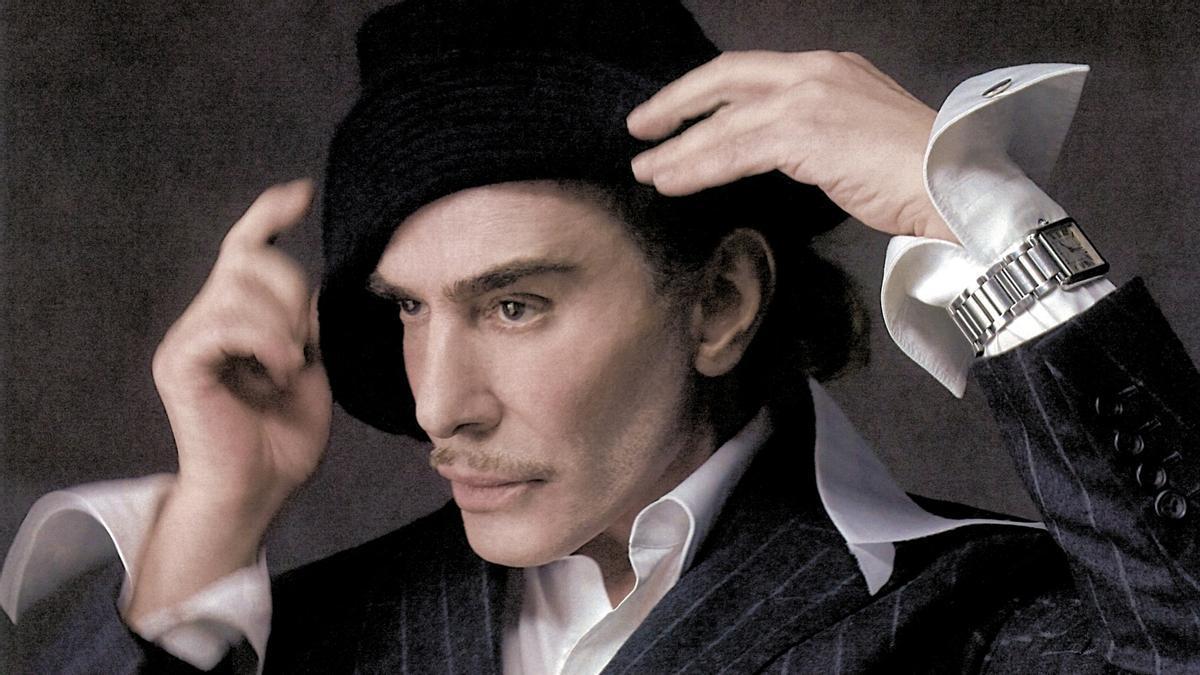

The retrospective that would have made John Galliano only the third living designer to have a solo exhibition at the Costume Institute will no longer take place. Just one month after announcing “John Galliano: Horizons,” the Metropolitan Museum of Art in New York confirmed that it had decided, in consultation with the British designer, not to proceed with the exhibition scheduled for May 2027.
The decision came after the project reignited a controversy that has dogged Galliano for the past 15 years: his anti-Semitic and racist remarks from 2011. This has sparked a debate over the extent to which a designer’s professional resurgence should also be recognized by a cultural institution.
The Metropolitan Museum of Art and Galliano jointly announced that the exhibition will not proceed. The museum’s official statement indicates that the decision followed discussions between both parties. Furthermore, it does not attribute the cancellation to any specific organization, political leader, donor, or protest. The Met also stated that it will announce the Costume Institute’s new spring exhibition and details of the 2027 Met Gala at a later date.
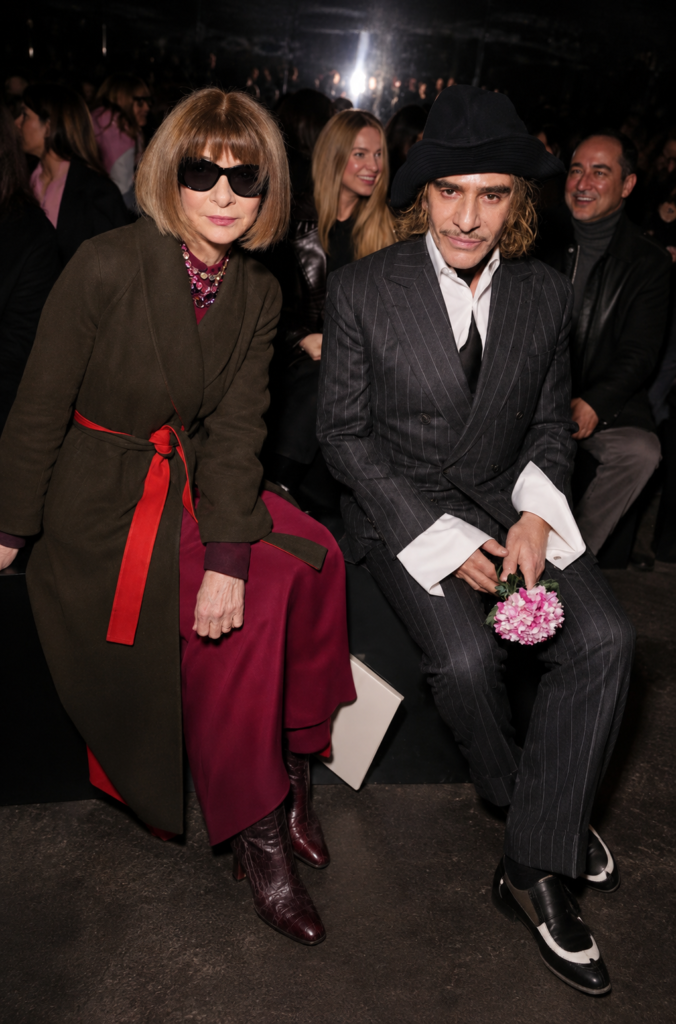
What was “John Galliano: Horizons”?
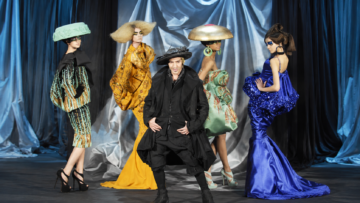
The exhibition had been conceived as a journey through four decades of Galliano’s work. It began with his 1984 graduation collection at Central Saint Martins and spanned his stints at Givenchy, Dior, and Maison Margiela.
This was no minor exhibition. “Horizons” would have made Galliano only the third living designer to have a solo retrospective at the Costume Institute, following Yves Saint Laurent in 1983 and Rei Kawakubo in 2017.
The exhibition was to bring together garments, accessories, sketches, toiles, research books, and archival documents from different stages of his career. It ranged from *Les Incroyables*, his graduation collection, to his years at Givenchy, Dior, and Maison Margiela. Furthermore, the original project also intended to explicitly address the incidents involving anti-Semitic, racist, and specifically anti-Asian remarks.
For Galliano, the exhibition represented one of the most far-reaching institutional recognitions since the crisis that interrupted his career in 2011.
Why was John Galliano’s exhibition canceled?
The incident that has once again taken center stage in the discussion is not limited to a single video. In 2011, various incidents that took place at a Paris café came to light in which Galliano made anti-Semitic and racist remarks; one of the most widely circulated videos showed him expressing admiration for Adolf Hitler, and anti-Asian remarks were also documented. Dior fired him, and months later a French court found him guilty of making public insults based on race, religion, ethnicity, or origin.
After that incident, Galliano entered treatment, apologized, and began a process of personal and professional rehabilitation. That process was not uniformly rejected by Jewish organizations. In 2013, the Anti-Defamation League determined that he had shown genuine remorse and recognized the work he had done to study anti-Semitism and take responsibility for his comments.
There were also Jewish leaders who, after meeting with Galliano in person, considered his remorse to be sincere. Rabbi Rick Jacobs, president of the Union for Reform Judaism, and Rabbi Joshua Davidson were among those who acknowledged his process of atonement, although that did not necessarily mean they endorsed a retrospective at the Met. Both argued that, if the exhibition went ahead, the museum should openly address the events of 2011 and their consequences.
His professional comeback proceeded in parallel. Maison Martin Margiela confirmed Galliano as its new creative director in October 2014—his first position of that magnitude since leaving Dior. For ten years, he once again held a central position in the fashion world and left Maison Margiela in December 2024.
Objections to “Horizons” intensified in August 2026. Political figures, Jewish leaders, and museum donors called on the Met to reconsider the project. Among them was Julie Menin, president of the New York City Council and daughter of a Holocaust survivor, who found the decision to honor Galliano particularly painful. Donor Alice Tisch also criticized the project, describing it as an attempt to whitewash his record.
Financial pressure also emerged in the coverage leading up to the cancellation. El País reported instances of donors who threatened to withdraw contributions to the museum if the exhibition went ahead. This information forms part of the documented context of opposition surrounding the exhibition, but the Met did not cite it as the official reason for its decision.
The Anti-Defamation League also ended up criticizing the tribute, without denying the process of repentance it had acknowledged years earlier. Jonathan Greenblatt had reiterated during the debate that the organization had long since accepted Galliano’s apology, but later maintained that dedicating a retrospective to him at that time was the wrong decision, especially given the rise in anti-Semitism. The objection was thus directed at the Met’s tribute and its timing, not at retroactively withdrawing recognition of his rehabilitation.
The timing added another element. Met Gala was scheduled for the evening of May 3, 2027—precisely when Yom HaShoah, the day of Holocaust remembrance, begins. The coincidence did not mean that the museum had scheduled the exhibition to mark that date, but it did intensify criticism from those who considered it inappropriate to open a season dedicated to Galliano during that commemoration.
Nor can the opposition be summarized as a uniform stance by the Jewish community. The Associated Press documented criticism from leaders and members of the Jewish community and from Jewish organizations, while other figures had considered the designer’s process of repentance to be valid.
All of this backlash forms part of the context leading up to the decision, but it should not be confused with the Met’s official explanation. The museum did not announce that it had canceled “Horizons” because of Julie Menin, the ADL, donors, or Yom HaShoah. Galliano explained that he did not want the controversy surrounding him to put the museum in a difficult position or distract from the work of the Costume Institute, and he once again acknowledged the pain caused to the Jewish and Asian communities.
Andrew Bolton, head of the Costume Institute, and Anna Wintour, a member of the Met’s board, supported the decision not to proceed with the exhibition, though not necessarily every argument raised during the public criticism.
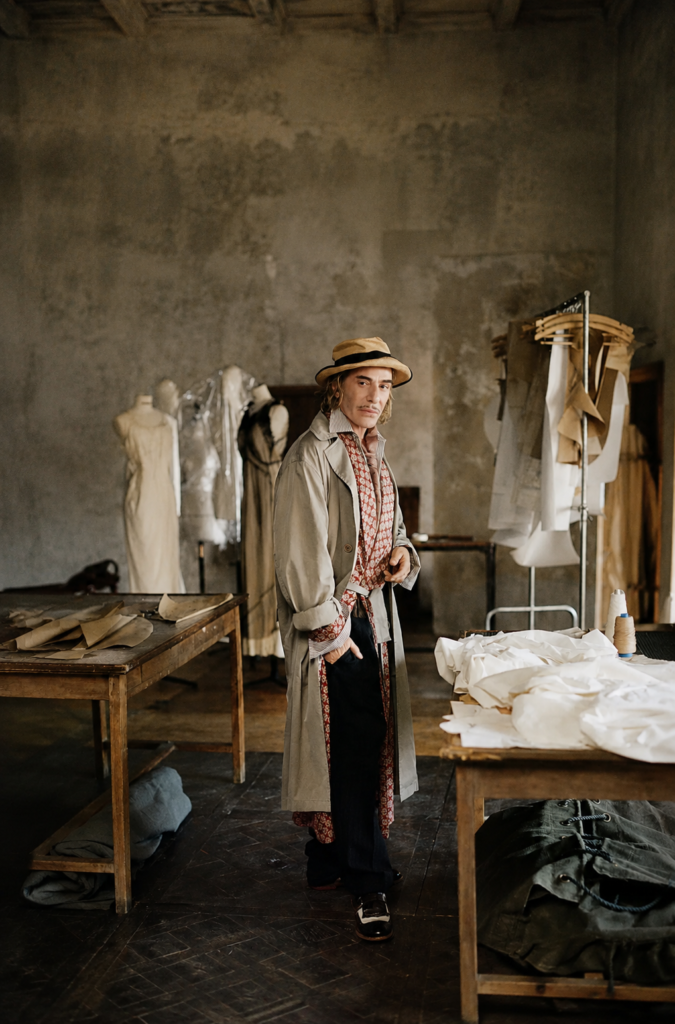
Why a Met retrospective held a different significance
The discussion was not simply about re-evaluating the events of 2011. By the time “Horizons” was announced, Galliano had been reintegrated into the industry for years. His process of repentance had even received recognition from people and organizations that had previously condemned him.
A monographic exhibition by the Costume Institute, however, is not the same as hiring a designer to create new collections. It selects, preserves, studies, and presents the designer’s career. All of this takes place within an institution whose programming helps determine which figures and periods are part of fashion history.
That is why the announcement carried more weight than his hiring at Maison Margiela. Before the cancellation, El País presented the upcoming exhibition as one of the greatest honors Galliano had received since his downfall in 2011. Furthermore, it positioned the project within a phase in which the designer had already regained much of his standing within the industry.
The retrospective thus raised a question that went beyond his professional reinstatement. It asked what it means for an institution of that stature to make a career—one also marked by those episodes—the subject of a solo exhibition.
What has changed for the 2027 Met Gala?
The 2027 Met Gala has not been canceled. What is being canceled is “John Galliano: Horizons,” the exhibition that was to serve as the Costume Institute’s spring project.
The gala is scheduled for Monday, May 3, 2027, and, prior to the cancellation of *Horizons*, the dress code had not yet been officially announced. Any potential references to Galliano’s work in the guests’ outfits were, therefore, merely speculation. All of this stemmed from the customary link between the gala and the Costume Institute’s exhibition. However, it was not a confirmed dress code.
For now, there is also no new official theme for the exhibition. The Met will have to present the project that will replace “Horizons” and subsequently explain the details of the gala associated with that new exhibition.
The cancellation leaves the Costume Institute with a specific task: replacing an exhibition that had already been announced. It must now also define the new framework for the 2027 Met Gala. For Galliano, this means that his professional comeback will not culminate—at least not through “Horizons”—in the monographic retrospective that the museum had prepared.
Editor
Viridiana Velázquez
Viridiana Velázquez is an editor at Yaconic and a journalist who graduated from the Carlos Septién García School of Journalism. She has a decade of experience working for media outlets such as Grupo Mundo Ejecutivo and Indie Rocks!, as well as the Mexico City Government’s Department of Social Communication. She specializes in cultural consumption, media narratives, and their relationship with art, the market, and society.
LinkedIn:Viridiana Velázquez