


Angela Davis in Mexico: What It Means to Conceive of Justice Beyond Prisons
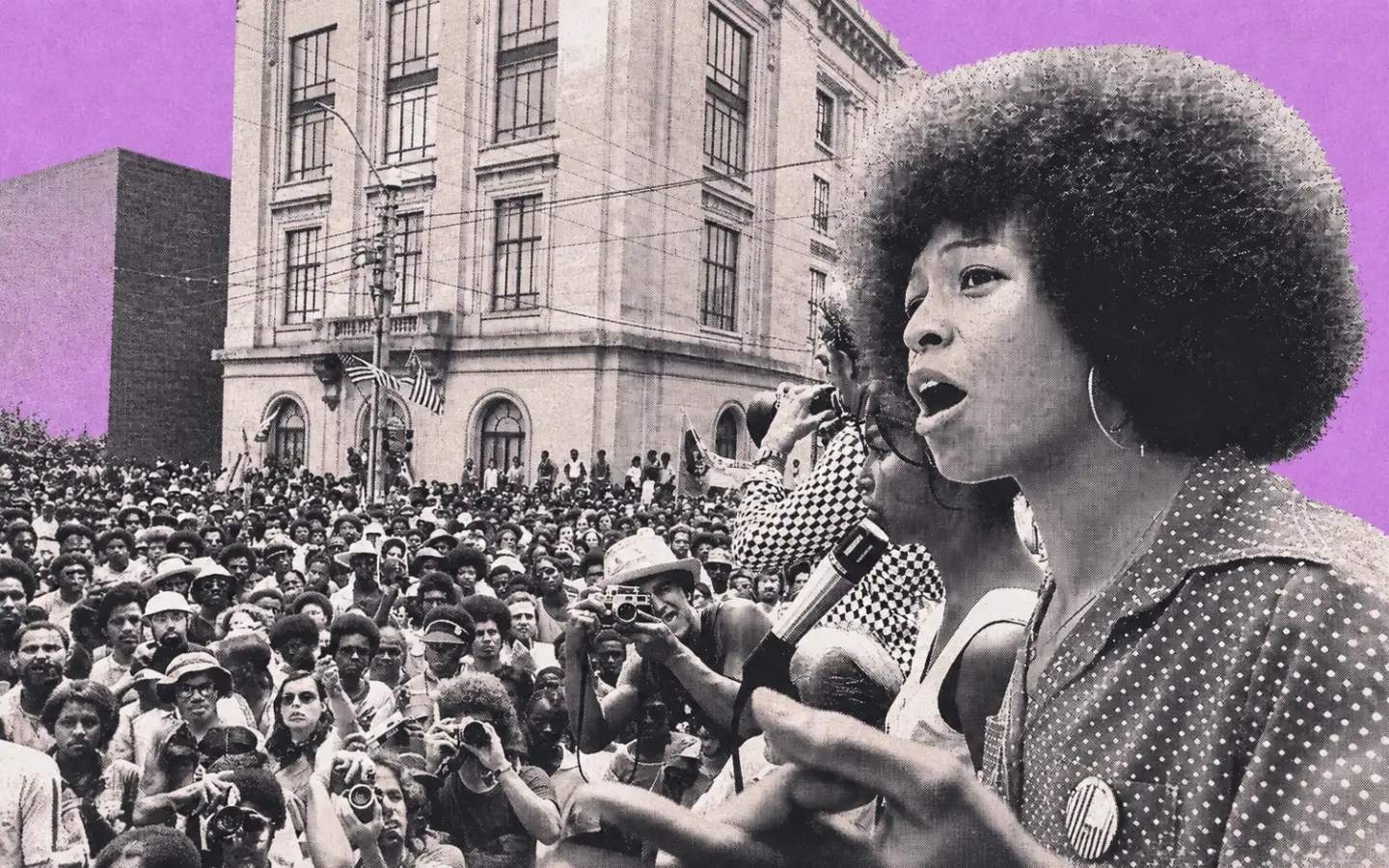

Angela Davis will visit UNAM for the first time on August 26. The American philosopher, scholar, and activist will participate in FILUNI 2026 to discuss *Abolition, Feminism, Now!*. This book challenges an idea deeply rooted in our understanding of justice. Specifically, it questions the use of prison as the primary response to harm.
The question takes on added significance when viewed from the perspective of Mexico. According to INEGI’s 2025 National Survey on Victimization and Perceptions of Public Safety, 93.2% of crimes in 2024 fell into the so-called “dark figure.” In other words, these are cases that were not reported or for which no criminal investigation was opened. The problem with the Mexican justice system, therefore, begins long before a sentence is handed down or a person is imprisoned. Furthermore, Davis’s visit opens up a different discussion: which institutions and conditions enable the restoration of justice, the prevention of crime, and the creation of safety. This is particularly relevant when criminal punishment proves insufficient to achieve these goals.

Angela Davis at UNAM: When and Where the Discussion Will Take Place
The keynote discussion “Abolition, Feminism, Now!” will take place on Wednesday, August 26, at 6:00 p.m. in the Miguel Covarrubias Hall of the University Cultural Center. Participants will include Angela Davis, Gina Dent, and Amneris Chaparro Martínez, with Rosa Beltrán serving as moderator. This event is part of the 8th International University Book Fair. The fair will take place from August 25 to 30.
Admission is free, but space is limited; the official Libros UNAM publication recommends arriving early. Additionally, the event will feature simultaneous interpretation and will be broadcast on TV UNAM, its website, YouTube, and the Facebook pages of TV UNAM and Libros UNAM. On television, it can be viewed on channel 20.1 (over-the-air) and various pay-TV systems.
This event also holds historical significance for the University. Gaceta UNAM notes that this will be Davis’s first appearance at UNAM. The publication presents her as one of the central figures of FILUNI 2026, alongside Gina Dent and other international voices in contemporary thought.
The event takes its name from *Abolition, Feminism, Now!*, written by Angela Y. Davis, Gina Dent, Erica R. Meiners, and Beth E. Richie, and published in Mexico as a co-publication by Libros UNAM, the Center for Gender Research and Studies, and U-Tópicas.

What Does Abolishing Prisons Mean to Angela Davis?
Davis’s abolitionist thought has evolved over decades of study and activism surrounding the U.S. prison system. Her analysis links the expansion of prisons to historical processes of racialization, economic inequality, surveillance, and control of specific populations. Consequently, prison is thus seen as part of a broader social structure and not merely as the building where a person ends up after committing a crime.
The Institut Català Internacional per la Pau, which published a compilation of Davis’s abolitionist thought in 2025, explains that her work examines the historical continuities between slavery and the prison system in the United States. Furthermore, they examine the racialization of crime and the development of institutions of control such as prisons, the police, and immigration detention centers. Davis links this critique to the search for alternative ways to ensure health, public safety, and dignified living conditions.
From this perspective, abolition is also a project of construction. Housing, education, medical care, mental health and addiction treatment, community networks, conflict prevention, and mechanisms for reparations are all part of the same debate on security. With this approach, the response to harm is distributed across different tools, and prison ceases to function as the dominant solution to problems of a very different nature.
The U.S. context is central to Davis’s work. Much of his analysis traces the relationship between slavery, racial segregation, the criminalization of Black communities, and the growth of the prison system. This historical lineage explains the role that race and class play in his critique and also highlights a significant difference with Mexico. In other words, the institutions, racial histories, and legal systems of the two countries are not equivalent. For Mexico, it is more fruitful to ask who bears the brunt of punishment, which situations come to be criminalized, and what social conditions persist after a conviction.
Editor
Viridiana Velázquez
Viridiana Velázquez is an editor at Yaconic and a journalist who graduated from the Carlos Septién García School of Journalism. She has a decade of experience working for media outlets such as Grupo Mundo Ejecutivo and Indie Rocks!, as well as the Mexico City Government’s Department of Social Communication. She specializes in cultural consumption, media narratives, and their relationship with art, the market, and society.
LinkedIn:Viridiana Velázquez