

Mexico City in the 1970s: Movements and Submetropolitan (Counter)Culture¹ ² ³

In Mexico City—then known as the Federal District—the transition from the 1960s to the 1970s linked the 1968 student movement to new forms of neighborhood organization, the Popular Urban Movement, popular urban rock and Canto Nuevo. This chronicle follows that web of counterculture and submetropolitan (counter)culture from the schools and neighborhoods of the DF to Avándaro, the hoyos fonquis and the threshold of the “decade of decay.”
The Origins: The Rebeco 1968⁵
From a bird’s-eye view, I focus on the Historic Center before coming down over San Juan de Letrán, today Eje Central Lázaro Cárdenas. The evening light falls over the traffic of consumers, and in the distance a group of students can be seen with their unmistakable books and their rebeco appearance, leaving the Cine Teresa, while others enter the Cine Savoy and still others walk away carrying a book purchased clandestinely at the Pérgola bookstore in Alameda Central.
On Donceles Street, amid slaps on the head, albures and puns, a palomilla⁶ enters through the Marian door of Preparatory School No. 1. Their commotion carries through the last remnants of what had once been the old University City. Following their mental map, they continue toward the medical school in Plaza de Santo Domingo and, farther north, perhaps as far as Vocational School No. 7, over by the Tlatelolco housing complex. Between these upper-secondary schools, bookstores and cinemas in the city center, a web takes shape, woven together with the neighborhoods of Morelos, Guerrero, Santa María la Ribera, Candelaria de los Patos and La Merced, continuing westward to Casco de Santo Tomás, where the National Polytechnic Institute’s vocational schools are located. To the north lies the working-class district of Azcapotzalco. From this inter-neighborhood connection, looking south, one can see Plaza de la Ciudadela, IPN Vocational Schools 2 and 5 and the facilities of Televicentro, today Televisa.
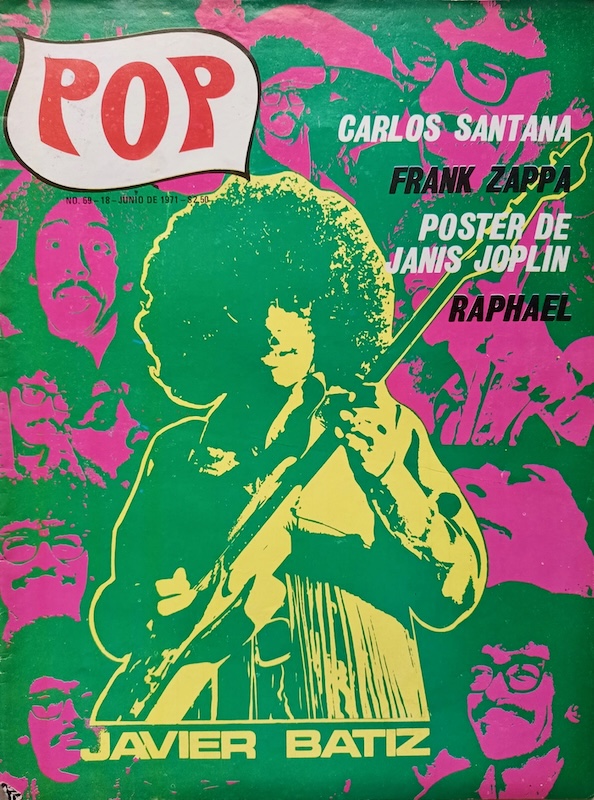
It was in this ancestral and distinctly youthful territory that the student-rebecos, between roughly 12 and 17 years old, gathered. Girls and boys liberated their bodies by entering beer halls and dance halls to the rhythms of danzón, huaracha or Afro-Caribbean music. Suddenly, radio and television summoned these rebecos to storm the dance floors to rock and roll, and although very few could afford the latest records by the Rolling Stones, Jimi Hendrix or Janis Joplin, circumstances always brought someone into contact with social groups that had greater purchasing power, giving them the privilege of listening to and touching the cover of the latest rock album brought back from England or the United States. With neighborhood slang as both shield and dagger, the rebecos would also discover world literature and urban writing in cafés and secondhand bookstores as they crossed the city.
The 1960s carried new ideological and revolutionary winds while the pressure cooker of state repression was close to bursting. And it was along this route of neighborhood onda that the student-rebeco, infected by those libertarian currents, protested against the authority of the working-class father, whatever his trade might have been: bus driver, merchant, street vendor, construction worker or something else. Against that omnipotent father represented in the figure of the president, the union boss or the coercive abuse of the police order. With this conviction, the rebecos began the indiscipline of confronting family authority. These same rebecos were among those who gained access to upper-secondary education and university enrollment. They were the ones who learned to emancipate themselves economically—working a few hours a day—and gradually exercise their autonomy.
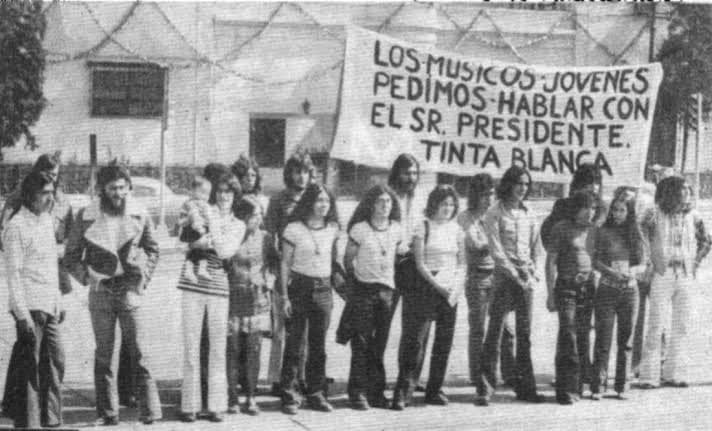
On the street, of course, watchful eyes with clubs in hand pursued young rebecos without explanation. Simply for “having the wrong face,” they could be detained and subjected to individual extortion. In the neighborhoods, meanwhile, the palomilla could be rounded up in a razia—a police raid—merely for gathering on street corners. The rebeco therefore had to live within an exclusionary and repressive social, police and cultural system without the mediation of political parties or socialist ideologies, without militancy or membership in a Communist cell and, much less, without belonging to the networks of intellectual power in the city.
Fed up with authoritarianism, the palomilla unleashed its desires by creating a collective network that made it master of the urban territory to which it belonged. The absence of respect for authority and the government’s exacerbated authoritarianism produced an unexpected event on July 22, 1968. It was a breaking point, when energies that had been colliding for some time suddenly condensed and burst loose. The dam broke brutally, without warning either the political vanguards or the forces of coercion. That mobilization of rebeco gangs was not, from this perspective, a “provocation organized by the government,” but a response to a succession of repressive acts by the authorities. Young people could no longer endure another beating from the philanthropic ogre. Beaten and wounded, this rebeco generation would return to the streets only days later to the Stones-like rhythm of “Street Fighting Man.”
July 26–30, 1968: The Insubordination of the Rebeco Student Base
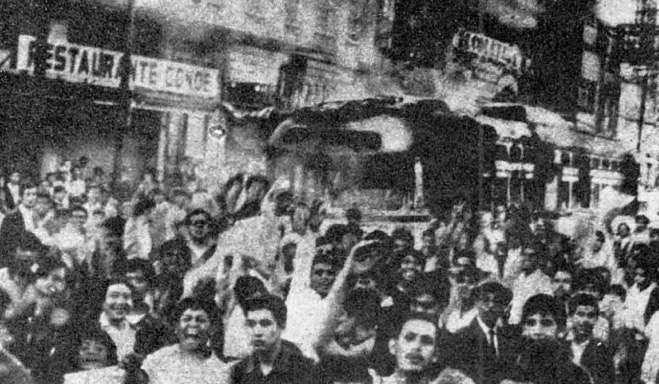
The evening of July 26 coincided with the anniversary of the Cuban Revolution. That day, young revolutionary vanguards protested in an orderly fashion in pursuit of a teleological goal, but others also took to the streets stirred by the Cuban landmark. It was then that the underage rebecos from the outskirts were intentionally provoked by those in power. They responded by tearing chunks of asphalt from the street and throwing them at the granaderos, Mexico City’s riot police. With buses and urban furniture, they built barricades against the representatives of the law. They set fires in an act of direct action without a program, armed only with accumulated hatred toward governmental authority, the same authority replicated at home, at work and on the street. They were preparatory-school students, naturally urban, stubbornly determined to demonstrate without an organization or political program. Why, when recounting these events, have opinion leaders been so insistent that these insubordinate groups possessed no partisan rationality?
Beyond the explanations, the fact is that these rebecos, called “rebels without a cause” by youth specialists, lit the fuse of the movement. Paradoxically, these libertarian rebecos provided the evidence that helped bring people together so that the political vanguards could structure the list of demands of the National Strike Council, the CNH. That was their task. They had no greater pretensions than releasing that emotionally accumulated energy. That hatred and the liberation of their desires became practices of communication and protest: street barricades, occupied schools, the seizure of buses, Molotov cocktails, lightning rallies and assemblies in plazas and markets that multiplied throughout central and northern Mexico City. It could hardly have been otherwise, as the weekend of July 27 and 28 demonstrated, when street fighting spread across 16 blocks in the heart of the city. They remained “blocked at the intersections with burning buses, and it was, according to government officials, the situation that led the army to enter Preparatory School No. 1 on the night of Monday, July 29, using a bazooka blast to knock down the door and advancing with bayonets fixed,” as Gonzalo Martré recounts in Los símbolos transparentes.⁷ The rebeco resistance continued between September 23 and 30 in La Ciudadela, Tlatelolco and Casco de Santo Tomás, facing the army’s armed assaults on IPN vocational and higher-education schools. Plebeian counterviolence responded, and survivors recount resisting with homemade incendiary devices and some handguns taken from their fathers’ trunks or obtained through the underground market.
Resistance to the occupation by the state’s repressive forces produced consequences unwanted by the democratic-reformist current—the Mexican Communist Party, Spartacists and the National Liberation Movement—or by government infiltrators, and contributed to the emergence of revolutionary guerrilla tendencies such as the Revolutionary Action Movement, the September 23 Communist League and the Guajiros, among others, as well as activists in the new neighborhoods of the submetropolis. At the same time, it fostered an atmosphere conducive to the resurgence of an anarchist movement that had quietly survived and continued cultivating itself underground.
In organizational terms, we could say that an early libertarian and self-managed current composed of anarchist sympathizers, Situationist artists, unreconstructed Magonistas and spontaneous anarchists concentrated on activating brigades in neighborhoods and markets. A coordinating body of brigade members was even formed, linking activists whose participation went beyond attending assemblies and voting on agreements.
The political effervescence of the moment led to a massive strike at the National Autonomous University of Mexico (UNAM) and the National Polytechnic Institute (IPN), together with the upper-secondary schools belonging to both institutions. The National Strike Council took the lead, bringing together students with a high degree of political awareness who became immersed in endless discussions among different currents, while the student base, porra and all, gathered food and supplies so they could spend the night guarding the entrances to preparatory and vocational schools.
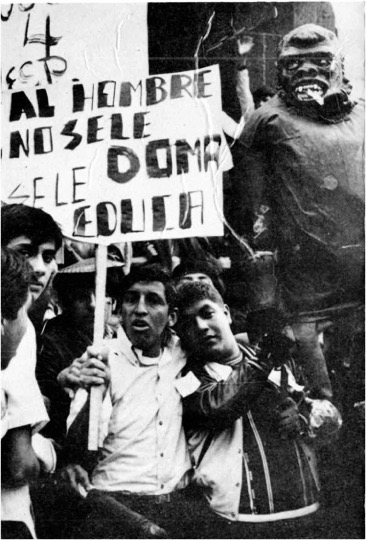
While the CNH remained immersed in grilla—political maneuvering and debate—the student base entertained itself while searching for provisions: “At Prepa 6 they would ask who was going to the CNH, and nobody wanted to go; they became radicalized. Carlos Lira and Javier Bátiz were brought to the preparatory schools, two musicians who raised the spirits of the students so they could get the festive chaos going.”⁸ Then came the October 2 massacre, harsh repression, relentless persecution and the imprisonment of hundreds of university students.
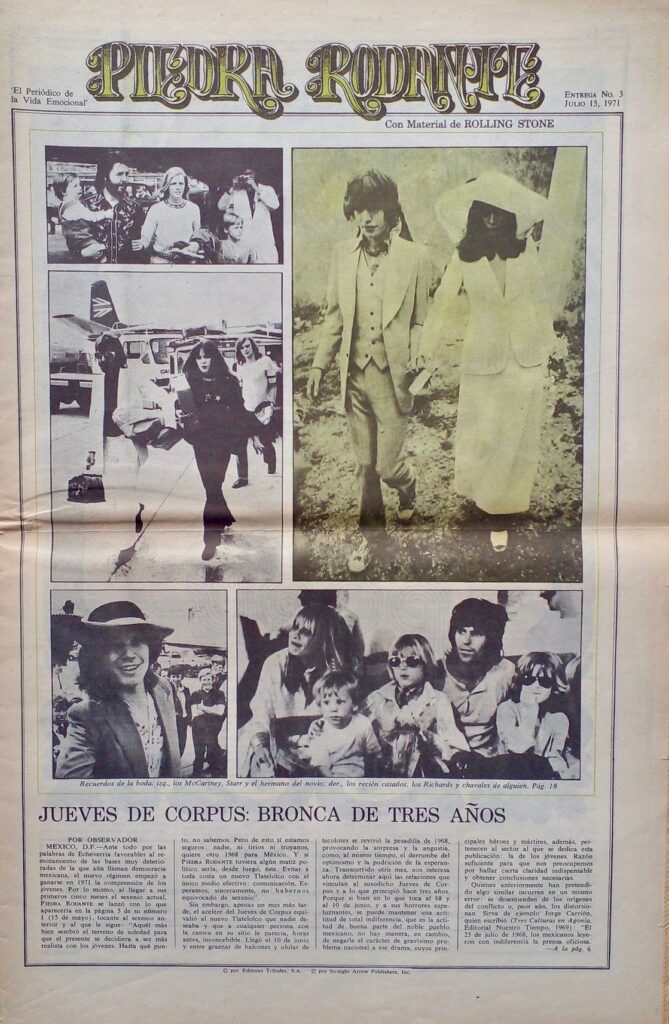
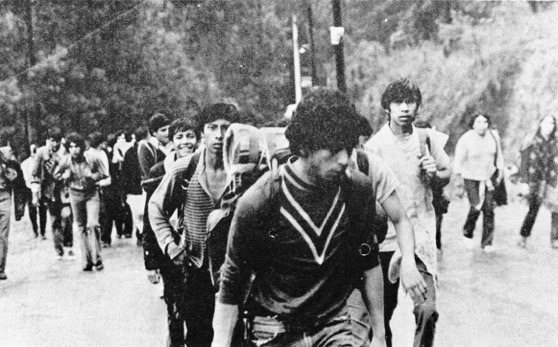
We can say that within this rebellious spirit, in the barricades and the resistance to the occupation of Polytechnic and preparatory schools, there germinated a spontaneous and wild anarchism, as the rupestre musician Roberto González would later call it. It flowed into educational centers and neighborhood territories at the very moment of the movement itself. This produced invisible chain reactions. During the next two or three years, from 1968 to 1971, the vanguards went underground while media-visible leaders moved toward the channels opened by the Democratic Opening of Luis Echeverría’s government. Echeverría, the former Secretary of the Interior under Gustavo Díaz Ordaz, took office as president in 1970. His administration would also be associated with the repression of the June 10, 1971 student demonstration, the event known as the Corpus Christi Massacre or Halconazo. After this, many students branched outward, almost virally, into suburban territories inhabited by Indigenous and rural migrants in the emerging metropolis of the DF.
The Origins of the MUP, Popular Urban Rock and Canto Nuevo⁹ ¹⁰
Avándaro, Popular Urban Rock and the Hoyos Fonquis
In the barriopolitano world, suburban gangs that loved rock created their xipiteca clothing from whatever materials they had at hand. Jubilant amid the post-1968 noise, they took seriously the call to attend the Rock y Ruedas festival in Avándaro, State of Mexico. Wearing urban sandals, sneakers and boots, the gangs descended en masse on the festival. Their brown-skinned presence, their caló slang and the stridency of their clothing far exceeded the expectations of the cultural and political elites. The submetropolitan youth masses became visible through media interpretations that constructed them as dangerous, producing territorial stigma around proletarian neighborhoods such as Ciudad Neza, Iztapalapa, the Pedregales de Santo Domingo and Santa Fe. The youth response was to create spaces for socialization and rock bands in different musical tendencies within their own neighborhoods, becoming protagonists in the birth of Popular Urban Rock—Rock Urbano Popular, or RUP—through hoyos fonquis, barter markets and any public space that could be occupied.
The Popular Urban Movement
At the same time, young people from working-class neighborhoods and settlements began entering decentralized upper-secondary schools and university campuses built on the outskirts of the city, particularly the Colleges of Sciences and Humanities, or CCH, and the National Schools of Professional Studies, or ENEP. The massive expansion of enrollment in preparatory schools gave thousands of young people from these territories under construction access to education after the 1968 student movement, even though that movement’s formal list of demands had not included educational access for this sector of society. Through the government’s “educational revolution” and “political democratization,” the administration of Luis Echeverría Álvarez incorporated the promise of social mobility for marginalized and working-class youth.
The territorial decentralization of the university and the expansion of upper-secondary and higher education paradoxically created bridges and interclass connections involving young professors who had participated in the 1968 movement. Hundreds of these new teachers had worked as brigadistas during the student movement, allowing them to establish an immediate dialogue with students from the submetropolis. In those frontier spaces, an ideological synthesis and reunion of activists of different tendencies began to take place, giving rise to innovative forms of reorganization, struggle and cultural processes in working-class neighborhoods.
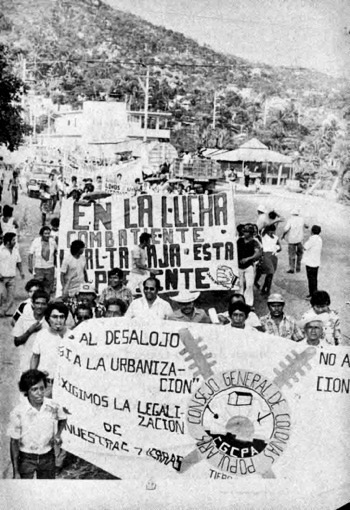
Across these territories emerged organizations demanding the legalization of urban land, the introduction of public services—water, electricity, drainage and schools—along with supply projects and cultural centers, which proliferated in every direction. At the same time, the urban-popular movement expanded through organizations such as the Asociación de Residentes de San Bernabé, Asociación de Residentes Barrio Norte, Comité de Lucha de Santo Domingo, Comité de Manzana Barrio Norte, Coordinadora Regional del Valle de México, Coordinadora de Colonias de Álvaro Obregón, Coordinadora Regional del Sur del Valle de México, Movimiento Popular de Pueblos y Colonias del Sur, Movimiento Independiente de los Pedregales, Unión de Colonos de Santo Domingo, Unión de Colonias Populares del Valle de México, Unión de Solicitantes y Colonos de Vivienda, Unión de Colonos de San Miguel Teotongo, Unión Independiente de Colonos de Neza and Unión de Colonos Independientes de Neza, among others.
All of them contributed to building the submetropolis and the collective memory in movement that lies within the underground layers of a metropolis now undergoing processes of whitening and gentrification.
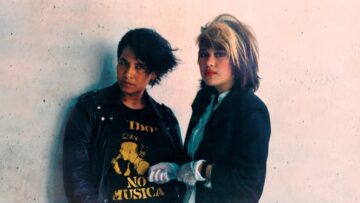
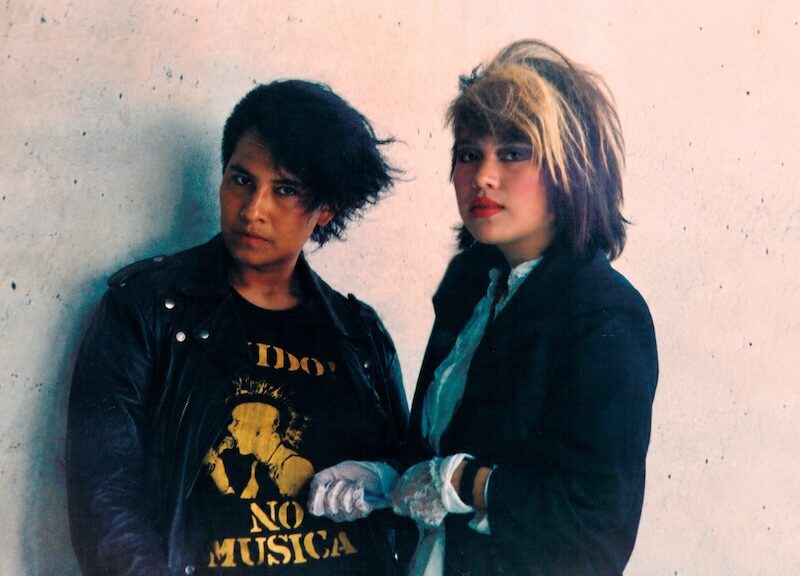
Alongside this movement, accompanied by activists and militants from socialist or Communist parties, another path was unfolding in those same territories, where neighborhood youth gathered through the gregarious life of the gang in search of satisfying desires fed by underground currents of 1960s (counter)culture and rock. They soon appropriated those expressions and produced their own identifications and creactions.¹¹ As Enrique Marroquín observed in La contracultura como protesta: “Today, young people from the proletarian suburbs who attend the CCH campuses, and who perhaps represent the most interesting element of contemporary youth, do not look toward folklore. They identify with electronic rock…it is music for dissidents in our present urban culture…”¹² Those young members of the suburbanda were not hippies; rather, they gave rise to Xipismo. They did not create clubs or pubs but hoyos fonquis. They did not make urban rock out of sweet stories but opened the way for the chilango chronicles of Popular Urban Rock in these spaces and beyond.
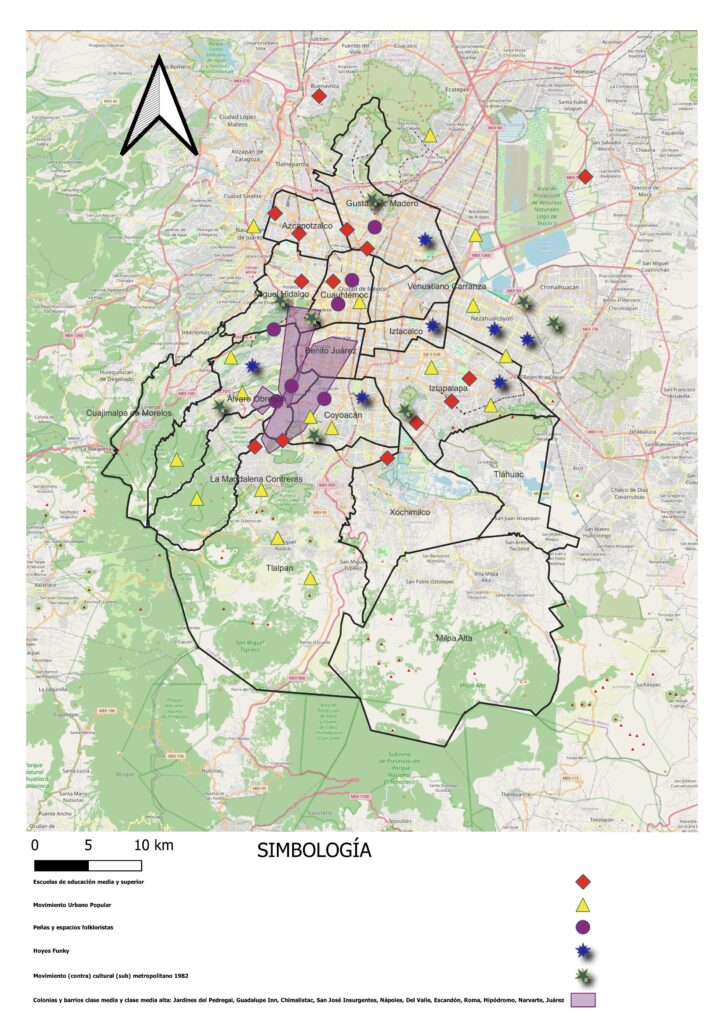
The hoyos, as the great Parménides García Saldaña¹³ called them, had names such as El Petulias, Salón Chicago, El Revolución, El Herradero, El Oro Negro, Salón Los Apóstoles, El Covadonga, La Pista de Cristal, Gimnasio Juan de la Barrera, Pista de Revolución, Auditorio Antonio Caso in Tlatelolco, El Snoopyes and Gimnasio de la Nueva Atzacoalco. These places had once been warehouses, stables, abandoned homes, parking lots or deteriorated sports facilities, and every weekend they hosted bands including Three Souls in My Mind, Tinta Blanca, El Ritual, Los Tequila, La Tribu, El Epílogo, Mayita Campos y su Banda de Blues, Dug Dug’s, Love Army, Bandido, Iguana, Five Fingers, Parada Suprimida, Al Universo, Ataúd Blindado, Ginebra Fría, La Tía Petra, Ciruela, Oz, Enigma, Nuevo Testamento, Nuevo México, Nahuatl, Peace and Love, Pájaro Alberto and Sacrosaurio. Information about the groups appeared in magazines such as Dimensión, Pop and México Canta, among others, while the suburbanda undergrasa listened to rock on stations such as Radio Capital and La Pantera de la Juventud.
Canto Nuevo
When a member of the neighborhood gang managed to reach a CCH campus or a UNAM faculty, other musical currents became accessible, particularly—and given the conditions of that historical moment—South American folk music and Latin American Canto Nuevo. Those young people who traveled between street corner, popular assembly and university faculty also lent their ears to other musical experiences. Arriving at a CCH esplanade or university campus, they might find a university union rally or an event in solidarity with an independent movement accompanied by Gabino Palomares or José de Molina—¡a parir madres latinas!—or stop to listen to the performed slogans of the Zumbón theater group. In those struggles they might join a march commemorating the beginning of the Cuban Revolution and, sooner rather than later, find themselves in a peña, drinking Chilean wine and learning a South American accent. These young people arrived at their preparatory school or university center wearing a Peruvian poncho, a Cuzco-style hat and sandals, carrying under one arm a book by some theorist of Latin American dependency, and listening to Radio Educación to hear Emilio Eberghendi introduce a representative of the new song movement while Julio Solórzano announced an upcoming performance by Negro Ojeda.
Radio Educación, the peñas and university spaces were where Canto Nuevo found its largest audience. Its solo performers included Amparo Ochoa, Gabino Palomares, Gerardo Tamez, Humberto Álvarez, Hugo Aspeitia, Juan Gutiérrez, Julio Solórzano, Judith Reyes, León Chávez Texeiro, Luis Urreta, Marcial Alejandro, Sergio Ramírez, Rafael Catana, Víctor Martínez, Eblem Macari, José Cruz Camargo, José de Molina and Salvador Ojeda, El Negro; the duos included Anthar y Margarita, Nora y Delia and Ipacarai. Among the groups were Ars Nova, Briseño, Hebe, Carrasco y Flores, Contrastes, Dueto Camionero y sus Invitados, Jaranero, Los Nakos, Los Huincas, Los Folkloristas, Macehual, Nacimiento, Nopalera, On’ta, Papalote, Seguimos lo Mismo, Sanampay, TIICOM, Tribu de la Paz, Taller José Canica, Tepeu, Topilli, Urbano Pacheco, Un Viejo Amor, Víctor Jara, Viraje, Vientos para un Nuevo Día, Los Malditos, Incataqui, Corazón del Pueblo, Cantos del Pueblo, Cabe and Yalba Unicaloob.
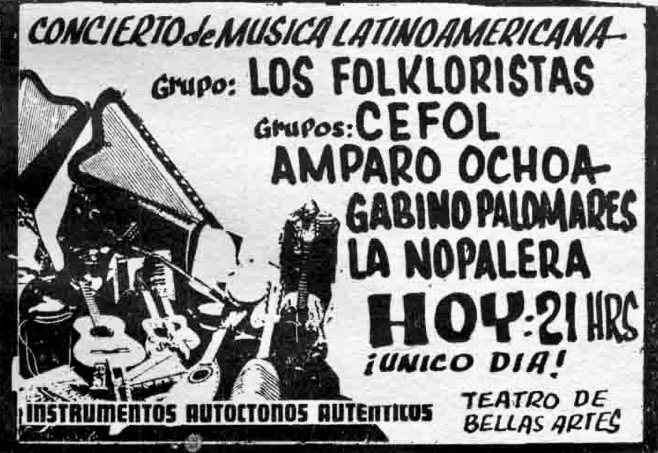
Among the temporary and permanent spaces associated with this musical current were the Foro del Museo Universitario, Casa del Lago, the Sala Manuel M. Ponce at the Palacio de Bellas Artes, Librería Gandhi, the Polytechnic forums and the peñas El Pesebre, El Farfelú, El Chaz Negro, El Callejón del Ojito, Peña de los Folkloristas, El Cóndor Pasa, Mesón de la Guitarra, El Náhuatl, El Sapo Cancionero, El Asador, Túpac Amaru and Pájaro Campana. Some of these solo artists, duos and groups could also be heard thanks to their exceptional cultural support for workers’ strikes in Azcapotzalco and Tlalnepantla and for university union strikes, particularly those of the Sindicato de Trabajadores de la Universidad Nacional Autónoma de México (STUNAM) and the Sindicato de Trabajadores de la Universidad Autónoma Metropolitana (SITUAM).
Toward the “Decade of Decay”
Among the multiple (counter)cultural and rebellious currents developing along the edges of the central metropolis, anarchist activism was also taking shape through collectives and publications including La Academia Negra, La Rosa Negra, Coordinadora de Estudiantes Libertarios, Regeneración Tercera Época—animated by Chantal López and Omar Cortés—Brigada Praxedis G. Guerrero, Autogobierno de Arquitectura at UNAM, Talleres Autogestivos de Investigación Social and Revista Caos, associated with Biblioteca Social Reconstruir and Ricardo Mestre. Some of their activists came from the western and eastern parts of the city where the youth gang movement was also emerging.
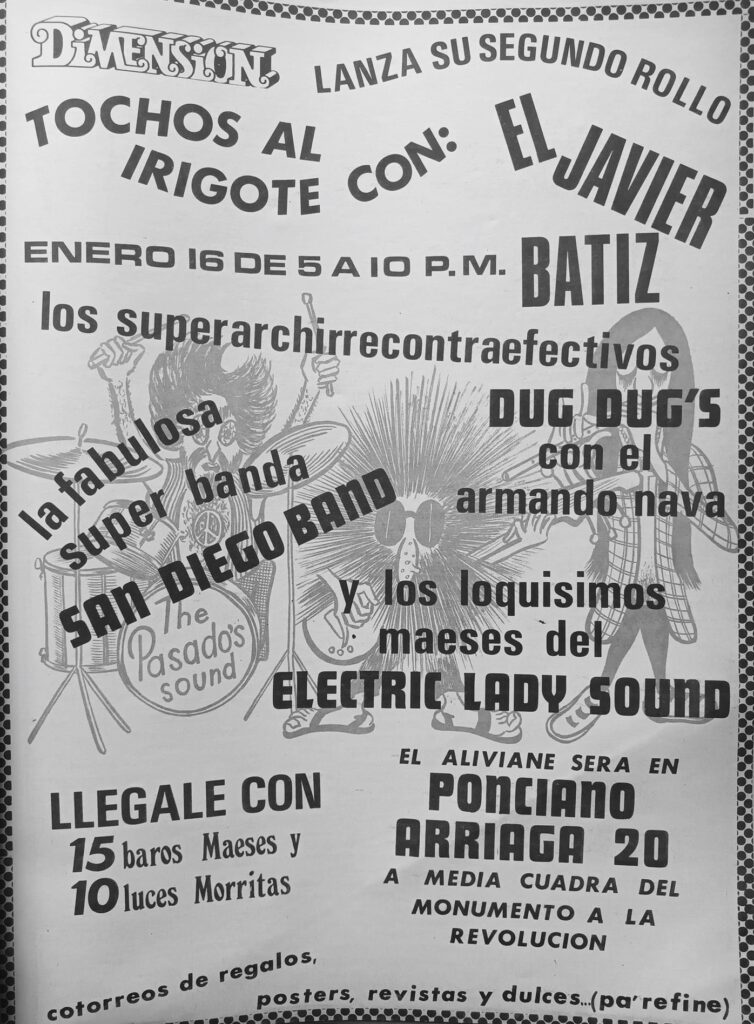
The synthesis of these social, political and cultural processes into other forms of becoming took place around 1980 and 1981, the years in which the Tianguis del Chopo was inaugurated. At the same time, calls for massive rock concerts, such as those organized to hear Johnny Winter at the Temixco swimming resort in the state of Morelos and at the football stadium in Pachuca, Hidalgo, ended in police repression, provoking chaotic responses from the gang masses that had gathered there.
Meanwhile, the MUP was making qualitative organizational leaps with the First National Meeting of Popular Neighborhoods; at the same time, gangs in western Mexico City created Grupo Santa Fe with the aim of organizing socially and politically. At the opposite end of the metropolis, organized gangs in Ciudad Neza mobilized against increases in public transportation fares, as did groups in the area of Ocoyoacac, State of Mexico. It was an agitation symptomatic of the hard and creative times that would unfold throughout the “decade of decay,” as members of the first punk collectives called it.
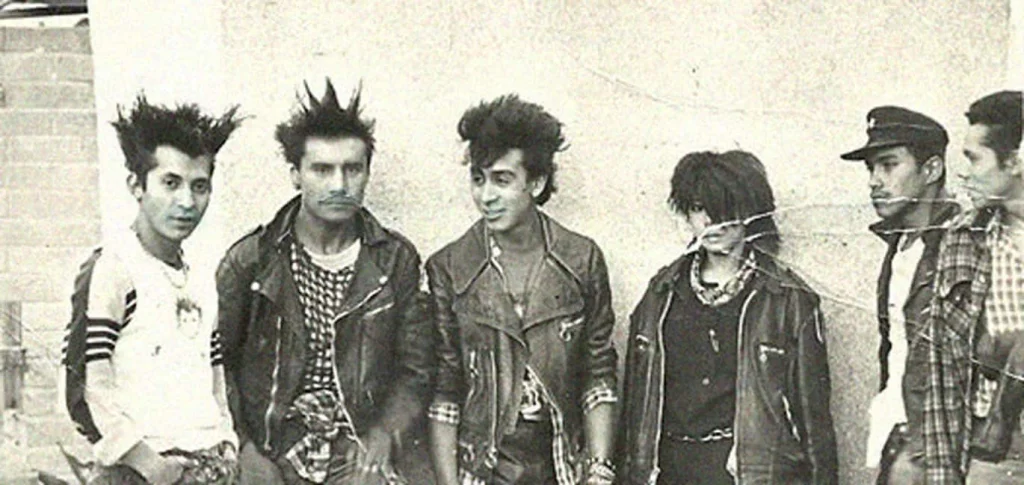
This symptom becomes transparent in the manifesto-letter sent by Los Panchitos—the iconic youth gang from Santa Fe—to the correspondence section of the newspaper Unomásuno on December 3, 1981, in which they declared: “…We tremble from cold and hatred, but we are together and we are the same ones everyone fears. We don’t love anyone, not even ourselves; the lives of others hurt us, and so do our own. Better to die soon.” Throughout the década podrida, punk and anarchist collectives proliferated alongside the qualitative organization of the Popular Urban Movement in the so-called periphery of the DF submetropolis.
Notes
1. From 1824 to 2018, what is now Mexico City was known as the Distrito Federal, or Federal District (DF), a special political entity created by the Mexican state because the executive, judicial and legislative branches of government were concentrated within its territory. One effect of this conception of the political city was that its residents lacked certain political rights, including, for long periods, the ability to directly elect their own local representatives. Punk bands of the 1980s played with the acronym DF to create neologisms such as Disturbio Funeral and DeFectuoso.
2. I place parentheses within the term (counter)culture in order to emphasize the constant change and transformation of countercultural movements.
3. Sociologists and urban planners use the concept of the periphery to name the inhabitants of the city’s “marginalized” areas. The image is the result of a dichotomous center-periphery conception. From my understanding of subaltern classes, I prefer to think of the city as a metapolis: the city that goes beyond itself, where the relationship between “center” and “periphery” becomes more complex. There is now a metropolitan centrality, metropolitan centers and “peripheries” within those metropolitan centralities. From this comes my idea of the submetropolitan. I refer not only to inhabitants but to their class differentiation: the submetropolitan subject is an inhabitant of the neighborhoods and settlements scattered throughout the Mexican central metapolis.
4. PhD in Social Sciences, specializing in Communication and Politics at UAM-X; MA in Urban Studies from UAM Azcapotzalco; video maker, chronicler, creactivist and suburban activist.
5.Rebeco: a contraction of rebelde, “rebel,” in neighborhood caló. A rebeco is a rebel.
6.Palomilla: a gang, crew or group of young people.
7. Martré, Gonzalo. Los símbolos transparentes. A novel of the Mexican 1968 movement; first published by V Siglos in 1978; second and third editions by Claves Latinoamericanas in 1993; fourth edition by Conaculta-Lecturas Mexicanas in 2001; definitive worldwide fifth edition by Alfaguara in 2014.
8. Anonymous text in Revista Vía Libre. Special issue commemorating the 20th anniversary of the 1968 student massacre. October 1988. Mexico.
9. MUP: acronym for Movimiento Urbano Popular, Popular Urban Movement.
10. See Mapa Movimientos (Contra)culturales (sub)metropolitanos (1971–1982).
11.Creacción: a neologism intended to resignify the idea of creation, which today has been emptied of meaning by the cultural industries.
12. Enrique Marroquín, La contracultura como protesta (1975). Editorial Joaquín Mortiz, Mexico.
13. “Hoyo is a word intimately connected to rock and the music around it; it is also connected with the underground places—one speaks of jazz as basement music—where the dark side of rock was born, grew and reproduced…” Parménides García Saldaña, “Los hoyos funky”, originally published in La Piedra Rodante and later republished in Carlos Chimal, ed., Crines. Otras lecturas de Rock (Editorial ERA, 1994).
Bibliography and References
Arana, Federico. Roqueros y Folcloroides. ¿Canto nuevo. Estúpido o racista? (1988). Colección Duda Semanal. Editorial Posada. Mexico.
García Saldaña, Parménides. “Los hoyos funky” (1994). Originally published in La Piedra Rodante and later republished in Carlos Chimal, ed., Crines. Otras lecturas de Rock. Editorial ERA. Mexico.
Gaytán Santiago, Pablo. Desmadernos. Crónica suburpunk de algunos movimientos culturales en la submetrópoli defeña (2001). Editorial UAEM. Mexico.
Martré, Gonzalo. Los símbolos transparentes. First published by V Siglos in 1978; second and third editions by Claves Latinoamericanas in 1993; fourth edition by Conaculta-Lecturas Mexicanas in 2001; definitive worldwide fifth edition by Alfaguara in 2014.
Marroquín, Enrique. La contracultura como protesta (1975). Editorial Joaquín Mortiz. Mexico.
Velasco, Jorge. El canto de la tribu: un ensayo sobre la historia del movimiento alternativo de música popular en México (2004). CONACULTA. Mexico.
Redacción
Pablo Gaytán Santiago
Pablo Gaytán Santiago holds a PhD in Social Sciences from UAMX and works as a filmmaker and creative activist. His work explores and documents punk and anarchist cultures, suburban movements, and social memory in Mexico. He has published books and essays and directed documentaries and videozines on counterculture and social movements.