


What Is Biopunk? Aesthetics, History, and Works That Help Us Understand How Our Vision of the Future Is Changing
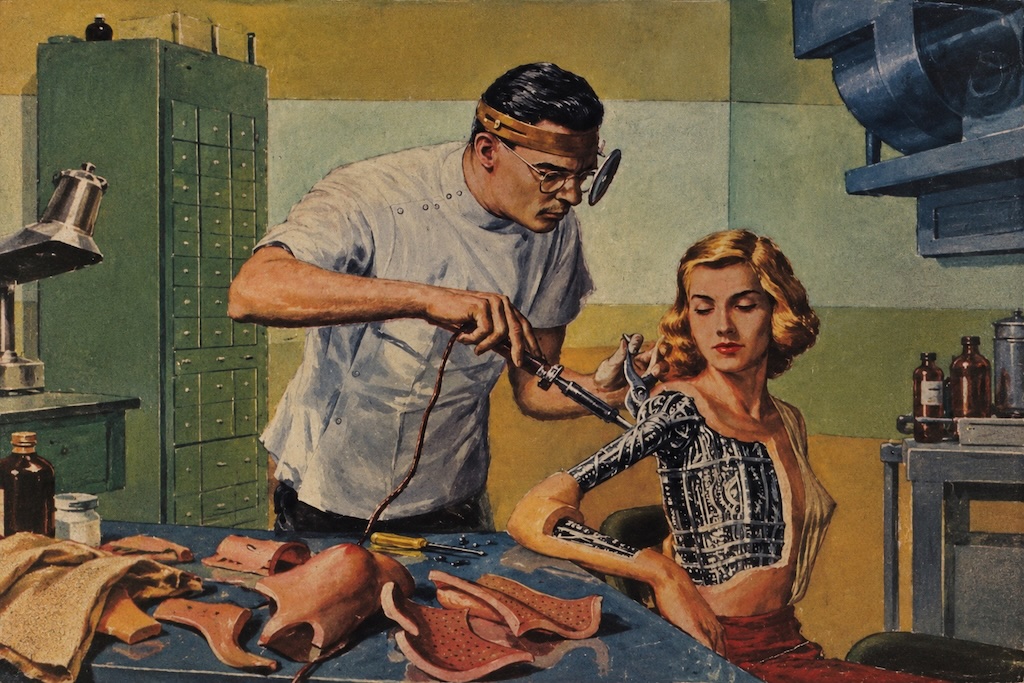

As a counterpart to cyberpunk, biopunk shifts some of the focus away from computers, networks, and electronic implants and toward the control and transformation of living organisms. Concepts such as biohacking, biotechnology, genetic modification, and experimentation thus appear in dystopian fiction such as Gattaca and Resident Evil.
Beyond the biopunk aesthetic, this subgenre raises cultural and social conflicts that align with questions raised by current scientific advances: who can modify an organism, who controls these technologies, what happens when the body becomes information, and to what extent can a biological trait determine a person’s opportunities.
This article explains what biopunk is, how it differs from cyberpunk, what some of its historical roots are, and why it is once again relevant in light of advances in genetics, synthetic biology, biohacking, and artificial intelligence applied to the life sciences.
What Is Biopunk?
Within science fiction, biopunk focuses on biotechnology and the social consequences of intervening in living organisms. It shares with cyberpunk themes of concentrated power, inequality, and technological control, though it typically brings genes, cells, tissues, microorganisms, reproduction, and modified bodies to the forefront.
Researcher Lars Schmeink studies biopunk as a subgenre that emerged from cyberpunk and analyzes how these stories take scientific advances into scenarios where bodily transformations have political, economic, and social consequences.
When did biopunk emerge, and how is it related to ribofunk?
The term “biopunk” was already in circulation during the first half of the 1990s. Michael Quinion noted in 1997 that it had emerged at the beginning of that decade as a biology-focused offshoot of cyberpunk.
Paul Di Filippo coined “ribofunk” as a term for science fiction centered on the biological revolution. The name combines “ribosome” with “funk” and sought to place biology in a role similar to the one computing had occupied in cyberpunk. His collection *Ribofunk*, published in 1996, helped solidify this movement. Di Filippo himself explained that “ribofunk” was a neologism he coined, focusing on biology as one of the great sciences of the future.
What are the characteristics of biopunk?
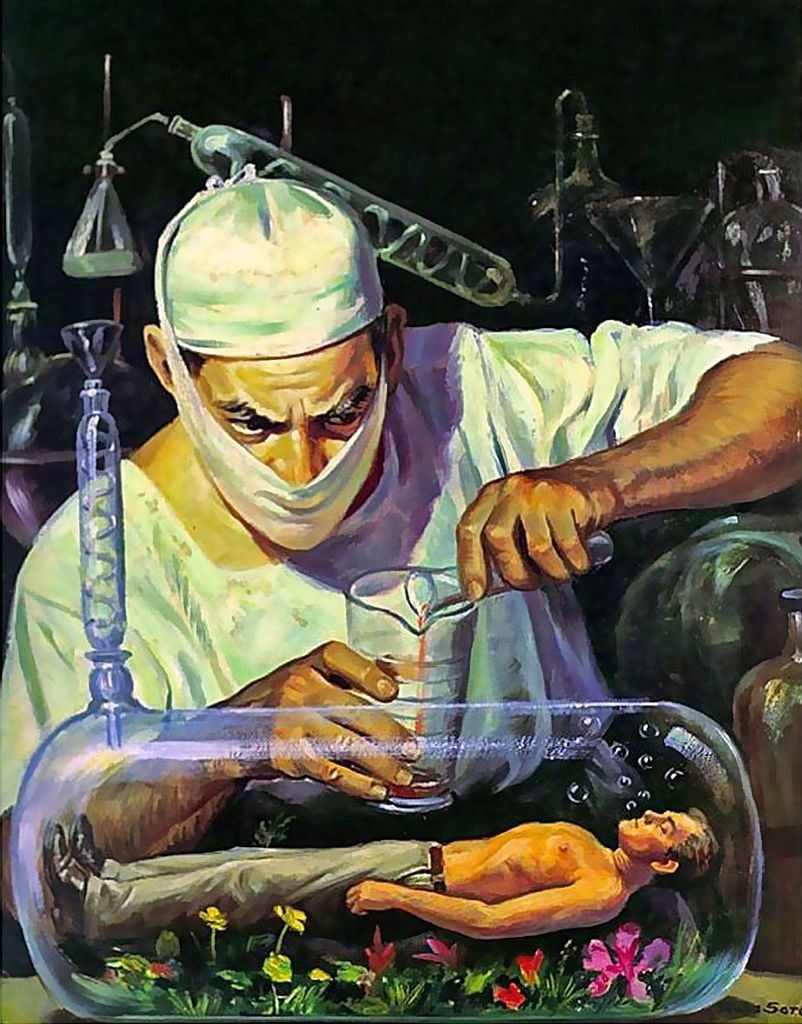
Among its most common characteristics are the modification of organisms, cloning, the use of genetic information, biological experiments, and the emergence of technologies capable of altering the body’s capabilities. Also common are biomedical companies, laboratories, artificially created biological agents, and conflicts over who controls technology capable of intervening in life.
Biohacking emerges when experimentation moves beyond large scientific centers and into the hands of communities, hobbyists, or individuals. In reality, DIY biology encompasses a wide range of practices and seeks to bring biological tools and knowledge to settings outside of universities or companies. In biopunk science fiction, this possibility is often taken further, featuring characters capable of modifying organisms on their own, makeshift laboratories, or biological technologies circulating outside institutional controls.
Another common theme is the economic value of the body. DNA, tissues, cells, or biological capabilities can become products, intellectual property, or instruments of control. This raises questions about identity, bodily autonomy, discrimination, and unequal access to technologies capable of altering a person’s health or characteristics.
How does it differ from cyberpunk?
Comparing biopunk and cyberpunk helps to better situate both subgenres, although their boundaries are fluid and many works combine elements of both.
| Characteristics | Cyberpunk | Biopunk |
|---|---|---|
| Common Technologies | Computer networks, cybernetics, virtual reality, and electronic implants | Biotechnology, genetics, cloning, cell culture, and experimentation with organisms |
| Resources That Typically Gain Value | Information, software, data, and network access | DNA, cells, tissues, microorganisms, and biological information |
| Common threats | Surveillance, IT control, and concentration of information | Genetic discrimination, biological experimentation, and control over organisms |
| Common aesthetic practices | Neon, electronic devices, big cities, and connections between body and machine | Laboratories, altered bodies, mutations, biological cultures, and artificially produced organisms |
| Social conflict | Concentration of technological power and surveillance | Control of biomedical technologies and unequal access to bodily interventions |
| Common modifications | Prostheses, implants, and neural interfaces | Cellular or genetic alterations, cloning, cultured organs, and biotechnological treatments |
In cyberpunk, hackers, mercenaries, researchers, and characters who rely on implants or computer systems are common. Biopunk science fiction may focus on scientists, doctors, clones, experimental subjects, or people affected by biological technology. The difference usually lies in the central conflict: computer and mechanical systems in one case, and the ability to intervene in life in the other.
The Obsessions of Biopunk
From viruses to body modification, biopunk revisits concerns that appeared in science fiction long before the subgenre had a name. An important precursor is *Daedalus; or, Science and the Future*, a text presented by geneticist J. B. S. Haldane in 1923. In it, he imagined a future where human reproduction could be achieved through ectogenesis and outlined scenarios of reproductive selection, while also anticipating the strong social backlash that certain biological innovations might provoke. These ideas foreshadow a question that would later become a recurring theme in biopunk: what happens when reproduction and biological characteristics can be subject to technical decisions?
Science subsequently progressed through various stages. In 1953, the double-helix structure of DNA was elucidated; during the 1960s, understanding of the genetic code expanded; and in the following decade, recombinant DNA techniques opened up new possibilities for working directly with genetic material.
Science fiction seized upon these possibilities and began to imagine organisms engineered to perform specific functions, bodies that could be modified, and systems in which genetic information defined a person’s status. This is where one of biopunk’s central obsessions emerges: the tension between autonomy over one’s own body and the power of governments, corporations, or institutions to intervene in it. Biohacking brings this same question to a more everyday scale, because the increased accessibility of certain tools also changes who can experiment with them.

Essential Works for Understanding Biopunk
Many of the ideas we now associate with the genre appeared before the term even existed. That is why some works serve as precursors, while others are already part of the cultural context in which biopunk developed.
Mary Shelley’s *Frankenstein*, published in 1818, is one of its most obvious precursors due to its focus on creating life through scientific procedures. It is also significant for the consequences faced by those who tamper with life. The novel leaves the procedure used by Victor Frankenstein ambiguous.
Another precursor is H. G. Wells’ *The Island of Doctor Moreau*, published in 1896. Its scientist performs surgical experiments on animals to transform them into creatures with human features—an early exploration of the limits of intervention in living beings.
During the 20th century, Aldous Huxley’s *Brave New World* was published in 1932. The novel envisions artificial reproduction, embryo selection, and biological and social conditioning to divide people into castes. These characteristics make it an important precursor to later works of fiction dealing with eugenics, reproductive control, and biological determinism.
William Gibson’s *Neuromancer* remains a central work of cyberpunk. However, its depictions of medical interventions, toxins, and mechanisms of bodily control demonstrate the extent to which the boundaries between the two subgenres can blur. Among the works most directly linked to this movement, Paul Di Filippo’s *Ribofunk* is a foundational text. This is due to its explicit intention to envision a science fiction marked by biotechnology.
In film, Andrew Niccol’s *Gattaca*, released in 1997, extends these concerns to reproduction and genetic discrimination. Eugenics refers to ideas and practices aimed at influencing human reproduction with the purpose of favoring certain hereditary characteristics. The film imagines a society where reproductive selection allows for the choice of embryos with specific characteristics. Furthermore, genetic information determines access to jobs and opportunities. Vincent, conceived without this selection process, is marked from birth by the predictions associated with his genome. A study in the Journal of Medicine and Film specifically analyzes genetic determinism, eugenics, and genetic discrimination in *Gattaca*. This transformation of biological inheritance into a social criterion is one of the film’s main connections to biopunk.
In video games, Resident Evil began in 1996, when Capcom released the first title in the franchise. Its connection to biopunk is evident in the constant presence of biomedical corporations, viruses, and other biological agents, as well as experiments on organisms and bio-organic weapons. Throughout the series, the T-virus, the Plagas, and other agents with varying effects appear. Among the creatures developed as bio-organic weapons is the Tyrant, linked to the T-virus.
The series *Orphan Black* (2013–2017) offers another example closely related to biopunk. Its story revolves around cloned women whose bodies and genetic material are tied to research programs and biotechnology companies. Conflicts over human cloning, genetic modification, control over bodies, and biotechnology corporations place biology at the center of the plot.
Why is biopunk relevant again?
Biopunk science fiction becomes particularly interesting when some of the technologies it imagined begin to form part of real-world research and treatments. Questions about access, safety, and control are already part of scientific and social debates.
One of the best-known examples is CRISPR-Cas9. Genome editing encompasses technologies capable of adding, removing, or altering genetic material at specific points in DNA, and CRISPR-Cas9 is one of the best-known systems. Its applications range from research to the study of potential treatments for various diseases.
The possibility of editing human cells raises safety concerns. It also sparks debates about changes to germline cells or embryos that could be passed on to future generations and the use of these tools to modify human traits. The WHO has developed recommendations and a framework for governance and oversight regarding human genome editing.
Synthetic biology expands these possibilities by combining knowledge and tools to build or reorganize biological systems. The UNAM School of Chemistry describes it as a discipline that integrates principles of engineering and biology to assemble DNA components and produce systems capable of generating compounds of medical, food, or industrial interest. In practice, it can utilize tools from molecular biology and genetic engineering within processes for constructing, testing, and fine-tuning new biological systems. For biopunk, this capability brings to life one of its recurring ideas: using organisms and biological components to achieve new functions.
Something similar occurs with personalized or precision medicine. This approach can integrate genomic and molecular information with clinical, social, environmental, and behavioral data to improve our understanding of diseases. In this way, it can guide health decisions tailored to individual characteristics. The connection to biopunk emerges as a person’s biological information becomes increasingly valuable for making medical decisions. At the same time, it raises questions about privacy, data protection, and potential forms of genetic discrimination.
Artificial intelligence adds another layer to this relationship between digital systems and biology. It can currently be used in the analysis of genomic information, the study of proteins, and the search for new molecules. Furthermore, it helps optimize certain gene-editing tools. The 2024 Nobel Prize in Chemistry was awarded to David Baker for the computational design of proteins. It also honored Demis Hassabis and John Jumper for the prediction of protein structures. An article from the UNAM School of Chemistry explains how these advances and artificial intelligence tools have accelerated the study of protein structure and function.
This is where certain elements of cyberpunk and biopunk begin to converge. Computer technologies can play a direct role in the study of molecules, genes, and organisms. Consequently, digital information and biological information no longer appear as separate worlds.
Biopunk remains science fiction, but its questions are becoming increasingly familiar: who controls the technologies that intervene in life, who has access to them, what information can be extracted from our bodies, and how far should our ability to modify them go? As genetics, synthetic biology, biohacking, and artificial intelligence expand these possibilities, the genre continues to offer a space from which to imagine their consequences.