

What Is Mexican Tribal? The History of Tribal Guarachero, From Mexico City to Monterrey

Mexican tribal, better known at different points as tribal guarachero or simply tribal, is a form of electronic dance music that combines club structures with cumbia, guaracha, Latin American percussion and sounds associated with Mexican musical traditions.
For years, however, talking about Mexican tribal seemed to require explaining the pointy boots first, followed by the viral videos or the success of 3Ball MTY. Behind that imagery lies a considerably more complex musical history. Tribal began to develop among electronic music producers in Mexico City experimenting with Latin American percussion, club rhythms and sounds associated with pre-Hispanic imagery. It later found a particularly receptive community in Monterrey, developed a dance culture of its own across northern Mexico and eventually reached international stages.
What Is Mexican Tribal Music?
Mexican tribal is electronic music made for dancing. Its synthesizers, basslines, percussion and rhythmic patterns were designed to produce movement, combining elements that did not fit comfortably within the established categories of electronic music.
One of its most recognizable characteristics is the rhythmic movement produced by triplets. Toy Selectah described tribal guarachero as music hovering around 132 BPM, built around a triplet swing that can feel much slower because of the cumbia shuffle underneath it. That combination gives the rhythm a sensation distinct from the regular grid that dominates much of house or techno.
The distinction matters because tribal guarachero should not simply be confused with tribal house. Although the early history of the Mexican genre intersects with tribal house, it developed a language of its own through cumbia basslines, Latin American percussion, pre-Hispanic references and regional musical influences.
The guacharaca, güira, congas, timbales and claves could coexist with electronic kick drums, processed sounds and synthetic basslines within the same track.
The Guardian was already describing that combination in 2010, pointing to the mixture of congas, güira, claves and timbales with electronic production, as well as accordions and flutes associated with Mexican musical traditions. It also highlighted the cascading triplets that give the music its peculiar sensation of constantly moving forward while almost tripping over itself.
The result was not simply house music with Mexican instruments, nor was it an electronic version of cumbia. It was not techno either, even if it borrowed the insistence of club music. Its identity existed precisely in the mixture.
What Does “Tribal Guarachero” Mean?
The term tribal guarachero emerged as a way of describing one stage in that evolution. Guarachero refers to guaracha and a broader tradition of Latin American dance music, while tribal was already circulating among producers connected to tribal house and compositions incorporating percussion and samples associated with pre-Hispanic imagery.
A reconstruction published byEl País places an early phase of “tribal prehispanic” around producers such as Ricardo Reyna. It describes how the later incorporation of cumbia basslines, guacharacas, maracas, congas, güira, claves, timbales and Afro-Caribbean vocals became associated with the name tribal guarachero. When the sound reached Monterrey, expressions such as Tribal Monterrey also appeared. Later came the stylized spelling 3Ball.
For that reason, tribal, tribal guarachero, 3Ball and Tribal Monterrey can describe closely connected parts of the same history, but they are not perfect synonyms. The terminology changed with the cities, producers and different stages of the movement. It is more accurate to think of tribal as a family of sounds and an evolving musical scene than as a rigid category.
Where Did Tribal Guarachero Begin?
The history contains one detail that contradicts one of the most persistent ideas about the genre: Monterrey was fundamental to its expansion, but the earliest documented developments of the sound appeared in Mexico City.
Toy Selectah’s reconstruction of the scene points to Mexico City producers including Ricardo Reyna and DJ Mouse as part of the original blueprint. In that early stage, tracks combined an electronic foundation with percussion and sounds evoking pre-Hispanic imagery. The language later began incorporating cumbia and other elements more heavily, moving closer to what would eventually become known as tribal guarachero.
Ricardo Reyna occupies a recurring place in that genealogy. In 2004, he released “Danza Azteca,” a track that crossed tribal house with sounds associated with pre-Hispanic music. A year later, DJ Mouse and Manuel Palafox developed productions featuring cumbia basslines, guacharacas, percussion and vocals, expanding the formula.
There is no single birth certificate for tribal, but there is a recognizable sequence of producers modifying a shared language before its massive expansion in northern Mexico.
The question connecting them was relatively simple: what could happen if the sounds of Mexican and Latin American music entered directly into an electronic dance track?
The answer did not require a major label or expensive recording studios. The scene grew at the same time that personal computers, production software, MP3 files, forums, exchanges between DJs and download sites made it possible to build music and circulate it through networks operating outside the traditional music industry.
How Tribal Guarachero Reached Monterrey
Monterrey became decisive because the city already had a particularly strong relationship with cumbia and dance music. Toy Selectah has explained that the long circulation of Colombian cumbia in the city — and the local forms that eventually developed around musicians such as Celso Piña — prepared an audience capable of immediately recognizing the possibilities of this new mixture. Tribal found fertile ground there and began acquiring another personality.
The process also coincided with a generation that could produce music on a personal computer without needing access to a professional studio. Erick Rincón has recalled discovering FL Studio on his brother’s computer and beginning to use it without formal training, learning from tutorials and initially producing trance, house and reggaeton. By the time he encountered tribal, he could use the same software to experiment alongside Sheeqo Beat.
FL Studio does not explain the birth of the genre by itself, but it reveals how the infrastructure around it worked. A young producer could take a guacharaca, an accordion, a voice or a cumbia bassline from a personal library and alter the sample. They could program a beat, export an MP3 and send it to another DJ without ever entering a professional recording studio.
The songs could then end up on Myspace, file-sharing pages, pirated CDs sold at a tianguis — an open-air market — or on the computers of other producers. Chico Sonido described this generation as young people who had grown up with computers, FruityLoops, YouTube and digital libraries they assembled and exchanged themselves.
That circulation also had a physical life. Digital files were burned onto discs and sold in markets such as Monterrey’s Puente del Papa. From there, they could end up at tardeadas — all-ages afternoon dance parties — quinceañera parties and clubs catering to younger crowds. The internet and the street market could form part of the same distribution system.
One of the most important physical spaces in that system was Arcoíris Club. Contemporary accounts describe the Monterrey club as a central refuge for tribal guarachero, drawing thousands of young people on Sunday afternoons. Erick Rincón would later recall that tribal in Monterrey was sometimes known as música arco because of its association with the club. Arcoíris provided something the MP3 alone could not: a place where the music could become a scene.
Mexican Pointy Boots and Tribal Dance Crews
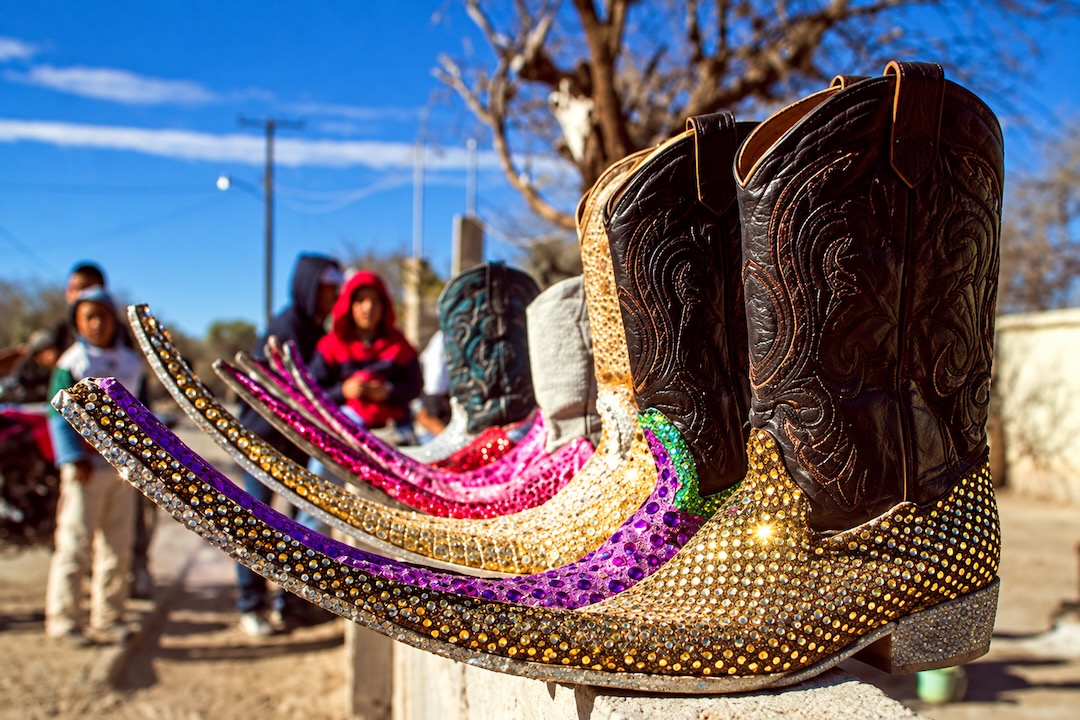
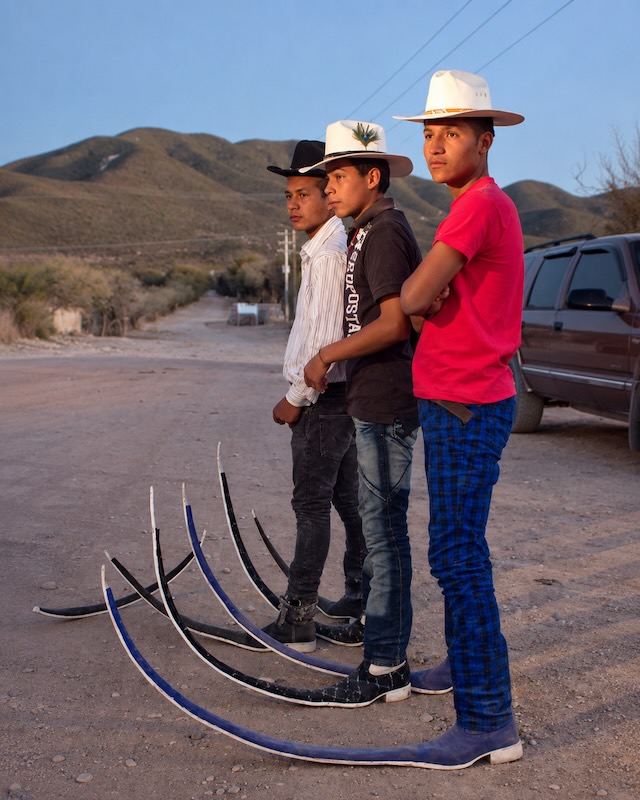
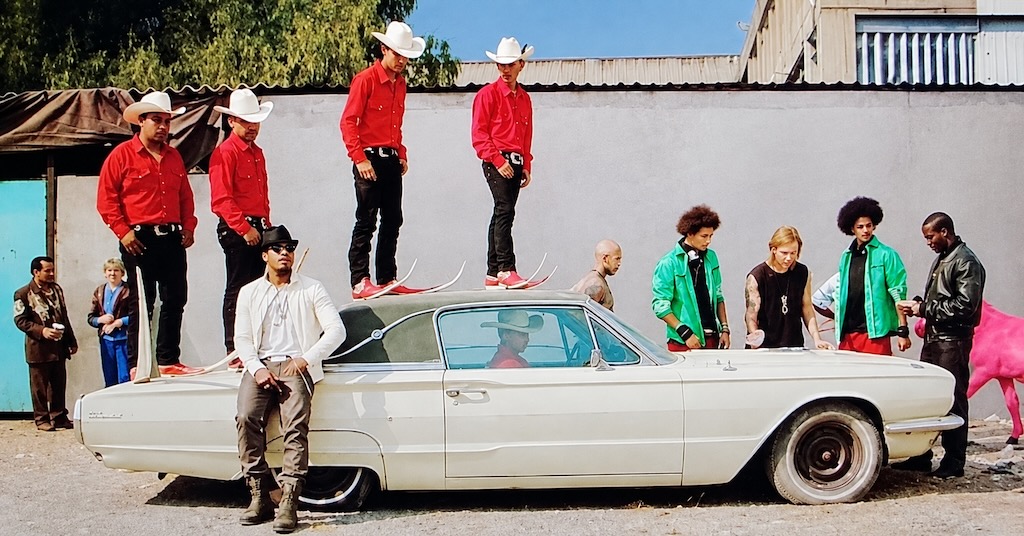
The music did not travel alone. Around it emerged a visual culture that eventually became its most internationally recognizable image: the botas tribaleras, or Mexican pointy boots. It is important to separate the histories. Tribal guarachero did not originate with the pointy boots, and the boots did not emerge at the same time as the earliest Mexico City productions.
Research by Anja Bandau and Anne Brüske places the emergence of the pointy-boot fashion around 2009 in Matehuala and nearby communities in San Luis Potosí, when young men began organizing all-male crews to compete in tribal dance contests.
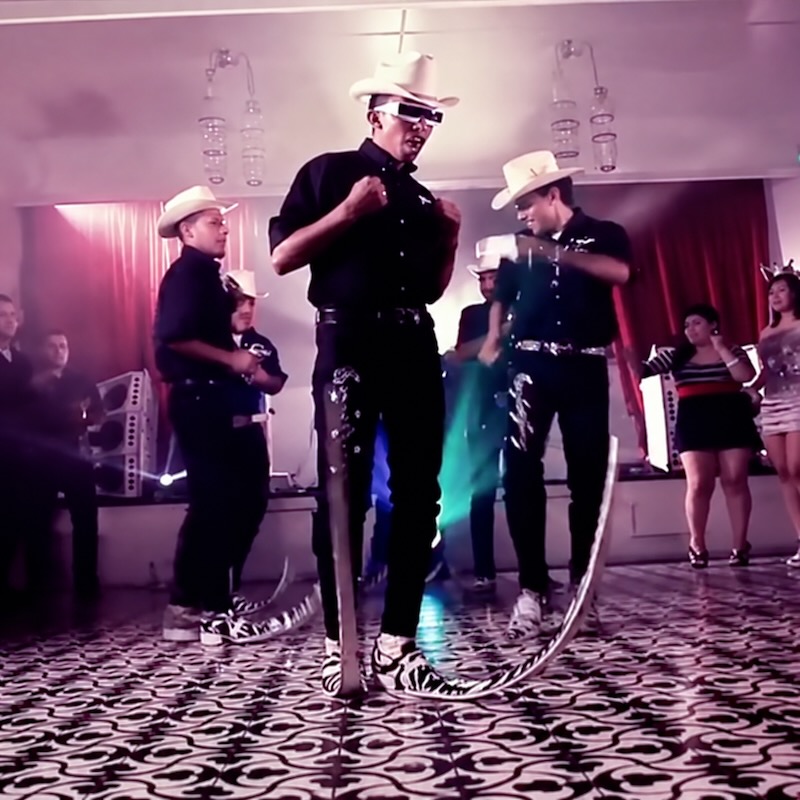
The exaggeratedly long boots were not simply an eccentric accessory. Dancers modified cowboy boots themselves using plastic tubes, leather, screws, sequins, lights and other materials. They paired the footwear with matching Western shirts and skinny jeans so the elongated points would become even more visible during choreography. Crews could spend weeks preparing their movements and competing against one another.
The shape of the footwear visually amplified every step. A point extending far beyond the foot turned relatively small movements into enormous gestures, while synchronized groups of dancers made the choreography legible even in low-quality online videos.
VICE documented competitions in Matehuala where groups such as Barrio Apache Hyphy danced tribal in boots they had made themselves. That visual component allowed local scenes to travel across the internet in a way an audio track alone probably could not. Videos of dancers began circulating outside San Luis Potosí while the boots appeared on television, blogs and international media.
A dance culture built around local competitions became recognizable even to people who had never heard of Ricardo Reyna or DJ Mouse. Eventually, that image partially eclipsed the music itself. For much of the outside audience, tribal became synonymous with impossibly long pointy boots. Virality helped the genre become recognizable, but it also made it easier to treat a complex musical scene as a visual curiosity.
How 3Ball MTY Took Tribal Guarachero Global
By the time 3Ball MTY appeared, tribal already had a history.
Erick Rincón, Sergio Zavala — Sheeqo Beat — and Alberto Presenda — DJ Otto — formed the Monterrey collective in 2009. All three were teenagers, and they had connected through the internet and the small network of producers exchanging music in the city.
Rincón later explained that the name developed organically. He and Sheeqo were placing “3BallMTY” in the names of their files and using IDs saying “Tribal Monterrey” or “Colectivo Tribal Monterrey.” They eventually incorporated Otto, whose tracks they were already playing in their sets.
The group’s name condensed something that was already happening around them.
The importance of 3Ball MTY was not that they invented the genre. It was that they transformed the language of a relatively small scene into something capable of circulating through the mainstream channels of the music industry.
Toy Selectah played an important role in that transition. He had encountered the collective’s music on a disc purchased at the Puente del Papa market and later contacted them through Myspace. His experience with Control Machete, Mexican electronic music and A&R work allowed him to connect the young producers with a much larger industry structure. In 2011, 3Ball MTY signed with Latin Power Music, a division of Universal Music.
That same year came Inténtalo. Its title track, featuring América Sierra and El Bebeto, carried the sound to an audience that probably had never encountered the underground tribal scene. “Inténtalo” eventually reached No. 1 on Billboard’s Hot Latin Songs chart for two non-consecutive weeks, while 3Ball MTY won the Latin Grammy for Best New Artist in 2012.
A musical language built around digital files, afternoon parties and small networks of DJs had suddenly entered the central machinery of the Latin music industry. The transition also changed the recordings themselves. The irregular, homemade energy of the early tracks began to coexist with professional production and singers associated with pop and regional Mexican music.
Tribal could now play on radio, television, in taxis and at weddings without completely disappearing from the spaces where it had developed. The internationalization did not stop with the charts. In 2013, 3Ball MTY appeared at Coachella, after already performing outside Mexico. Music that only a few years earlier had circulated through MP3 files and market CDs was now sharing festival programs with some of the biggest names in the international music industry.
But the rest of the scene did not disappear. Producers including DJ Mouse, Javier Estrada, Siete Catorce and others continued working with tribal rhythms from different positions: some more tropical, others darker, experimental or closer to local electronic scenes. That distinction matters. 3Ball MTY took tribal to a scale nobody else had achieved, but their commercial success was never the complete history of the genre.
Why Mexican Tribal Is Being Rediscovered
Calling what is happening now a “revival” requires some caution. It does not mean tribal disappeared completely, nor does it mean the genre once again dominates dance floors as it did during its period of greatest commercial exposure. What can be documented between 2022 and 2026 is a process of recovery, recirculation and reinterpretation.
In 2022, Remezcla revisited the legacy of “Inténtalo” ten years after it reached No. 1 and found tribal circulating again both on TikTok and in underground electronic scenes. The article also returned to producers such as Siete Catorce, Javier Estrada and Debit to show how the sound had continued evolving away from its commercial peak. By 2025, that recovery was becoming visible through new releases.
NAAFI releasedTRIBAL 2025in December 2025, a compilation bringing together 21 producers approaching the genre from contemporary perspectives. Among them are Debit, Siete Catorce, Lao, Zutzut, DJ Fucci, Clap Freckles and a newer generation using tribal patterns alongside other forms of club music.
NAAFI itself presented the project not simply as nostalgia but as both a tribute and a reinvention: an attempt to place tribal’s rhythmic language in conversation with contemporary experimental music. That makes “comeback” an insufficient word.
Part of what is happening is nostalgia and rediscovery. Another part involves returning to old archives, producers and techniques to make something different from them. Tribal is circulating again because one generation can now hear its first period from a historical distance, while another never stopped using its rhythms.
Rosa Pistola and the Recovery of Tribal’s Archive
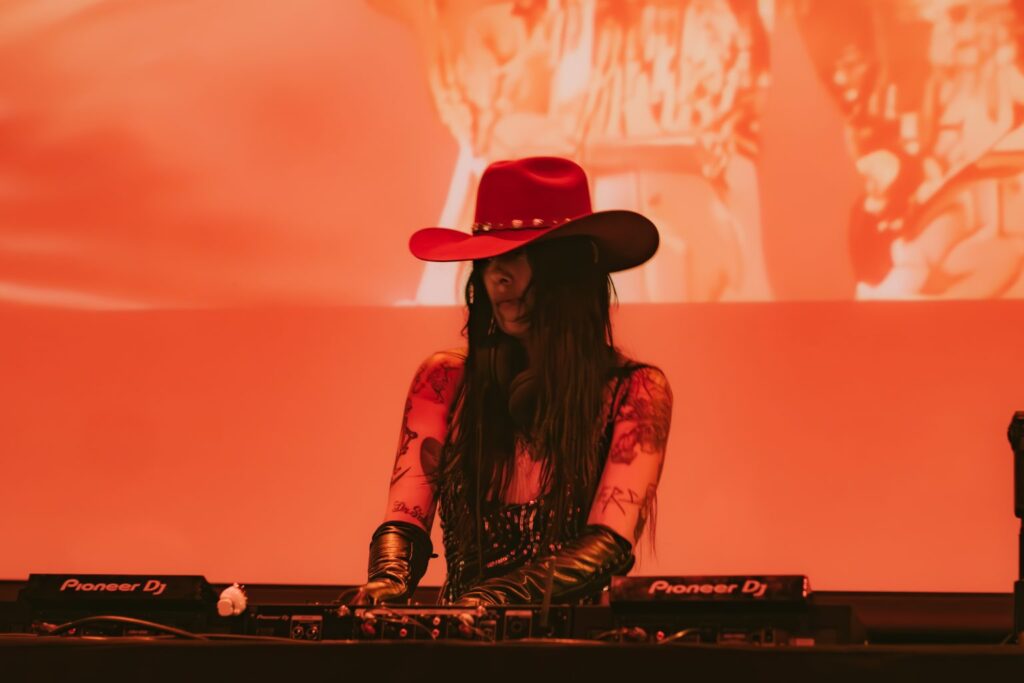
Rosa Pistola is part of that recovery. Born Laura Puentes in Colombia and based in Mexico for years, the DJ’s career is closely connected to Mexico City’s underground scenes and to an approach to Latin American music that moves between reggaeton, cumbiatón, merengue, Brazilian funk, guaracha and tribal.
Before concentrating on those sounds, Puentes had been involved in punk, noise and experimental music projects. During the 2010s, she became a regular presence in Mexico City’s underground reggaeton scene, working as a promoter and producer and later running La Chekera Records.
Her relationship with tribal did not appear out of nowhere. Rosa Pistola has explained that she began going deeper into the genre through Lao’s ESTADO parties in Mexico City and a NAAFI compilation dedicated to the sound. From there, she began researching its producers and incorporating tribal into her own musical work.
In 2026, that relationship became particularly visible. Alongside Incorregible, an album crossing regional Mexican music with electronic production, Rosa Pistola developed an archival project focused on producers from different stages of tribal’s history.
Dioses Tribalesbrings together eight tracks by Ricardo Reyna, DJ Mouse, DJ Tetris, Freebot, Alfonso Luna, Javier Estrada, Clap Freckles and DJ Morphius. Produced by Trucha Soul Records, Sabotaje Media and La Chekera Records, the 2026 compilation connects producers from different periods and geographies.
Rather than concentrating exclusively on the moment when 3Ball MTY brought tribal into the mainstream, the project returns to names associated with stages before, during and after that commercial explosion. That is where the usefulness of Dioses Tribales becomes apparent.
Much of this music emerged in an era of MP3s, vanished websites, pirated discs and files that could circulate without ever receiving a lasting physical release. Bringing producers such as Ricardo Reyna, DJ Mouse and Javier Estrada together in one compilation makes it possible to hear connections that had previously remained scattered.
It is one thing to remember that there was once a musical genre associated with pointy boots. It is another to listen again to its producers, trace the connections between them and begin reconstructing a genealogy.
Tribal After Tribal
The genre’s influence did not end with 3Ball MTY’s commercial peak. In the years that followed, producers within Mexican electronic music returned to tribal’s swing, percussion, structures and ability to combine local references with global club languages.
NAAFI offers one of the clearest examples. The Mexico City collective and label cannot be considered a direct continuation of tribal. Its catalog draws from many other genealogies of electronic and Latin American music. But several producers connected to it have explicitly worked with tribal’s language. One of them is Debit, a Mexican American producer who encountered tribal while living in Monterrey.
HerSystemEP was described as a reconstruction of tribal guarachero, stripping away some of the genre’s exuberance to focus on the percussion patterns at its core. Debit has also described tribal guarachero as a genre that suffered a form of class-based rejection within parts of Monterrey’s electronic music scene, an experience that influenced her interest in revisiting it.
TRIBAL 2025 made that relationship explicit by bringing together producers connected to NAAFI with musicians from different generations. The result does not attempt to reconstruct the sound of 2009 exactly. Some tracks preserve the genre’s recognizable swing. Others push it toward abstract textures, circuit rhythms and experimental forms of club music.
Tribal, then, is not returning as an intact historical object. It can appear as a rhythm, a technique, a structure, a sample or simply a point of departure. Its influence survives precisely because producers can dismantle it and use only one part.
More Than a Meme: The Cultural Legacy of Mexican Tribal
The history of tribal is also a history of who gets to decide which music deserves to be taken seriously.
For years, the public conversation around the genre was dominated by pointy boots, viral videos and a certain fascination with the supposedly bizarre. The music itself could easily disappear into the background. That is where class becomes difficult to ignore.
The communities associated with the boots developed among young people in Matehuala and rural or semi-rural communities in San Luis Potosí. The studyMexican Pointy Boots and the Tribal Scene examines how the footwear operated as a form of belonging, competition and identity among young people and migrants.
The boots could be made from relatively inexpensive materials, but they required time, skill and creativity. Within the community, their value did not depend on the fashion criteria applied to them from outside. When those images reached national and international media, the scale of values changed.
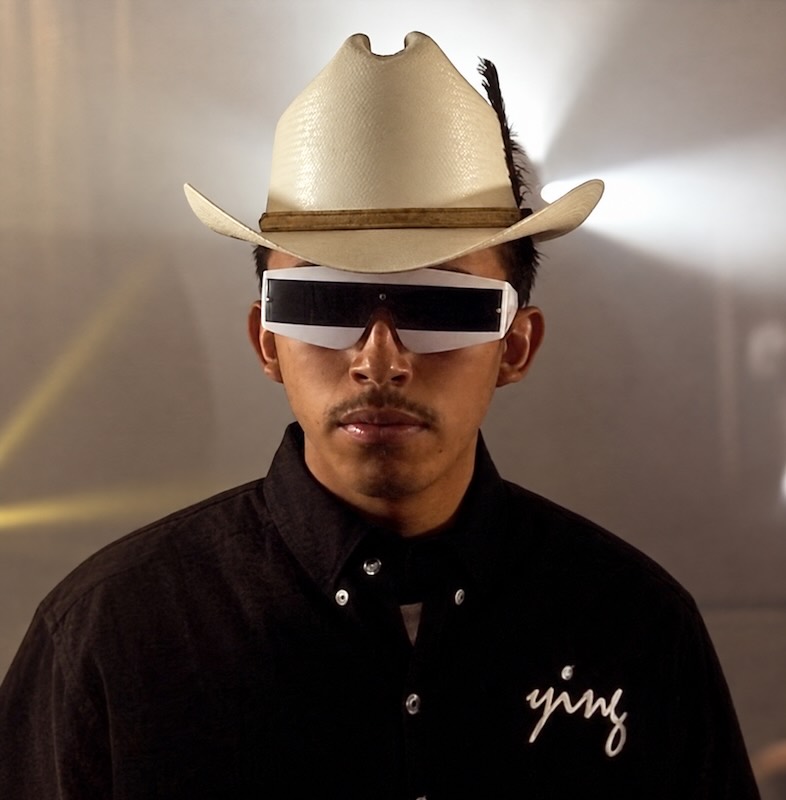
The enormous points, cowboy hats, coordinated shirts and choreography were easy to turn into viral content. During that transition, a form of youth expression could be presented as an oddity before it was understood as part of a community with its own codes.
There was also distance between some urban producers and the dancers who eventually became the genre’s most internationally recognizable image. The same research points to tensions between the electronic identity of some DJs and the rural aesthetic associated with the boots.
The relationship between music, class and territory was more complicated than a single perfectly unified scene. Something similar occurred within parts of electronic music itself. Debit has described tribal guarachero as having suffered a kind of “classist self hatred” and recalled that it could sometimes clear dance floors in Monterrey. Her observation points to a real tension within the scene, although it does not mean every rejection of tribal can simply be reduced to classism.
There were musical criticisms, reactions against particular commercial productions, debates around the use of sounds and a backlash against the sudden mass exposure that transformed the genre into a radio and television product.
But there was also a cultural hierarchy. Certain forms of house or techno could be presented as serious electronic music while tribal was read through its boots, neighborhoods, afternoon parties and the social origins of part of its audience.
Even members of 3Ball MTY acknowledged a difference between their commercial version of the sound and producers continuing to explore tribal in other directions. The legacy becomes clearer when that variety is actually heard.
Mexican tribal built a recognizable musical language through cumbia, percussion, local imaginaries, accessible software, shared files and dance communities. Then it achieved something less common: music developed far from the dominant models of international electronic culture moved from street markets and afternoon parties to radio, awards ceremonies and global festivals without completely erasing the codes of the places where it began.
A History That Is Still Being Written
Mexican tribal left a deeper mark than its period of greatest visibility initially suggested. It began with electronic experimentation in Mexico City, found another identity through cumbia and the dance cultures of northern Mexico, and reached enormous commercial exposure through 3Ball MTY. For a time, much of that history became obscured by the viral image of the pointy boots.
But underneath that image, the producers, archives and tracks remained. TRIBAL 2025, Dioses Tribales, Debit’s work and the renewed attention around producers such as Ricardo Reyna, DJ Mouse, Javier Estrada and DJ Morphius suggest that tribal never completely disappeared.
What changed was where — and by whom — it was being heard. One generation encountered it at afternoon parties, street markets and through MP3 files. Another found it through “Inténtalo” and the pointy boots. A new generation is returning to its producers, rhythms and archives and using them differently.
Sometimes tribal now appears almost intact. Elsewhere it survives as little more than a rhythmic pattern, a percussion sequence or a reference inside another track. More than two decades after its earliest recordings, Mexican tribal is still playing. Its history is still being written.