

Who is Jeff Mills, and why does he remain one of the most influential voices in techno?
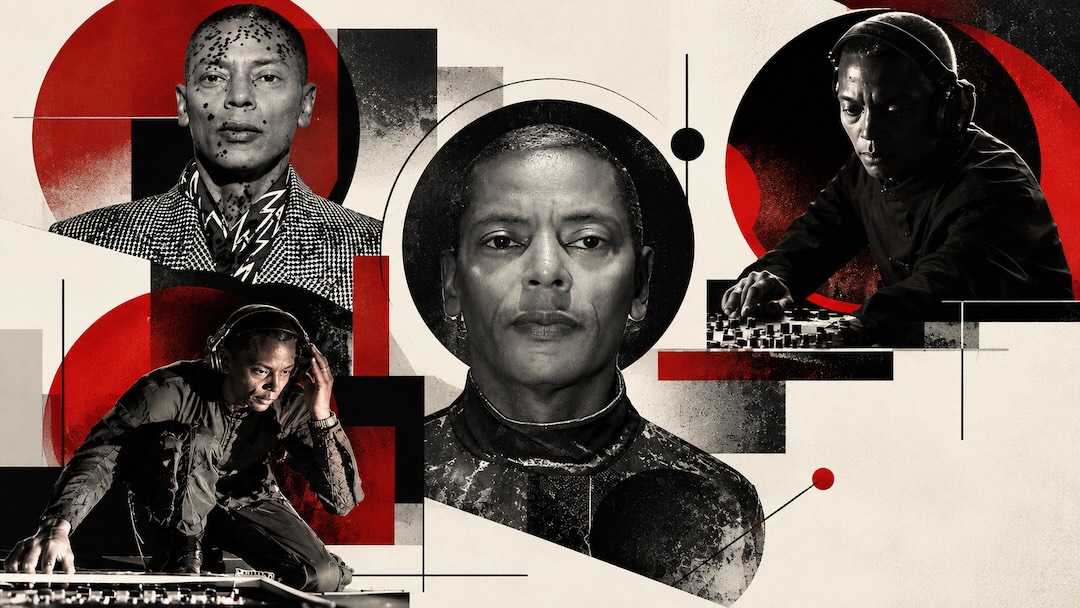

Detroit is a city of great musical significance in American history. Also known as Motor City, it is the birthplace of artists ranging from the MC5 and the Stooges to the White Stripes. Beyond electric guitars, it is also the place where Jeff Mills took techno from the underground to venues such as the Centre Pompidou, the Louvre, and symphony halls. At the same time, he combined it with cinema. He also merged it with technology, science fiction, and futurism.
Today, electronic music is present in every sphere. The role of the disc jockey (DJ) can now take center stage—a place reserved for rock stars just decades ago. However, Jeff Mills took a different path. His career began before techno had gained international traction. Moreover, much of his subsequent work has centered precisely on exploring what a DJ can do. Beyond simply selecting music for a dance floor, he seeks out new possibilities.
Who is Jeff Mills?
Jeff Mills was born in Detroit on June 18, 1963, and began working as a DJ after graduating from high school. During the 1980s, he became a local radio personality under the name The Wizard, working first at WDRQ and later at WJLB. On these stations, he performed live mixes that blended hip-hop, electro, house, new wave, and the early sounds of techno. Furthermore, his radio work caught the attention of The Electrifying Mojo, one of the key figures for understanding Detroit’s music culture during those years.
His place in the history of techno requires some clarification. Juan Atkins, Derrick May, and Kevin Saunderson—the so-called Belleville Three—belong to the core group of producers associated with the first generation of Detroit techno. Mills developed much of his body of work later on and eventually became one of the central figures of the so-called second wave. What he inherited from that first generation was the ability to create electronic music using machines, funk, electro, and a forward-looking imagination. He also contributed by taking those elements toward a faster, harsher, and more stripped-down sound. He also transformed mixing into a much more physical activity.
Part of that technique was developed precisely on the radio. Mills explained that he learned to operate three turntables starting in 1983 because the WDRQ studio had a third backup deck. Little by little, he began using it to maintain the sensation that the music was constantly in motion. He also used it to incorporate more records in short bursts. Over time, this way of working became one of his trademarks: layering different records. In addition, he isolated frequencies and used fragments as if they were parts of a composition. In this way, he created music in the moment.
As part of his contribution to music, he also transformed the sound of drum machines like the Roland TR-909 into truly demonic drills. The machine appeared in both his productions and his live performances. There, Mills could program patterns, modify percussive layers, and play it in real time. In an interview with Pitchfork, he explained that one of the advantages of the TR-909 is the power of its sound without excessive processing and the simplicity of its controls. These controls allow him to write patterns quickly. Exhibitionist 2 took that practice to the extreme. It showed Mills switching between three players and the drum machine and improvising with it as if it were an instrument.
Detroit and its industrial history are part of techno’s cultural context. However, the specific pace of Mills’ mixes has a more concrete explanation rooted in his experience as a DJ. His years in radio, hip-hop, and the need to switch records quickly influenced his style. His work with multiple turntables also played a role. The almost mechanical precision of his execution fits with a music born in a city whose identity was linked for decades to factories and automobiles. However, attributing his technique directly to that cultural connection would be an oversimplification of his story.
According to the book *Techno Rebels. The Renegades of Electronic Funk (Alpha Decay Editions, 2019) by the late music journalist Dan Sicko, one of Jeff Mills’s—also known as The Wizard—contributions was to transform DJing into a practice in which records could be used as building blocks. He didn’t just select songs: he manipulated fragments, created dizzying mixes, and used multiple sources simultaneously. Robert Hood described that same speed when talking about Mills editing tapes during his “The Wizard” years: the process, he said, was so fast and precise that watching him work already felt like a performance.
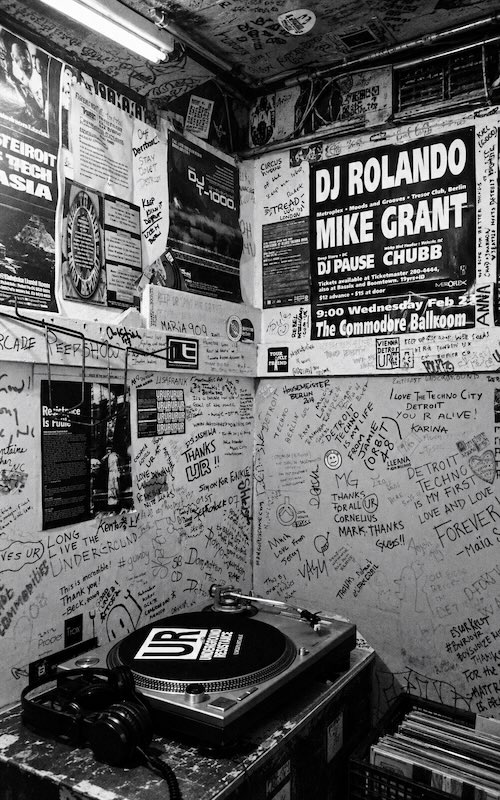
Underground Resistance and a New Vision of Techno
In the late 1980s, Mills met the musician and producer “Mad” Mike Banks. The two founded Underground Resistance (UR) in Detroit around 1989, and Robert Hood joined shortly thereafter, first working on recordings and later as a full member of the group. Hood has said that he entered Banks’ and Mills’ circle while trying to break into the techno scene and that he found in UR an opportunity to develop his own ideas outside the industry’s usual paths.
Underground Resistance emerged when Detroit techno had already begun to gain international traction. The collective drew on elements of that first generation but pushed them toward a harder, faster, and more confrontational sound: dry beats, electro, repetitive sequences, aggressive basslines, and a production style that deliberately retained a certain roughness. Records such as *The Punisher*, *Riot*, *Sonic Destroyer*, and the *X-101*, *X-102*, and *X-103* series made that musical intensity an inseparable part of the group’s identity. Hood himself has explained that Banks and Mills broke away from the established mold and taught him to work from concepts, not just to produce individual tracks.
The difference was also political. Underground Resistance used black uniforms, balaclavas, military codes, communiqués, and titles associated with confrontation, war, or social change. That image wasn’t merely for show: it accompanied a discourse against the exploitation of artists, dependence on major labels, and the transformation of the DJ into a celebrity. A study by Christoph Schaub on African American identity and Detroit techno places UR within a Black tradition of struggle and explains that the collective sought to reconnect this music with African American communities in Detroit while imagining identities that were not restricted by racial categories.
References to organizations such as the Black Panther Party require this context. Underground Resistance’s work has been compared to the Black political tradition of previous decades, but that does not mean the collective functioned as a musical extension of the Panthers. When Mills was asked about that relationship, he linked songs like “Riot” to the historical period in which he and other members had grown up and to the lasting impact that the African American struggles of the 1960s and 1970s continued to have on their generation. Robert Hood, for his part, has described the original members as children of an era marked by the assassinations of Martin Luther King Jr. and Malcolm X and by a constant awareness of racial injustice.
The comparison with Public Enemy is better documented. There was no organic link between the two groups, but there was an affinity that the protagonists themselves and various historians have pointed out. Mike Banks explained that Underground Resistance was built, among other influences, on the strength of Public Enemy, while research on UR has identified a common thread with certain hip-hop traditions: reaching out to urban African American communities and using music as a space to envision social change and distinct identities. Musically, they did very different things; culturally, they shared the idea that music could carry a message without asking for permission.
Independence was the other half of the project. UR operated as both a collective and a label; it avoided relying on major companies, limited the public exposure of its members, and eventually became affiliated with Submerge, a network of musicians, small record labels, and services created in Detroit to sustain musical activity outside traditional corporate structures. Anonymity helped ensure that the logo and the music took precedence over a recognizable face. The result was a way of operating that made control over recordings, distribution, and public identity part of the project’s very essence.
What did Underground Resistance really change within techno? It showed that hardening the sound could go hand in hand with a specific stance on who produces, who controls, and for whom the music circulates. That combination set a precedent that would later resurface in independent labels, among artists who rejected the figure of the superstar DJ, and within scenes that understood techno as a culture with its own infrastructure—not merely as a genre confined to the club.
When Techno Left the Club
The Underground Resistance collective had a fairly short run with Mills as part of its original core. In the early ’90s, he left the group, and in 1992 he founded Axis Records, a label through which he began to develop a body of work increasingly focused on space, time, machines, and science fiction. From that point on, he took his music into territories that did not depend exclusively on the dance floor. Axis Records maintains that continuity between electronic music and space exploration as one of the cornerstones of its catalog.
One of the central examples is *Metropolis*, Fritz Lang’s silent film. In 2000, Mills presented a new electronic soundtrack for *Metropolis* at the Centre Pompidou in Paris, a project he would later revisit from different perspectives. The original version approached the music from the viewer’s perspective; in other reinterpretations, he sought to adopt the perspective of the characters and, later, that of the machines and technology within the film itself. The film allowed him to explore questions that had accompanied techno since its origins in Detroit: what happens when humans and machines share the same space, and where does the tool end and dependence begin?
That work opened up other possibilities. Mills composed new music for films such as Cecil B. DeMille’s *The Cheat* and Fritz Lang’s *Woman in the Moon*, as part of collaborations with the Cinémathèque Française. Silent films proved particularly useful because they allowed him to remove the existing music and construct a new interpretation of the imagery; Mills has explained that his approach began precisely as a way to demonstrate that techno could function as a soundtrack.
Science fiction appears just as consistently. Titles such as “One Man Spaceship,” “Fantastic Voyage,” and “Proxima Centauri” are part of a body of work where planets, space travel, encounters with extraterrestrials, and possible futures serve as starting points. Nor is this fascination limited to the track titles. Mills has explained that he finds a connection between the creation of electronic music and scientific research: both begin by exploring the unknown and building possibilities before knowing exactly where the journey will end.
His engagement with other formats also extended to orchestras. In 2005, he presented *Blue Potential* with the Orchestre Philharmonique de Montpellier; years later, he developed *Light from the Outside World* with the Orchestre National d’Île-de-France. There, techno did not appear as a track played in the background behind classical musicians: Mills’ compositions were arranged for a symphonic ensemble, and his electronic elements coexisted with strings, brass, and percussion. The experiment served to test how much of that music could survive a complete change in the instruments used to produce it.
Museums eventually became part of the same journey. The Centre Pompidou has presented Mills’ projects since 2000, and in 2015 the artist participated as a resident in the Louvre Museum’sDuos Ephémères, a program in which he developed works that blended music, dance, and film. For *Life to Death and Back*, for example, he utilized spaces within the Louvre’s Egyptian collection as part of a piece that explored themes of death, transition, and rebirth.
The Visitor also emerged from this artistic vein. The piece was created in collaboration with artist and musician Yuri Suzuki and presented in Tokyo in 2015 as part of the exhibition Weapons. It was not simply a sculpture of a drum machine: it was a musical instrument made specifically for Mills, with an interface designed for his playing style and inspired by the so-called Battle of Los Angeles of 1942—an air-raid alarm incident that occurred during World War II and eventually fueled stories about alleged flying objects. “The Visitor” was part of an exhibition featuring objects, documents, and installations related to that event and continued to be used in some of Mills’ performances.
Why does Jeff Mills believe techno needs to evolve?
Although he has decades of experience and remains active and constantly creating music, Mills has spent years questioning what happens when technique ends up replacing the reason for making music. In a 2015 interview with Pitchfork, he spoke of a problem that, for him, went beyond knowing how to sync tracks or use software. He believed that DJs had made enormous strides on the technical side. Meanwhile, they were barely beginning to discuss why they create music and what they want to convey through it. Exhibitionist 2 emerged precisely from that concern. Its goal was to showcase technique, but also to deconstruct it in order to examine what lies behind it.
This reflection wasn’t a recent controversy. Mills has spoken for years about technology as something that inevitably shapes electronic music. In 2017, he even envisioned a future in which certain physical machines—and the very figure of the DJ standing behind a booth—might disappear. This would happen as the tools changed. His interest wasn’t in protecting a specific piece of equipment, but in considering what the musician can do. When technical possibilities make a task easier that previously required years of practice, the musician finds themselves in a new landscape.
In another conversation, he explained something that helps us understand why he continues to use multiple turntables and machines when a computer could handle much of the work. The human response to risk and error is also part of a performance. Furthermore, mixing three or four sources requires constant listening, correction, and reorganization. In 2026, while reflecting on the legacy of his famous “Live at Liquid Room, Tokyo” session, he revisited the same idea and championed the knowledge and skill of the person operating the equipment over automated sequencing.
His vision for the future doesn’t mean abandoning techno either. In an interview with DJ Mag, he argued that electronic music’s historical relationship with new technologies is precisely one of the reasons the genre can continue to evolve. For Mills, its advantage lies in the fact that there is still no definitive definition of what electronic music should be. That lack of boundaries explains why he can move from a TR-909 to an orchestra, from a club to a silent film, or from a DJ set to a project about wormholes. He does so without even realizing he’s changing the subject.
In 2026, that idea continues to spawn new projects. Mills premiered *Stargate*, an immersive audiovisual performance centered on interdimensional travel, wormholes, and science fiction, at MUTEK Montréal. The project uses sound, video, and lighting to envision the passage between different points in space and time. In this way, he continues an obsession that was already present in his albums from the 1990s. Rather than treating his own catalog as a museum piece, Mills continues to use the same themes to experiment with different formats.
His recent activity isn’t limited to the stage either. In 2025, he released *The Love Pretender* with Spiral Deluxe—an album built around improvisations with Gerald Mitchell, Yumiko Ohno, and Kenji “Jino” Hino—and that same year, under the alias Millsart, he released the EP *Space Outside Space*. By 2026, his catalog had expanded to include *The Trip To Vega*. These are distinct projects, but they make it clear that his relevance doesn’t depend solely on performing “The Bells” for new generations.
Why does he remain a benchmark?
First and foremost, Jeff Mills developed a recognizable style of DJing. His speed, the use of three or more turntables, the mixing of short fragments, the layering of frequencies, and the performative incorporation of the TR-909 changed the way a techno set could be conceived. The complete track was no longer always the basic unit. A track could be used as a layer and mixed with others to form something that didn’t exist in any of the separate recordings.
Simon Reynolds described precisely this characteristic when writing about a performance by Mills at Twilo in 1999. Rather than arguing that DJs before him barely modified songs—a claim too broad for the history of DJing—Reynolds focused on what made his technique unique. It consisted of using minimalist tracks as tools and crossfading their most intense parts across three turntables until they became a new composition. The difference seems small on paper. However, in a DJ booth, it forces one to think of several records at the same time as if they were channels on a studio mixer.
His cultural influence also extends to Underground Resistance. The refusal to turn every release into an extension of the artist’s personality, control over the production and distribution of music, anonymity, and the creation of independent networks established a model that could function independently of major labels. Mills later applied part of that logic to Axis Records. This is a label capable of sustaining records, films, objects, books, and conceptual projects for decades on its own terms.
The third dimension emerges in what he did after the club. Metropolis, Blue Potential, his work at the Louvre, The Visitor, his collaborations with musicians like Tony Allen, and improvisational projects such as Tomorrow Comes The Harvest showcase a trajectory in which techno can engage with film, jazz, orchestral music, dance, and the visual arts while still acknowledging its electronic roots. After Allen’s death in 2020, Mills continued to develop Tomorrow Comes The Harvest with various lineups, and in 2026 the project was still performing with new musicians.
His current work fully explains why Jeff Mills remains a leading figure. In 2026, he continues to perform as a DJ, release music, and create performances. These performances revisit the questions that have accompanied him since his time in Detroit. These questions are: what do we do with machines, how do we imagine the future, and what can happen when a tool is no longer used in the way for which it was apparently created?
His legacy, then, lies not solely in having sped up the tempo. It lies in having treated turntables and drum machines as instruments capable of producing music in real time. It also lies in his participation in a collective that made independence, identity, and control over production part of the techno discourse. Finally, it lies in his refusal to accept that a music born looking toward the future should spend the rest of its history repeating the past.