


Natural paints: what they are, how they were made before acrylics, and why they're making a comeback
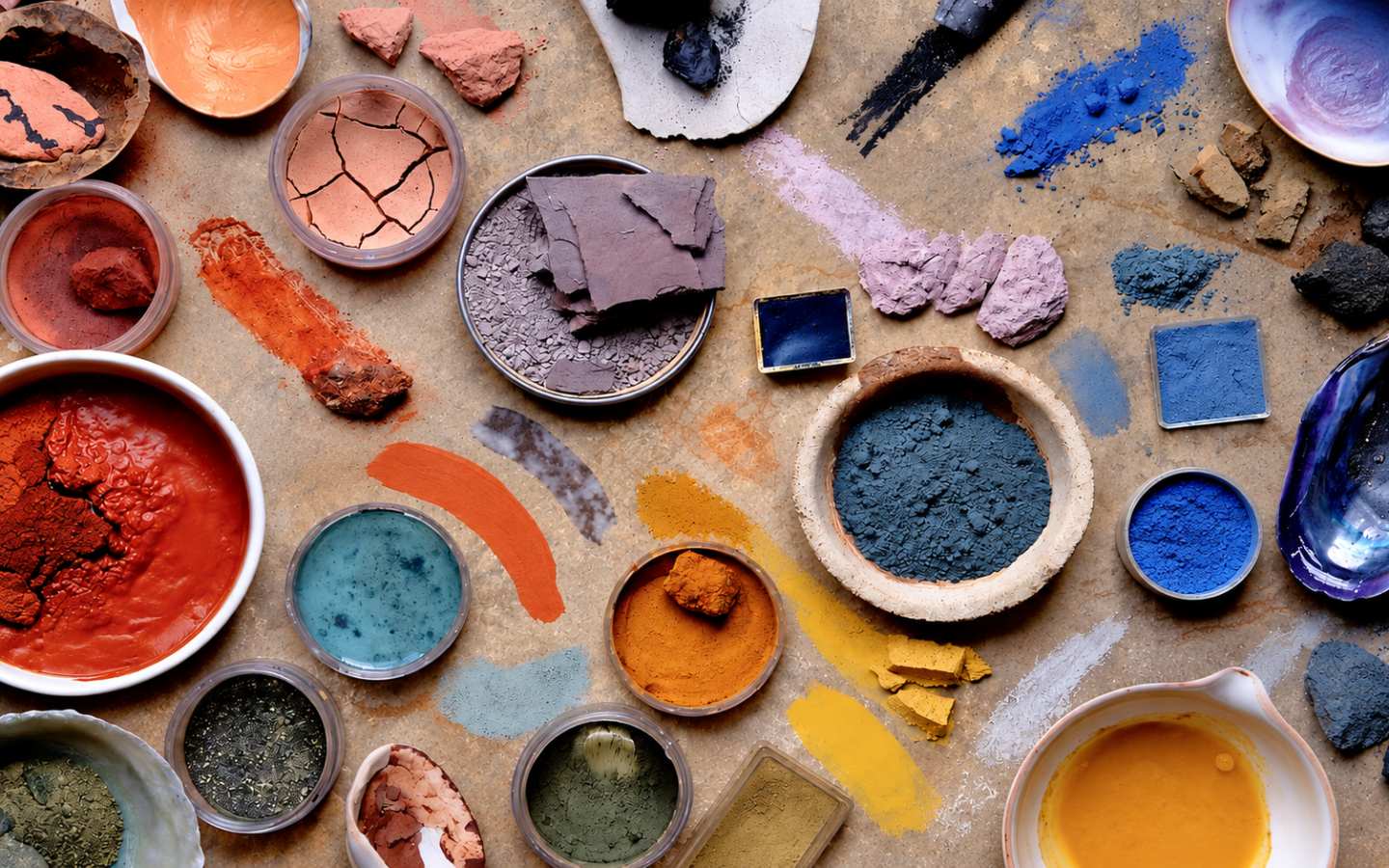

Natural paints have been with us throughout history. Plants, minerals, and even insects were used by numerous societies, each employing different techniques and color palettes depending on the needs of the time.
That’s why, more than just an aesthetic trend, we’re now seeing the professional choice of natural-based paints as part of the preservation and compatibility of modern and historical projects.
What are natural paints, and how do they differ from industrial ones?
Natural paints are made from vegetable oils, lime, egg, mucilage, vegetable gums, and animal glues, to name a few. Although their basic ingredients come from nature itself, this does not mean they are 100% free of toxins or heavy metals, as certain historical pigments pose a significant toxicological risk, such as cinnabar, which is a mercury sulfide.
Their safety depends on their formulation, the concentration of their components, exposure routes, the substrate, and application methods.
Industrial paints, on the other hand, are mostly of petrochemical origin and contain synthetic, vinyl, acrylic, or epoxy resins. There are also options of mixed origin that include minerals and additives from various sources. Therefore, the distinction is not absolute; rather, it depends on the composition and substrate.
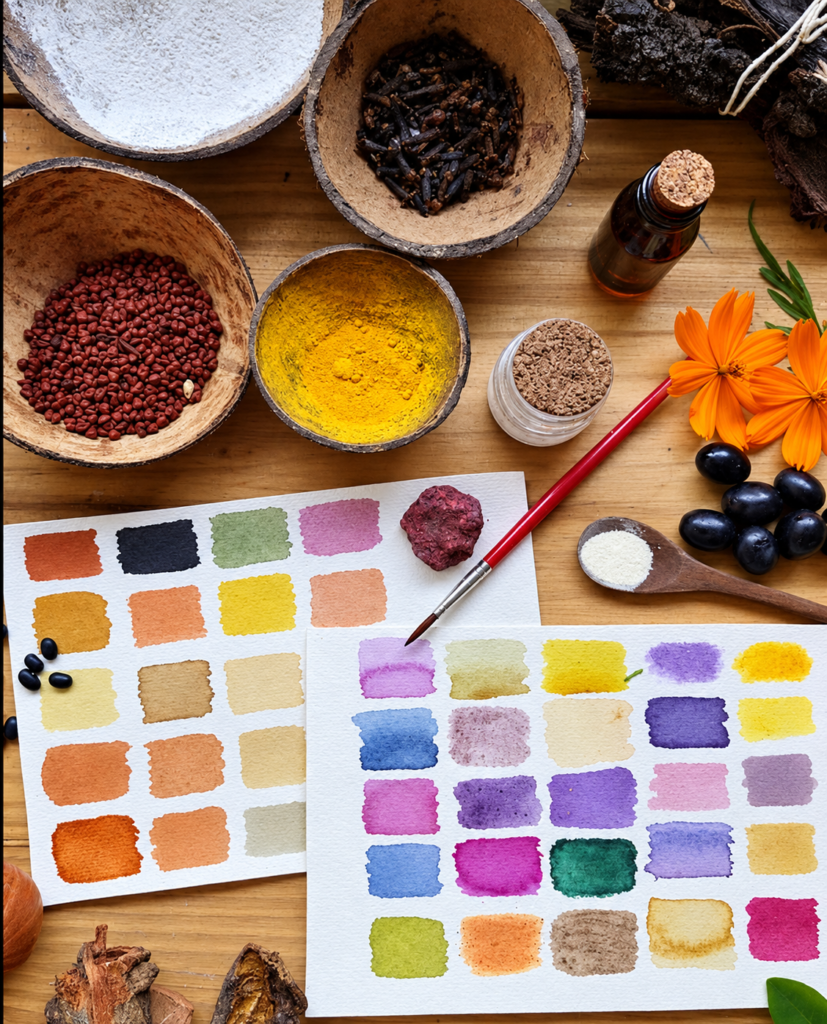
The Basic Composition: The Balance Between Natural Pigments, Binders, and Solvents
In practice, there are no absolute truths. Therefore, it is helpful to understand some basic components:
- Pigment: provides coverage, opacity, and texture. Formulations use clays, earths, and minerals to achieve earthy tones, or lacquers derived from cochineal to produce reds and carmine shades.
- Binder: This is what holds the pigment particles together. It can set through the evaporation of water, as with gums and glues; through oxidation and polymerization in drying oils; or through a chemical reaction, as with lime. Among the most common are casein, egg, and—in more specialized techniques—natural waxes. Each ages differently: animal glues react to changes in humidity, casein can form hard, brittle films, and drying oils change in color and stiffness as they age, as detailed in the Canadian Conservation Institute’s painting conservation guidelines.
- Water and other solvents: These facilitate mixing until the appropriate viscosity is achieved. Turpentine or alcohol have also been used. For this reason, the label “solvent-free” is not synonymous with a 100% natural product.
A formulation with a high pigment load and little binder tends to produce a matte finish, but if there is not enough binder to hold the particles together, the layer may become porous and more prone to losing material or becoming powdery. A higher proportion of binder usually produces more saturated or glossy surfaces, although the result depends on each specific mixture.
Its Main Characteristics and Uses
The paint’s characteristics determine its use. Therefore, before choosing an option, it is important to understand these concepts:
- Breathability: Some mineral finishes, especially lime washes, allow for greater water vapor exchange than many coatings that form continuous films. This can be important on porous substrates such as stone, adobe, brick, or lime mortars, where a coating that is too impermeable can hinder moisture escape. The National Park Service specifically highlights the vapor permeability of whitewash as one of its useful characteristics in historic buildings.
- Compatibility: Casein can form a matte, durable film, but it is also rigid and brittle, so it works best on stable substrates. Animal glues react to changes in humidity and can shrink when the environment is too dry. In murals and frescoes, moreover, moisture can carry salts to the surface and cause loss of cohesion, flaking, or deterioration of the paint layers.
- Drying oils: These form films through oxidation processes that continue even after the surface appears dry. Over the years, they may become stiffer, yellow, or develop cracks, depending on the support and environmental conditions. The Canadian Conservation Institute documents these deterioration processes in paintings.
- Durability: varies depending on the type of pigment, binder, application method, substrate, sun exposure, humidity, rain, salts, and maintenance.
Before applying natural paint, it is advisable to assess the surface to ensure compatibility and achieve the desired finish. No paint alone can correct problems caused by moisture, leaks, or the presence of salts.
Before Acrylics: How Were Paints Made in the Past?
Let’s start by understanding that acrylic paints use synthetic polymers. Acrylic emulsions for artists began to be marketed in the 1950s and became widespread during the 1960s: the Getty Conservation Institute documents that Liquitex appeared as an acrylic emulsion paint for artists in 1956 and that by 1965 most manufacturers were already offering their own lines.
Before their widespread adoption, the most commonly used binders included egg, drying oils, vegetable gums, casein, animal glues, wax, and lime, employed depending on the technique and surface.
But long before that, in caves around the world, experts have found cave paintings in shades of red and brown derived from ochres and iron oxides, mineral whites, and carbon-based blacks.
In fact, in ancient Egypt, the use of ground malachite for greens and iron oxides for reds and yellows, charcoal for blacks, and copper compounds for blues is documented, as detailed in the materials glossary of the Getty’s Mummy Portraits of Roman Egypt project, while other cultures mixed natural pigments and resins for boats, weapons, and everyday artifacts.
Thus, the exact composition of ancient paints varies depending on the region, the era, and the availability of local materials.
Organic and Inorganic Pigments
If we look at how natural paints were made, we find a classification of their components:
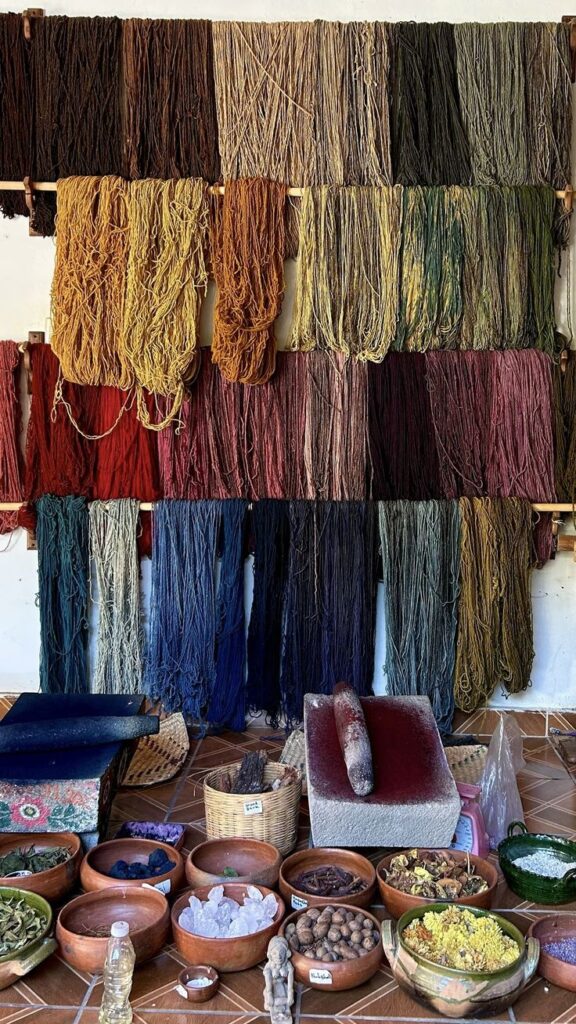
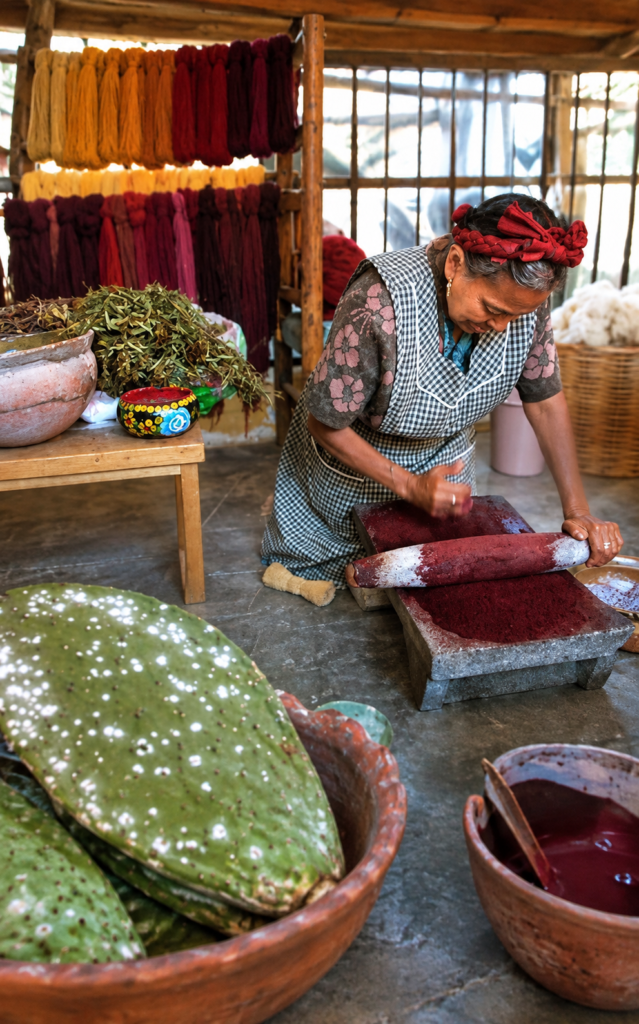
- Organic: Species of the genus Indigofera provided the raw material for indigo. The cochineal insect (Dactylopius coccus) yielded cochineal, which produces a carmine or deep red hue; to be used in paints, it could be fixed to a mineral substrate and turned into a type of lacquer. Flowers, plant lacquers, sap, resins, certain woods, and fruits provided various colors depending on their species and combination with other elements.
- Inorganic: Yellow, red, and brown ochres were obtained from iron oxides and hydroxides mixed with clay and other minerals. Calcite provided white or was also used as a filler.
- Carbonaceous materials: Black was obtained from charcoal. Although its origin is organic, its composition is influenced by carbon.
The Role of Traditional Binders
For the pigment to adhere to the surface, a binder is required; historically, the following were used:
- Nopal mucilage: It can improve the adhesion and plasticity of mortars and paint layers, according to the formulation documented by the INAH in its conservation studies.
- Casein: forms durable, matte films, although once dry it can become brittle, so it requires sufficiently stable substrates.
- Egg white: creates a transparent film in manuscripts and decorative painting.
- Egg yolk: is the characteristic binder in numerous tempera techniques.
- Gums: form transparent films that work well in watercolor, ink, and other techniques.
- Animal glues: serve as binders in tempera paintings but are sensitive to changes in humidity.
- Oils: linseed, poppy, walnut, and other drying oils add luster and depth. They harden through oxidation and polymerization processes that continue as the work ages.
- Other binders: Beeswax was melted down into a fairly stable paste, but it is sensitive to heat, dirt accumulation, and warping, so its durability depends on the technique and conservation.
Natural Pigments in Mexico and Around the World: A History of Universal Painting
In pre-Hispanic times in Mexico and the rest of the world, various natural pigments were used to dye clothing, basketry, decorative and musical instruments, as well as to paint murals that are now part of history.
The mural art of Teotihuacán
The Teotihuacan murals were created on stucco and other mineral-based substrates. Researchers from the INAH, in collaboration with the UNAM, identified hematite and cinnabar in murals from the Quetzalpapálotl complex, which were used to produce reddish pigments in decorations dating from 200 to 350 AD.
Mayan Murals
The renowned Maya blue is one of the most remarkable innovations of pre-Hispanic America. Its basic composition combines indigo with palygorskite, a clay found in deposits on the Yucatán Peninsula and other regions. This mixture of an organic dye and a mineral is well established and helps explain the pigment’s extraordinary stability.
What is still being studied in greater detail is how these two materials interact during preparation. Heating promotes the interaction of indigo with paligorskite and may allow part of the dye to penetrate the microscopic channels of the clay. Experimental research on Maya blue has also shown that heating conditions influence the pigment’s color and durability. Current research therefore focuses on these mechanisms and on reconstructing more precisely how the pigment was historically prepared.
New Spain Painting
New Spain art emerged from the fusion of European models, American resources, and indigenous knowledge. However, not all works shared the same blend, as they varied according to date, region, support, and origin. Consequently, identifying the exact materials requires a case-by-case analysis.
For example, in 17th- and 18th-century easel paintings, indigo was identified as a component of New Spain painting. This pigment of Mesoamerican origin is obtained from plants of the Indigofera genus and continued to be used in easel paintings from the colonial period and possibly in murals. Its deterioration and associated materials remain the subject of study, as demonstrated by María Castañeda Delgado’s research published by the INAH.
Mural painting also allows us to observe how certain materials changed—and in some cases remained the same—after the Conquest. At the former convent of Santo Domingo Tehuantepec in Oaxaca, built in the 16th century, a study published by *Intervención*, the INAH’s journal, identified cinnabar or vermilion, orpiment, and bone black in one of its pictorial phases.
The presence of cinnabar is particularly interesting because this mineral was also used before the Conquest, as we saw at Teotihuacán. This is not enough to assert that pre-Hispanic techniques remained intact throughout the New Spain period, but it does help us understand that some materials known in the region continued to form part of new painting traditions.
Natural ultramarine blue derived from lapis lazuli—whose primary colored phase is lazurite—originating historically, from Badakhshan, Afghanistan, among other regions, was highly prized in Europe during the Middle Ages and the Renaissance and was used in areas of special visual and symbolic importance, as explained in this Smithsonian analysis of the historical use of lapis lazuli.
In Italian fresco painting, it is important to distinguish between different techniques. In buon fresco, pigments compatible with lime are dispersed in water and applied to a still-wet plaster base of lime and sand. As the lime reacts with carbon dioxide in the air and reverts to calcium carbonate, the pigment becomes fixed to the surface during the carbonation process.
Pigments such as azurite and lapis lazuli did not tolerate the alkalinity of the wet plaster well, so they were applied in tempera or a secco on a pre-prepared surface. Treccani’s *Enciclopedia dell’Arte Medievale* distinguishes these applications from *buon fresco*. Wall painting executed with oils corresponds to another procedure on prepared or dry surfaces and should not be confused with the *fresco* technique.
In various local traditions of the Sahel and sub-Saharan Africa—such as murals in Burkina Faso or the masonry of Mali—documented by ICCROM, clay, ochre, and charcoal formed part of the local palette used in the conservation and maintenance of these works.
This convergence shows how different cultures addressed the issue of color using the biological, commercial, and geological resources available to them: minerals, plants, oils, resins, and animal-based materials that were adapted according to the technique and region.
Why Are Natural Paints Making a Comeback?
Natural pigments are making a comeback due to technical, heritage, and environmental needs in construction and conservation.
- Historical conservation: The restoration of historic masonry requires the use of materials compatible with the originals.
- Green building and sustainable construction: mineral lime paints and certain systems can prevent the formation of a continuous plastic membrane, allowing for greater vapor permeability. However, they are not a universal solution, as their performance depends on the technique, the substrate, and environmental conditions.
- Contemporary applications and eco-friendly paints: There is interest in materials that can be maintained and repaired without causing incompatibilities with the substrate, while also reducing certain environmental impacts.
- Traditional trades: lime burners, stuccoers, plasterers, and tempering masters are still needed to prepare compatible mortars, adjust particle sizes, and apply traditional finishes.
And this is not merely a theoretical revival. At the Old Cemetery in Manatí, Puerto Rico, for example, the National Park Service documented conservation work in which deteriorated modern paints were removed and the use of whitewash was restored on historic monuments. This case helps explain why a traditional material might be used again: not out of nostalgia, but because its behavior may be more compatible with certain older substrates.
The same criteria continue to be applied in the conservation of historic buildings. Historic England recommends permeable lime finishes on certain walls and traditional plasters, especially when coatings that are too impermeable can hinder moisture release.
This does not mean that natural paint is the best option or that synthetic paint is unsuitable, as this depends on compatibility—which requires a prior assessment and testing.
Can natural paints still be manufactured and used today?
Yes. Although lime and clay did not completely disappear from traditional construction, there is now a renewed interest in these materials in four specific areas:
- Facades and walls: lime and clay are used in mortars, stucco, and finishes for restoration, earthen construction, and green building.
- Interior coatings: Casein and other proteins can be used in mixtures for interior mortars and plaster.
- Wood finishes: drying oils continue to be used on furniture, doors, beams, and other wooden elements.
- Arts and decorations: Earth and mineral pigments continue to be used in watercolors, oil paints, tempera, inks, and decorative coatings.
Natural-based paints can be a viable alternative for the requirements of historic preservation and certain contemporary practices, provided that their composition, application, and compatibility have been evaluated beforehand.
Advantages and Limitations of Natural Paints Compared to Synthetic Options
A general comparison is presented below. Actual performance will always depend on the formulation and the substrate. The Getty Conservation Institute’s studies on modern paints, recommendations for the conservation of historic masonry, and documentation on emissions and curing of coatings are particularly useful for understanding these technical differences.
| Criterion | Mineral-based / natural formulations | Synthetic and industrial formulations |
|---|---|---|
| Compatibility with the substrate | They can work well with lime, stone, earth, plaster, and porous mortars when compatible with existing layers. | They can perform well on modern substrates, but some low-permeability films may cause problems on historic masonry. |
| Aging | Loss of cohesion, powdering, yellowing, or stiffness may occur depending on the binder, humidity, and exposure. | Cracks, loss of flexibility, discoloration, or delamination may also occur depending on the resin and environmental conditions. |
| VOC | Aqueous mineral mixtures may have low emissions, but natural oils and solvents can also emit volatile organic compounds. | Water-based paints generally emit fewer VOCs than those formulated with organic solvents, although emissions do not automatically cease once the surface dries. The Canadian Conservation Institute explains that they may continue during the drying and curing process. |
| Uniformity | This can vary depending on the origin of the materials, particle size, mixing, and the substrate’s absorbency. | Industrial manufacturing offers greater consistency across batches in terms of color, viscosity, and gloss. |
| Drying and Curing | Gums and glues rely primarily on evaporation; calcium carbonate and drying oils harden through oxidation and polymerization. | Drying may involve a combination of evaporation and subsequent film formation; complete curing depends on the resin and environmental conditions. |
| Future Repairs | Some lime washes and mineral finishes can be gradually reapplied if the substrate remains stable. | Some aged coatings can be difficult to remove from porous surfaces without damaging the original material; the National Park Service guidelines on cleaning historic masonry warn of these difficulties. |
The Legacy of Color
If natural paints continue to be used, it is because traditional knowledge has been preserved over time. That is why their current use opens up a very interesting conversation about environmental impact and the compatibility of materials, without seeking to invalidate industrial options. Their return should not be interpreted as a complete rejection of industry or as an obsession with the past.
Because color was never just another element; rather, the sustainability of a paint is also shaped by compatibility, durability, and the preservation of the memory of traditional crafts—without neglecting the specific needs of each project.
But the final decision will depend on a comprehensive evaluation, taking into account their possibilities, their limitations, and what works best in each context.