

Madonna Before Fame: How She Became Part of New York’s CBGB and Downtown Scene
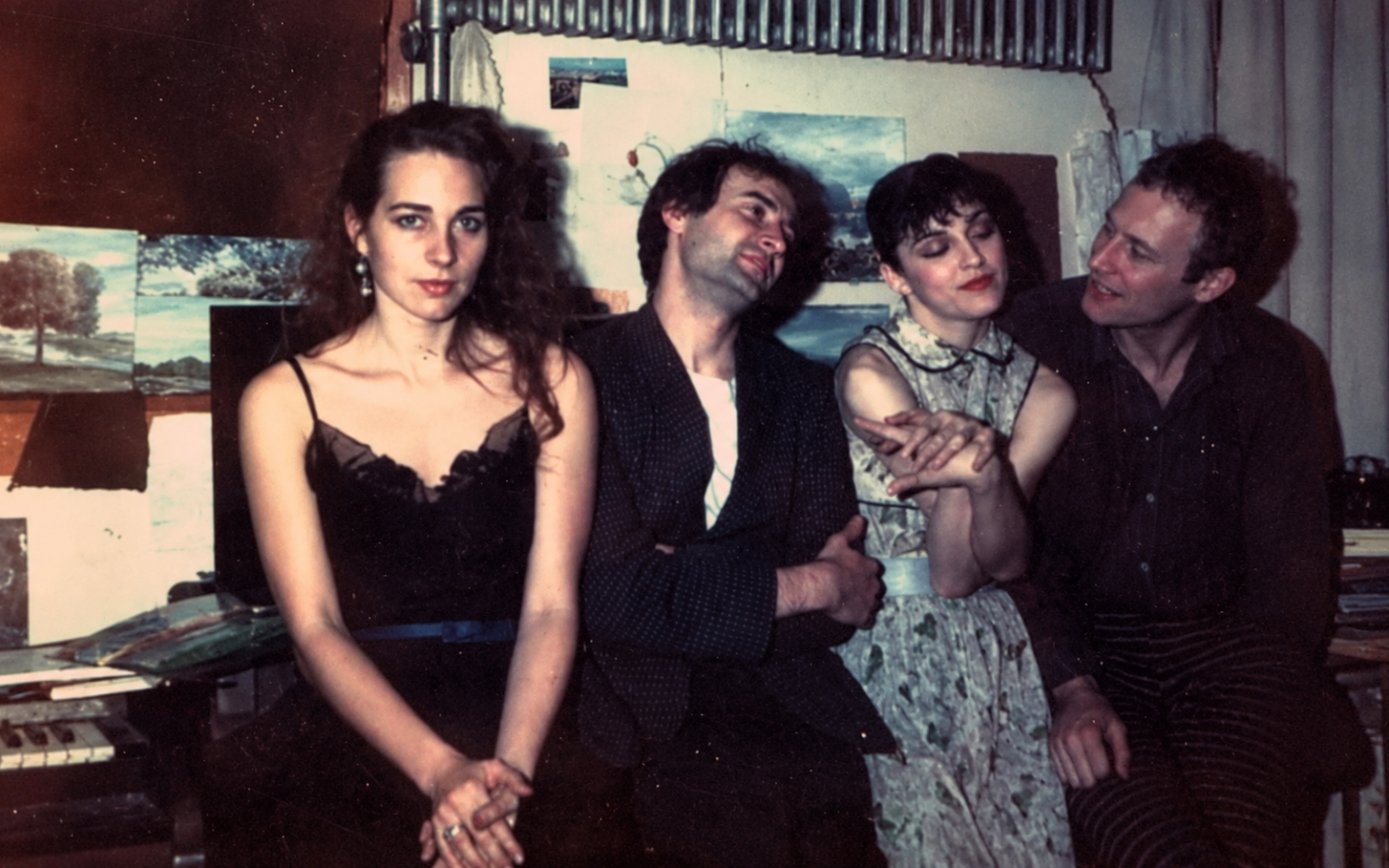

Before Madonna became one of the defining pop stars of the 1980s, she was part of a much rougher and less predictable New York music world. She played drums, moved between bands, experimented with new wave and post-punk, and circulated through the downtown club scene that included CBGB, Max’s Kansas City and Danceteria. Her connection to CBGB was not the episode that “made” Madonna, nor can her rise be traced to a single performance there. What it reveals instead is the musical environment in which she developed before her solo breakthrough.
That distinction matters because Madonna’s early history is usually told as a direct progression from aspiring dancer to pop superstar. The years in between were considerably messier. She spent time behind a drum kit, struggled to move from supporting musician to lead singer, worked with people who would remain important to her career and participated in a downtown New York circuit where punk, new wave, no wave, disco and experimental music overlapped far more often than their later histories might suggest.
What Was CBGB, and Why Did It Matter?
CBGB was founded by Hilly Kristal in 1973 on the Bowery in Manhattan. Although the initials originally stood for “Country, Bluegrass and Blues,” the club became one of the central venues associated with New York punk and new wave. In Kristal’s own history of CBGB, he recalled that one of the venue’s defining policies was requiring bands to perform original material rather than covers, helping make the club accessible to emerging musicians who had not yet found a place in established scenes.
That policy helped create an environment in which bands such as Television, Ramones, Blondie and Talking Heads could develop in public before becoming internationally recognized. Later, CBGB would become equally important to New York hardcore through groups including Agnostic Front, Cro-Mags and Murphy’s Law. <u>Its history, however, was never as stylistically uniform as the phrase “birthplace of punk” can make it seem. Artists working around new wave, experimental rock and other corners of the downtown scene circulated through many of the same venues, and Madonna’s early career belongs to that broader story.
Madonna Before Fame: From Breakfast Club to Emmy
Madonna Louise Ciccone arrived in New York in 1978 intending to pursue dance. She studied, worked a succession of jobs and, in 1979, became involved with the revue surrounding Patrick Hernandez, whose disco single “Born to Be Alive” had become an international hit. That chronology is important: her association with Hernandez followed her move to New York rather than causing it, as accounts of her early career, including AllMusic’s Madonna biography, make clear.
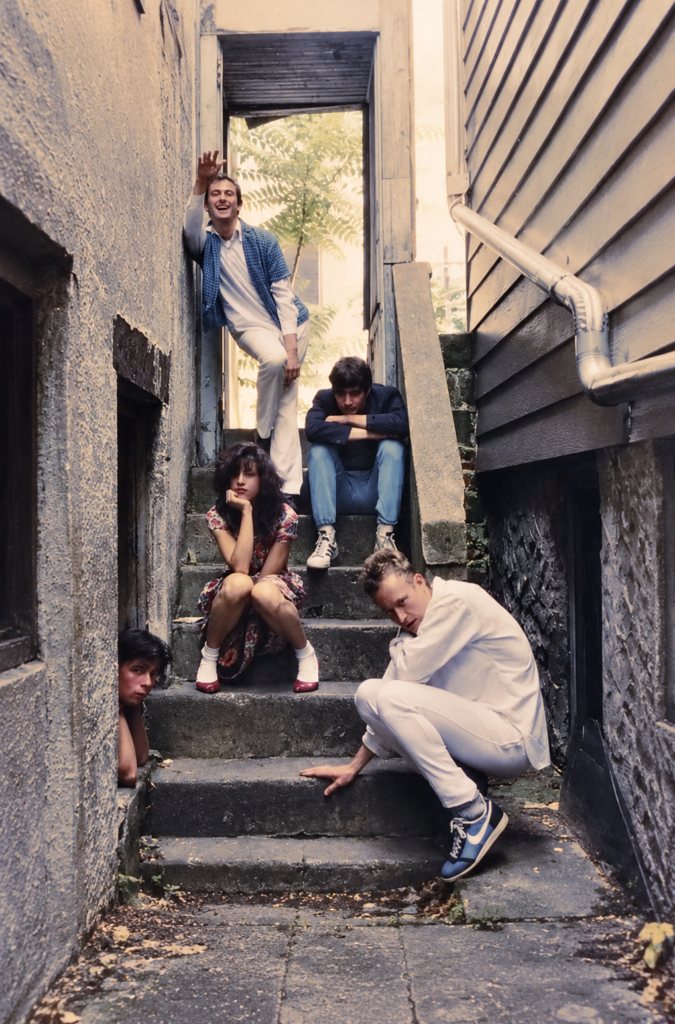
Her relationship with musician Dan Gilroy brought her closer to New York’s alternative music scene. Madonna began playing drums with the musicians who became Breakfast Club, alongside Dan and Ed Gilroy. She was not content to remain behind the kit for long. PBS American Masters’ reconstruction of Madonna’s early musical years describes her growing determination to sing and move to the front of the band; PBS also notes that the musicians around Gilroy were already getting gigs at venues including CBGB and Max’s Kansas City.
The history of Breakfast Club similarly places Madonna at the drums before her ambitions as a vocalist contributed to her eventual departure. She went on to form Emmy in 1980 with Stephen Bray, an old acquaintance from Michigan who would later become one of her most important collaborators. Bray eventually co-wrote and produced songs including “Into the Groove” and “Express Yourself,” but during the Emmy period the pair were working in a far less polished musical setting.
Emmy’s recordings show Madonna exploring a sound closer to new wave and post-punk than the dance-pop that would define her solo breakthrough. Bray later recalled that the music they were making drew from bands such as the Pretenders and the Police. This does not turn early Madonna into a “punk artist” in retrospect, but it does place her development inside a New York musical culture that was considerably broader than the pop narrative attached to her later career.
Did Madonna Actually Play at CBGB?
The safest answer is yes, with an important qualification: the available sources support Madonna’s connection to the CBGB performance circuit, but they do not provide enough evidence to confidently assign a specific date to an Emmy performance there.NME includes CBGB among the venues associated with Madonna’s early career, while PBS places the musicians around her early Breakfast Club period at CBGB and Max’s Kansas City.
Stephen Bray provides some of the strongest firsthand context. In an interview with MadonnaTribe about Madonna, Breakfast Club and the early 1980s, Bray recalled arriving in New York in 1980 and immediately rehearsing with Madonna and bassist Gary Burke. He described playing gigs at Max’s Kansas City, Danceteria and CBGB during that period and said he performed at CBGB often enough to leave his drums in the loft above the stage.
What those accounts establish more securely than a single legendary “Madonna at CBGB” night is that she belonged to the same network of musicians and downtown venues during the transition from Breakfast Club to Emmy. That is the more revealing connection. CBGB was one stop within a larger ecosystem rather than a secret origin story that explains her entire career.
Madonna and New York’s Downtown Music Scene
Madonna’s association with CBGB becomes more meaningful when placed alongside the other venues and musicians surrounding her at the time. New York’s downtown culture in the late 1970s and early 1980s did not divide itself as neatly as later genre histories often suggest. Punk, new wave, no wave, disco, performance art and emerging club music could share audiences, musicians and physical spaces even when their sounds were radically different.
Sonic Youth co-founder Thurston Moore later remembered Madonna as part of that environment. In a 2018 interview with The Guardian about Madonna and the downtown scene, Moore recalled her moving through clubs including CBGB, Danceteria, Tier 3 and Club 57 before her mainstream breakthrough. His recollection is useful not because it turns Madonna into a no wave musician, but because it captures how close those social and musical worlds could be before their participants followed dramatically different career paths.
That context also explains why Madonna’s early rock-oriented bands should not be treated merely as an embarrassing or irrelevant prelude to her “real” career. Breakfast Club and Emmy were part of the process through which she learned to perform as a musician, pushed herself toward the role of lead singer and developed relationships with collaborators such as Stephen Bray. The downtown scene provided the environment; Madonna’s ambition determined what she eventually did with it.
What Did CBGB Mean for an Artist Like Madonna?
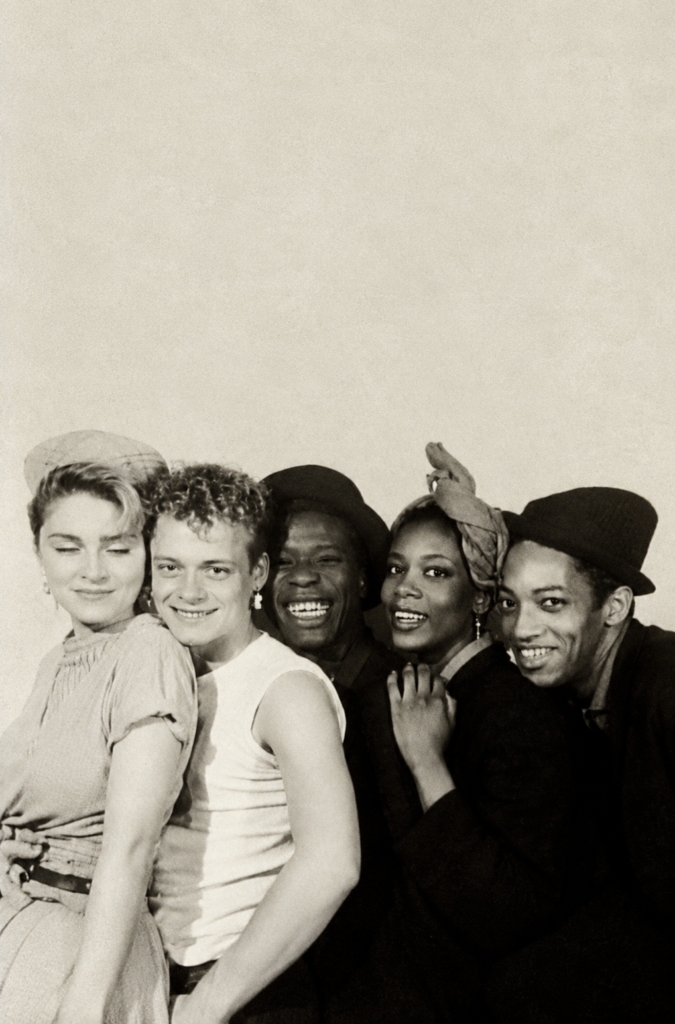
Madonna’s relationship with CBGB appears to have been brief compared with artists whose identities became inseparable from the club, but her presence within that circuit helps illuminate the kind of New York in which she began making music. Punk, new wave, no wave, disco and experimental scenes were developing alongside one another, while musicians, visual artists, filmmakers and dancers frequently occupied overlapping social spaces.
That overlap became visible again later in Madonna’s career in ways that may have seemed unusual to her growing mainstream audience. For The Virgin Tour in 1985, she chose the Beastie Boys as her opening act. The group would become one of the biggest names in hip-hop, but it had begun as a New York hardcore band. The Rock & Roll Hall of Fame documents the Beastie Boys’ 1985 tour with Madonna, a pairing that looked far stranger from the perspective of mainstream pop than it did when viewed through the overlapping New York scenes from which both acts had emerged.
The connection should not be overstated: CBGB did not create Madonna, and punk did not secretly provide the blueprint for her pop career. What the club represents in her story is access to an unusually fluid cultural environment in which a dancer could become a drummer, a drummer could decide she wanted to sing, and musicians who would later occupy completely different genres could still cross paths in the same downtown circuit.
CBGB Was More Than a Punk Club
CBGB’s place in punk history is undeniable, but its cultural significance becomes richer when its history is viewed beyond a fixed list of famous punk bands. During the 1970s and early 1980s, the Bowery venue formed part of a broader network in which musicians who had not yet entered the commercial mainstream could experiment with original material and encounter audiences drawn from neighboring scenes.
Ramones reduced rock to short, aggressive songs; Suicide combined electronics with the confrontational energy surrounding punk; no wave artists pushed against conventional rock altogether; and musicians associated with new wave pursued increasingly different directions. Madonna’s presence in that broader downtown circuit demonstrates precisely how porous those boundaries could be. She did not need to become a punk musician to belong, for a time, to the same musical geography.
The Beastie Boys would also become associated with CBGB during their hardcore years, long before rap transformed their career, while Bad Brains brought reggae into one of the most ferocious versions of hardcore punk. Such histories resist the idea of CBGB as a venue whose importance depended on a single sound. Its influence came partly from creating space for artists who had not yet settled into the identities by which audiences would eventually remember them.
That may be the most useful way to understand Madonna’s connection to the club. Seen only through the global pop star she later became, CBGB looks like an unlikely detour. Seen through early-1980s New York, it looks considerably less surprising.
The End of CBGB
CBGB remained open for approximately 33 years, accumulating hundreds of stories in which musicians, genres and generations crossed paths in ways that became clearer only in retrospect. The club’s significance did not depend on every artist passing through it becoming a punk musician; its value came from providing a stage for original work and allowing different parts of New York’s underground culture to collide.
CBGB closed on October 15, 2006, with Patti Smith performing the final concert. The club’s official history records Smith as its last performer, while photographs and archival material have preserved the final night as the symbolic end of one of New York’s most famous music venues. By then, the physical club was disappearing, but its mythology—and the careers that had intersected with it—had already spread far beyond the Bowery.
Madonna’s early years offer one way to see that legacy from an unexpected angle. Before the pop records, MTV, arena tours and global celebrity, there were rehearsals, drums, small bands and downtown clubs. CBGB was a stop along that path rather than the place that “made” Madonna, but her connection to it reveals a period when the boundaries between the future Queen of Pop and New York’s underground music culture were not nearly as obvious as they would later appear.