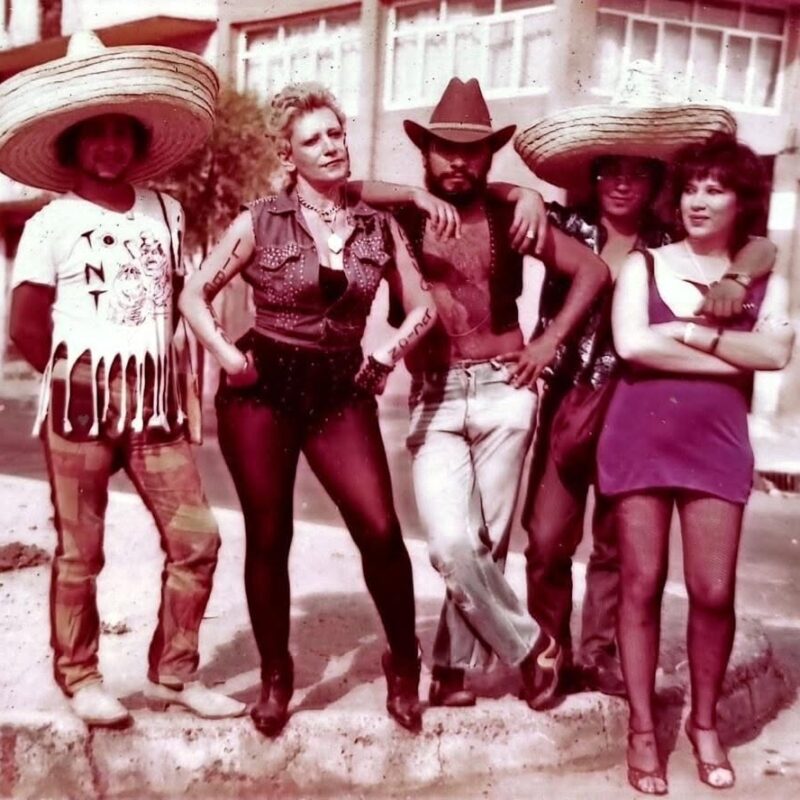


Who Are CocoRosie? Two Decades of Quirkiness, Sisterhood, and the Songs That Help You Understand Their World


After years of going their separate ways, Bianca and Sierra Casady reunited in Paris in 2003 and began making music together almost by accident. They recorded in Sierra’s apartment—often in the bathroom because of its acoustics—with limited resources, using conventional instruments, toys, and whatever objects they had on hand. From those sessions came the material that would become *La Maison de Mon Rêve* (2004). Thus began the story of CocoRosie. An interview with the sisters published by *El Tiempo* recounts that period and their use of found objects during those early recordings.
More than two decades later, the duo remains difficult to pigeonhole into a single genre. Their music blends folk, hip-hop, classical singing, electronic music, lo-fi pop, found sounds, and percussion created with unusual objects. That blend, along with a recognizable visual identity and a very distinctive approach to vocals, allowed them to build an international community of fans. They achieved this without relying on a fixed musical formula. CocoRosie’s discography comprises eight studio albums released between 2004 and 2025.
This guide serves exactly that purpose: to understand who CocoRosie is and where such a project—one so difficult to categorize—came from. It also highlights the elements that make their music recognizable and which songs are best for getting into their discography without having to listen to twenty years’ worth of music all at once.
Who is CocoRosie?
CocoRosie consists of sisters Bianca and Sierra Casady. Sierra was born in Iowa and Bianca in Hawaii; they grew up in an artistic family and followed different paths for several years. Their training was also different: Sierra took up classical singing and later studied in Paris. Meanwhile, Bianca turned to the visual arts, writing, and other disciplines.
The distance between them ended up becoming part of the group’s story. Sierra told El País that for a time they had virtually no contact: she was living in Paris and Bianca in New York. Their reunion in 2003 ended up changing that dynamic because they began working together and found a common ground in music.
The name CocoRosie also stemmed from that family history: it combines the nicknames “Coco” and “Rosie,” which they used during their childhood.
The definitive turning point came in Paris. Sierra was studying singing, and Bianca traveled to see her; they began writing and recording together in 2003. The songs were initially intended to circulate among friends. However, they eventually became *La Maison de Mon Rêve*, released in 2004. The home recording, percussion made with everyday objects, and the use of the bathroom as a recording space became part of the album’s sound from the very beginning.
What makes CocoRosie different?
If someone asks you what CocoRosie sounds like, “freak folk” might be a good place to start, but it doesn’t quite capture everything that goes on in their albums. There’s folk, yes, but also hip-hop, electronic music, blues, lo-fi pop, classical singing, and sounds recorded outside a traditional studio. The sisters themselves have for years rejected the idea of being pigeonholed into a single genre.
Toys and household objects have been part of that identity since *La Maison de Mon Rêve*. Rattles, creaking mechanisms, small music boxes, children’s keyboards, tape recorders, and improvised percussion appear alongside guitar, harp, piano, and flute. They don’t always replace a drum set, nor do they follow a fixed rule. However, they are part of a palette that CocoRosie draws on when a song needs a certain texture. Years later, these elements continued to appear among toy samples, animal sounds, music boxes, and found recordings.
The vocals are what ultimately make the project recognizable. Sierra has a classical background and uses a wide vocal range, often verging on opera singing. Bianca approaches it differently: she phrases, whispers, raps, and modifies her tone to adopt high-pitched, nasal, or deliberately childlike registers. That difference has not faded over the years. Even when they changed their production style or instruments, the contrast between the two continued to serve as one of the core elements of CocoRosie.
The presence of childhood also remains, though it has evolved alongside them. On *Little Death Wishes* (2025), family references coexist with relationships that end, wounds passed down through generations, and other adult experiences. The album retains several elements associated with CocoRosie, but places them within the context of concerns that are no longer the same as those they had in their twenties.
Why did CocoRosie become a cult band?
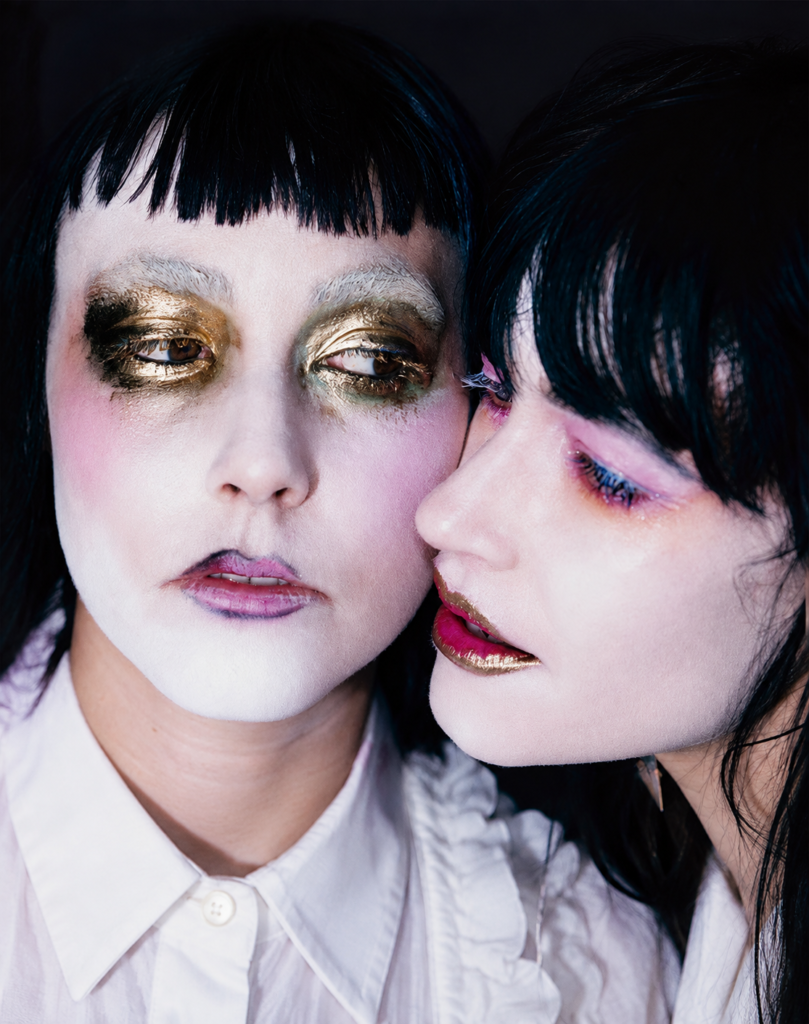
Part of it has to do with how easy it is to recognize them and how difficult it still is to categorize them. Even when they change their production style, certain elements remain: the two contrasting voices, the use of found sounds, a flexible approach to genres, and a stage presence in which costumes, makeup, and performance matter just as much as the instruments. Years ago, *El País* summed up this classification problem by noting that any attempt to fit them into a single category ultimately fell short.
They also emerged at a particular moment in the independent music scene. During the early 2000s, terms like “freak folk” and “New Weird America” began circulating in the press to group together projects that revived acoustic and folk elements. However, these were blended with psychedelia, experimentation, and unconventional forms of composition. Devendra Banhart, Joanna Newsom, ANOHNI, and other musicians became associated with these labels, which served more as a journalistic way to describe a scene than as genres with strict rules.
CocoRosie were part of that scene, but they never limited themselves to it. Their work extended into theater and other formats, including music for four productions by Robert Wilson. In addition, they collaborated with the Kronos Quartet. These projects helped reinforce something that was already evident in their concerts: CocoRosie could move beyond the usual band format without abandoning the elements that made their songs recognizable.
Critical reception has not been uniform either. Throughout their career, CocoRosie has provoked very different reactions, and some Spanish-language media outlets have directly pointed out this divide. There are those who connect with their blend of voices, genres, and homemade elements, and those who find it excessive or difficult to listen to.
That’s a big part of their status as a cult band: they didn’t build a career on a formula that repeats itself identically on every album, yet they also didn’t lose the traits that make them recognizable. They changed their production style, moved between genres, and worked outside the usual indie rock circuit. Yet they maintained an audience that has followed them for years.
More than twenty years later, that combination better explains their longevity than any label. Thus, they achieved a sound that’s easy to identify, albums that are hard to pigeonhole into a single scene, mixed reviews, and a community that stuck with them even as CocoRosie changed course several times.
Where should you start when listening to CocoRosie?
If you’ve never heard them before or don’t know where to start with their discography, there’s no need to begin with their first album and listen to everything in order. These eight tracks showcase different facets of CocoRosie and work better as a guide than as a ranking.
1. “Terrible Angels” — La Maison de Mon Rêve (2004)
One of the clearest tracks to hear where it all came from. Acoustic guitar, background noise, faint metallic sounds, and a recording that preserves the homemade feel of those sessions in Paris. If you want to understand their lo-fi phase and how they could turn recording limitations into part of the song, start here.
2. “By Your Side” — La Maison de Mon Rêve (2004)
It’s on the same album, but it showcases a different side. The melody is more delicate and straightforward, with few elements surrounding the vocals. It reveals that beneath the toys and noises, there’s also a very traditional way of crafting melodies—which they then twist in their own unique way.
3. “Beautiful Boyz” — Noah’s Ark (2005), featuring ANOHNI
Here we see another recurring technique from CocoRosie: building characters within a song. “Beautiful Boyz” features the voice of ANOHNI—then known for her work as the frontwoman of Antony and the Johnsons—in one of Noah’s Ark’s most memorable collaborations. It’s a great introduction to the duo’s theatrical side: three very distinct voices creating the same scene without needing to sound alike.
4. “Werewolf” — The Adventures of Ghosthorse and Stillborn (2007)
If you want to hear what happens when CocoRosie takes hip-hop to the forefront, “Werewolf” is a great place to start. The track begins with a spoken-word narrative, and then Bianca’s delivery kicks in over a beat that blends rhythm, electronica, and dark imagery, while Sierra maintains the contrast with a much more melodic vocal range.
5. “Lemonade” — Grey Oceans (2010)
“Lemonade” showcases one of CocoRosie’s more pop-oriented sides. It features a catchy hook and a more polished production than their early work, without sacrificing the shifts in texture or the clash between the two voices. Within this context, it’s worth listening to see what happens when the duo adapts their songwriting to a more accessible structure.
6. “Gravediggress” — Tales of a GrassWidow (2013)
Marking the start of a darker, more political phase, “Gravediggress” demonstrates how the sisters could maintain delicate sounds while writing about much heavier topics. *Tales of a GrassWidow* explores ideas related to violence and the treatment of women, and the song utilizes that blend of vocals, piano, synthesizers, and percussion that the duo had already been developing for years.
It’s a great track for hearing how CocoRosie’s darkness doesn’t rely solely on weird effects or strange vocals—it’s also in what they’re saying.
7. “Cut Stitch Scar” — Little Death Wishes (2025)
Two decades after their debut, “Cut Stitch Scar” retains several familiar elements—keyboards, drum machines, electronic layers, and the two vocals—but places them within a much broader production. The song stands as one of the best examples of Little Death Wishes: an album where folk, electronica, pop, and hip-hop continue to appear without being completely separated.
It’s a great way to experience the duo’s mature phase without thinking of it as just a cleaner version of their early albums: the sound has changed, but the same curiosity remains—to transform vocals, rhythms, and small noises into something hard to categorize.
8. “Least I Have You” — Little Death Wishes (2025)
If “Terrible Angels” marks the beginning, “Least I Have You” brings to the forefront the relationship that has allowed CocoRosie to endure for more than twenty years: that of Bianca and Sierra. The song deals directly with sisterhood and mutual support. It’s a fitting place to end this journey because it highlights something that has always been at the heart of the project, even as instruments, producers, or influences have changed: CocoRosie began as a conversation between two sisters, and that’s still what drives them today.
Why are they worth listening to?
CocoRosie has maintained a level of continuity that’s rare for a project that emerged from an indie scene so closely associated with the early 2000s. Between *La Maison de Mon Rêve* and *Little Death Wishes*, there are eight albums and enough shifts in production that listening to their entire discography doesn’t feel like repeating the same idea eight times.
That doesn’t mean they’ve left behind what makes them recognizable. Their voices still clash with one another, the rhythms can shift from folk to hip-hop in a matter of minutes, and small or seemingly out-of-place sounds continue to appear alongside fairly straightforward melodies. Even on *Little Death Wishes*, their eighth album, that blend continues to work.
Their collaboration with Chance the Rapper also demonstrates how CocoRosie can move in and out of other musical spaces without getting completely lost within them. In 2019, they co-wrote, produced, and performed “Roo,” featured on *The Big Day*, and six years later, Chance appeared with them again on “Girl In Town,” one of the tracks on *Little Death Wishes*. To understand the duo’s current state, that second collaboration is more revealing than poring over a list of credits: hip-hop no longer appears as an external influence, but has been part of their musical vocabulary for years.
For a first-time listener, CocoRosie remains a good gateway to hybrid or experimental music because it doesn’t force you to choose between melody and noise, between folk and hip-hop, or between a song and a performance. Sometimes all of that appears in the same track.
And that’s probably still the best way to get into their music: listen to one song first, then another that seems completely unrelated, and gradually discover that both belong to the same universe.