

Divine: Her Movies, Drag Culture, and Her History in Mexico


Originally published on April 20, 2024. Updated on November 10, 2026, with editorial revisions, new sources, and historical context.
Divine, the stage name of Harris Glenn Milstead (1945–1988), was an American actor, singer, and drag icon who achieved international recognition for his films with director John Waters. His portrayal of Babs Johnson in *Pink Flamingos* (1972) made him one of the most recognizable faces in underground cinema. He also starred in *Female Trouble*, *Polyester*, and *Hairspray*, in addition to pursuing a musical career rooted in the dance and high-energy scenes of the 1980s.
His image, built around exaggerated makeup, voluminous wigs, and flashy costumes, stood in stark contrast to the beauty standards of his time. Divine played outrageous characters, housewives, and show business figures, but she also sought roles outside her drag persona. That variety was reflected in a filmography that ranged from independent productions in Baltimore to films with wider commercial distribution.
In Mexico, her musical side found an audience within the high-energy scene that flourished during the 1980s. Her 1984 visit and the circulation of her songs in Patrick Miller’s DJ sets are part of a story that connects John Waters’ films with Mexico City’s nightlife.

Who Was Divine and How Did Her Career with John Waters Begin?
Harris Glenn Milstead was born on October 19, 1945, in Baltimore, Maryland. During his youth, he was teased for his physical appearance and found in theater and performance a way to develop his artistic interests. His encounter with John Waters, also a native of Baltimore, marked the beginning of a collaboration that would shape much of both their careers.
Waters began making short films and low-budget movies with friends and artists in his circle. This group, known as the Dreamlanders, included performers such as Mink Stole, Mary Vivian Pearce, David Lochary, and Edith Massey. They worked with limited resources, nearby locations, and scripts that used dark humor to provoke the audience.
It was Waters who gave Milstead the stage name Divine. Their early collaborations included *Roman Candles* (1966), *Eat Your Makeup* (1968), and *Mondo Trasho* (1969). In *Multiple Maniacs* (1970), Divine played Lady Divine, the protagonist of a story that combined crime, sexuality, and deliberately over-the-top situations.
The stage persona emerged from that collaboration, but Harris Glenn Milstead also worked as an actor outside of drag. Divine was his professional name and one of his most recognizable characters, while his aspirations as a performer included male roles, comedy, and dramatic performances.
His relationship with Waters allowed him to develop characters that deviated from the standard models of beauty and behavior in commercial cinema. In the director’s films, Divine could be a protagonist, a villain, or a comic figure, with a physical presence and expressiveness that were integral to the humor of each story.
Divine’s Films and His Most Important Characters
Divine’s films show how his work as an actor evolved, from independent productions made on a shoestring budget to comedies that reached wider audiences. His collaboration with Waters was central to that career path, though he also appeared in films by other directors.
Pink Flamingos (1972)
In *Pink Flamingos*, Divine played Babs Johnson, a woman who lives in hiding with her family in a mobile home and boasts the title of the filthiest person in the world. The story begins when a couple tries to strip her of that reputation, triggering a competition of increasingly extreme acts.
The film was shot on a shoestring budget and circulated in the midnight movie circuit—venues where horror films, independent productions, and works that couldn’t find a place in conventional commercial theaters were screened. Its sexual content, grotesque scenes, and the infamous dog-excrement ending provoked both revulsion and curiosity. Waters used these situations to satirize notions of decency and respectability. Divine, for her part, played Babs with the confidence of a Hollywood star, even during the most distasteful moments.
The Criterion Collection’s edition of *Pink Flamingos* includes the film and materials related to its production, including the documentary *Divine Trash*. Its circulation over the decades cemented Divine’s status as a cult film icon and made Babs Johnson one of her best-known characters.
Female Trouble (1974)
In *Female Trouble*, Divine played Dawn Davenport, a teenager who runs away from home after a family argument over a pair of high heels. Her life unfolds amid crime, personal conflicts, and an obsessive quest for recognition.
Waters used the character to question the fascination with fame and the association between beauty, spectacle, and violence. Dawn becomes a celebrity thanks to her criminal acts, encouraged by characters who view her excesses as a form of artistic expression.
Divine also played Earl Peterson, a male character in the same film. This dual role showcased his ability to switch registers without straying from the director’s sense of humor.
The film reunited several Dreamlanders and featured the work of Van Smith on costumes and makeup. Criterion’s restoration of *Female Trouble* includes materials on that collaboration and the production in Baltimore.
Polyester (1981)
In *Polyester*, Divine played Francine Fishpaw, a housewife grappling with marital conflicts, difficulties with her children, and the facades of suburban life.
The film took elements of family melodrama and transformed them into grotesque comedy. Waters worked with a larger-scale production and utilized the Odorama system, through which viewers were given scratch cards that allowed them to experience scents associated with specific scenes.
Francine was a character quite different from the criminal figures in her previous films. Divine had to portray the frustration, vulnerability, and desires of a woman trapped in a troubled family. Her performance retained the exaggerated humor but also explored recognizable emotional situations.
Van Smith’s costume and makeup design helped establish Francine as a suburban woman surrounded by deliberately flashy objects and clothing. With this character, Divine expanded her range within film comedy.
Lust in the Dust (1985)
*Lust in the Dust*, directed by Paul Bartel, was one of Divine’s most significant films outside of her collaboration with John Waters. In it, she shared the screen with Tab Hunter and Lainie Kazan.
Divine played Rosie Velez, a singer who arrives in a Wild West town and ends up caught up in a tale of rivalries, secrets, and a treasure hunt. The film parodied the conventions of the Western genre through exaggerated characters and absurd situations.
The role allowed Divine to work with another director and within a different film genre. He also shared the screen once again with Tab Hunter, with whom he had acted in *Polyester*. His performance demonstrated that his comedic presence could work outside of Waters’ stories.
Hairspray (1988)
In Hairspray, Divine played Edna Turnblad, the mother of Tracy, a teenager who dreams of appearing on a television dance show in 1962 Baltimore.
The film featured music, voluminous hairstyles, dance competitions, and a storyline related to racial segregation on American television. Unlike Waters’ early productions, *Hairspray* had a tone that was more accessible to a mainstream audience.
Edna is a protective mother who initially fears her daughter will face ridicule and rejection. Her relationship with Tracy provides some of the film’s most recognizable comedic scenes. Divine also played the male character Arvin Hodgepile.
The Criterion edition of *Hairspray* documents this dual role. The film received a wider reception than the director’s earlier works and subsequently spawned stage and film adaptations.
Divine also played male roles in productions such as *Trouble in Mind* (1985) and appeared in *Out of the Dark*, which was released after his death. These performances were part of his desire to develop a career as an actor without being limited to a single type of character.
Divine’s Aesthetic and Her Influence on Drag Culture
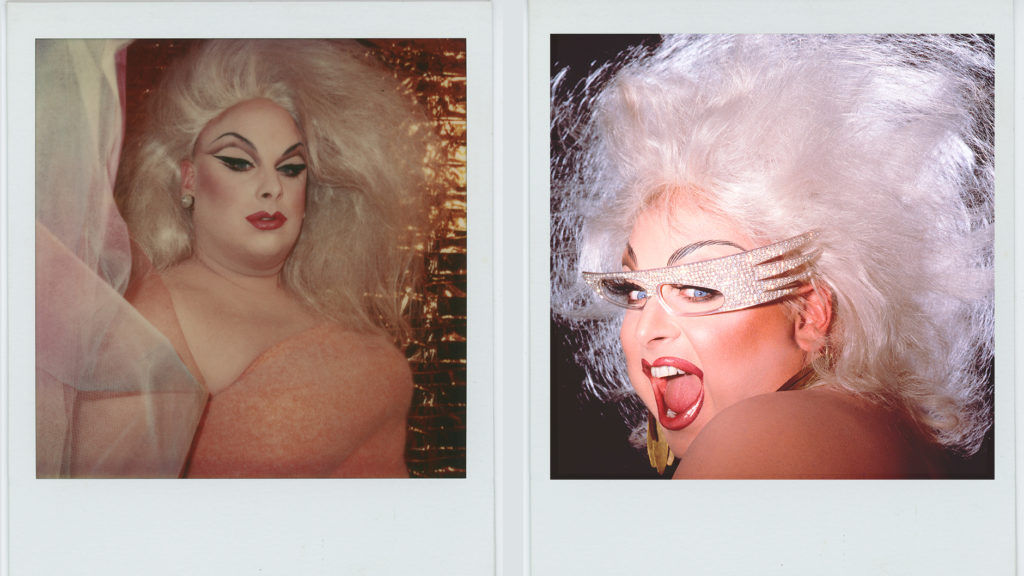
Makeup, wigs, and costumes were essential elements in crafting Divine’s image. Her appearance combined references to Hollywood stars, such as Elizabeth Taylor and Jayne Mansfield, with deliberately exaggerated features that broke with traditional standards of feminine beauty.
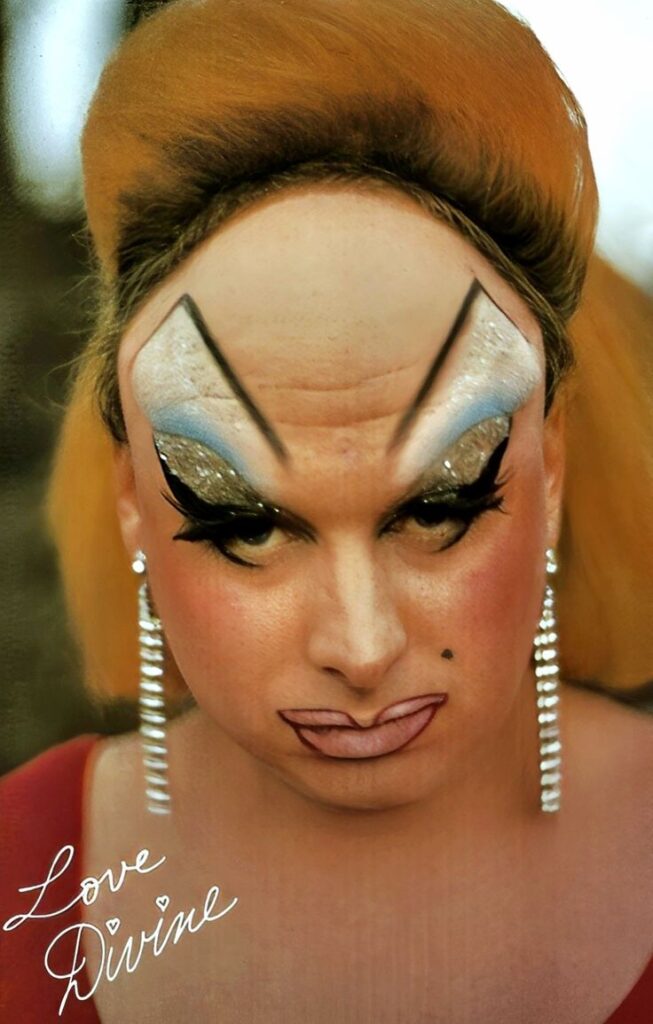
A key figure in this process was Van Smith, a makeup artist and costume designer on several of John Waters’ films. For *Pink Flamingos*, Smith and Divine developed a look that included a hairline shaved back, large areas of eyeshadow around the eyes, eyebrows drawn high on the forehead, and heavily made-up lips.
Smith’s work also helped shape characters such as Dawn Davenport and Francine Fishpaw. In each film, the costumes reflected the role being played, from the extravagant outfits in *Female Trouble* to the suburban attire in *Polyester*. The Criterion Collection features accounts of Divine’s makeup and costumes, including those from collaborators who worked on his films.
This approach to drag was linked to camp culture, which uses exaggeration, artifice, and humor to play with the conventions of performance. Divine applied these techniques to uncomfortable situations, violent characters, and scenes designed to provoke intense reactions.
In an interview published by Agente Provocador, biographer Álex Ander explains that Divine’s acting style contrasted with the expectations of other drag artists of his time, who favored imitating conventional models of femininity. Divine incorporated grotesque humor and a physical presence that made exaggeration a central part of her performances.
Her approach to portraying drag characters stood in contrast to the conventional imitation of showbiz divas. The influence of that persona also extended to animated films.

Why Divine Inspired Ursula from *The Little Mermaid*
One of the best-known examples of Divine’s visual influence is Ursula, the villain in The Little Mermaid (1989), a Disney animated film.
Animator Rob Minkoff explained that, while developing the character, he created sketches inspired by Divine. The initial designs depicted a slender woman, resembling Joan Collins, but Minkoff developed a fuller figure that incorporated drag-inspired features.
The story of Ursula’s creation, documented by Vogue, includes the animator’s statements about the influence of *Pink Flamingos* and Divine’s character. The heavy makeup, arched eyebrows, and theatrical demeanor were some of the references that helped define the villain’s appearance.
Producer and lyricist Howard Ashman also participated in the development of Ursula, whose personality ultimately incorporated elements from musical theater.
Divine died before the premiere of *The Little Mermaid* and did not appear in the film. Ursula’s original voice was provided by Pat Carroll. Divine’s influence lived on in the character’s appearance and personality, one of the most recognizable examples of the intersection between drag culture and commercial animation.
Divine in Mexico: Patrick Miller and the High-Energy Scene
During the 1980s, Divine also pursued a musical career that introduced him to audiences different from those familiar with his films. His dance and high-energy recordings circulated in nightclubs across Europe, the United States, and Latin America, where his stage persona found a new home.
High energy, also written as Hi-NRG, is a genre of electronic dance music characterized by fast beats, synthesizer sequences, and a strong disco influence. During that decade, it had a significant presence in clubs associated with the LGBT community and later gained followers in other dance scenes.
Divine began recording singles with producer Bobby Orlando, known as Bobby O. Among her songs were “Native Love (Step by Step),” “Shoot Your Shot,” and “Love Reaction.” She later gained wider recognition with “You Think You’re a Man,” “I’m So Beautiful,” and “Walk Like a Man.”
These recordings brought some characteristics of his cinematic persona to the music scene: makeup, costumes, humor, and a deliberately provocative performance. Divine’s official archive preserves references to his singles and his career as a singer, an activity he pursued in parallel with his final film roles.
Divine’s Visit to Mexico in 1984
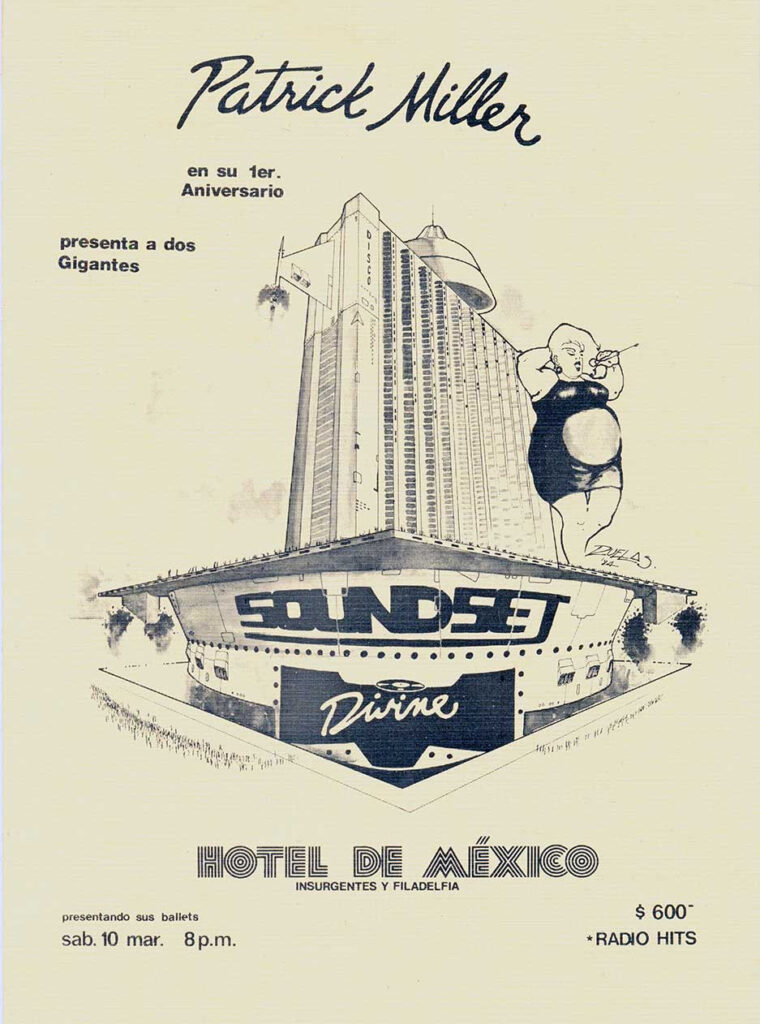
In 1984, Divine visited Mexico during a period of expansion in his musical career. His presence became associated with fans of high energy and with the DJ sets of Roberto Devesa, known as Patrick Miller, who played an important role in popularizing the genre in Mexico City.
One account of that visit appears in the article My Strange Encounter with the God of High Energy, published by Revista Los Cínicos. The text draws on testimonies related to David Dávila’s documentary *Discolocos* and mentions Divine’s performance at the Hotel de México.
According to that account, during his visit he also appeared on *En vivo*, the late-night show hosted by Ricardo Rocha. The accounts collected by the magazine mention performances of “Shoot Your Shot,” “Shake It Up,” and “Love Reaction,” as well as an incident in which members of the television production crew failed to recognize the actor after he removed his makeup. These experiences are part of the stories about Divine’s first performances in Mexico and his interaction with the audience that followed electronic dance music.
His relationship with Patrick Miller offers another entry point into that story. The DJ began organizing disco and high-energy music sessions in the early 1980s. His events took place at venues such as the Club de Periodistas, the Teatro del Pueblo, and later at his venue on Mérida Street in the Roma neighborhood.
Those sessions featured songs by Sylvester, Divine, Rofo, and other artists associated with the electronic music of the era. Patrick Miller’s historical account, published by OCESA, identifies Divine as one of the artists Devesa promoted during the movement’s early years in Mexico.
Attendees also developed their own ways of socializing around dancing, with step and choreography competitions that turned these gatherings into meeting places for fans. The phenomenon was later documented in the 2016 documentary *Discolocos*, dedicated to the history and followers of Mexican high energy.
Divine’s music was part of that repertoire alongside other international artists. For some members of the Mexican public, songs like “You Think You’re a Man” or “Shoot Your Shot” served as a gateway to discovering him without necessarily having seen *Pink Flamingos* or *Female Trouble*.
His reception in Mexico demonstrates how a figure emerging from American independent cinema was able to find a place in another cultural context through dance music. While his films primarily reached audiences interested in cult cinema, his singles found a place in nightclubs, vinyl collections, and gatherings dedicated to high energy.
Divine’s Death and the Enduring Influence
Divine died on March 7, 1988, at the age of 42, while in Los Angeles. According to a report published by the Los Angeles Times on March 10 of that year, the autopsy determined the cause of death to be hypertrophic cardiomyopathy, a disease of the heart muscle.
At the time, he was preparing to appear in the television series *Married… with Children*, where he was set to play a male character. The project was part of his efforts to expand his acting work into commercial productions.
His death occurred shortly after the release of *Hairspray*, just as his film career was beginning to reach audiences unfamiliar with Waters’ early films.
In the years that followed, his legacy was revisited through documentaries, retrospectives, and new editions of his films. Among them is *I Am Divine* (2013), directed by Jeffrey Schwarz, which reconstructs his life through interviews and archival footage.
Divine’s films continue to offer different ways to engage with his work. *Pink Flamingos* showcases his connection to underground cinema; *Female Trouble* explores fame and scandal; *Polyester* and *Hairspray* feature characters more in line with family comedy, while his music highlights another facet of his performances.
Divine’s presence in drag culture, the visual inspiration for Úrsula, and the circulation of his songs in Mexico demonstrate how his persona reached very different audiences. His career brought together independent film, comedy, dance music, and a style of acting that used exaggeration to challenge what could appear on screen and on stage.