

Xoancho Sillero, on the front lines

I’ve always been interested in / that slang the Rastafarians use / they talk about battles you can’t find on maps. / Be careful when you walk by me / because I’m a walking blade / another says he lives on the front lines. /You can hear someone staying /at the barricade at three. /I’d like to meet the forces of victory! /If you hear this, prepare your mind /to meet us on the front lines, /jump a fence, turn a corner, /the front line is on any cobblestone.
It’s front-line rock—/make sure they know you’re there. /And now I’m turning into a walking razor blade—/it’s tough living on the front lines. /I love you, and we’ll meet at the barricade at three—/with the forces of victory at dawn! /It’s front-line rock—/make your presence felt.
On the Front Lines (Kortatu)
—(Vocals: Xoancho Sillero) “The calls have already started coming in,” said the Punk Friar. “He sends his regards to Rody Metal, Gozas, and Milena, who are fucking right now.” He also sends his regards to the band of nymphomaniac nuns—the band consists of Danny Boy, Nayelli, Berenice, Claudia, Mokis, Pegistrana, and Cebollini. He also sends his regards to Momo and Sumo Punktifice. The King spoke to us too—he was there, but, well, he’s the absolute king of Neza. He sends his regards to the whole Neza crew. He also sends his regards to Javier, Benjamín, all the NDM members, and Juancho.”
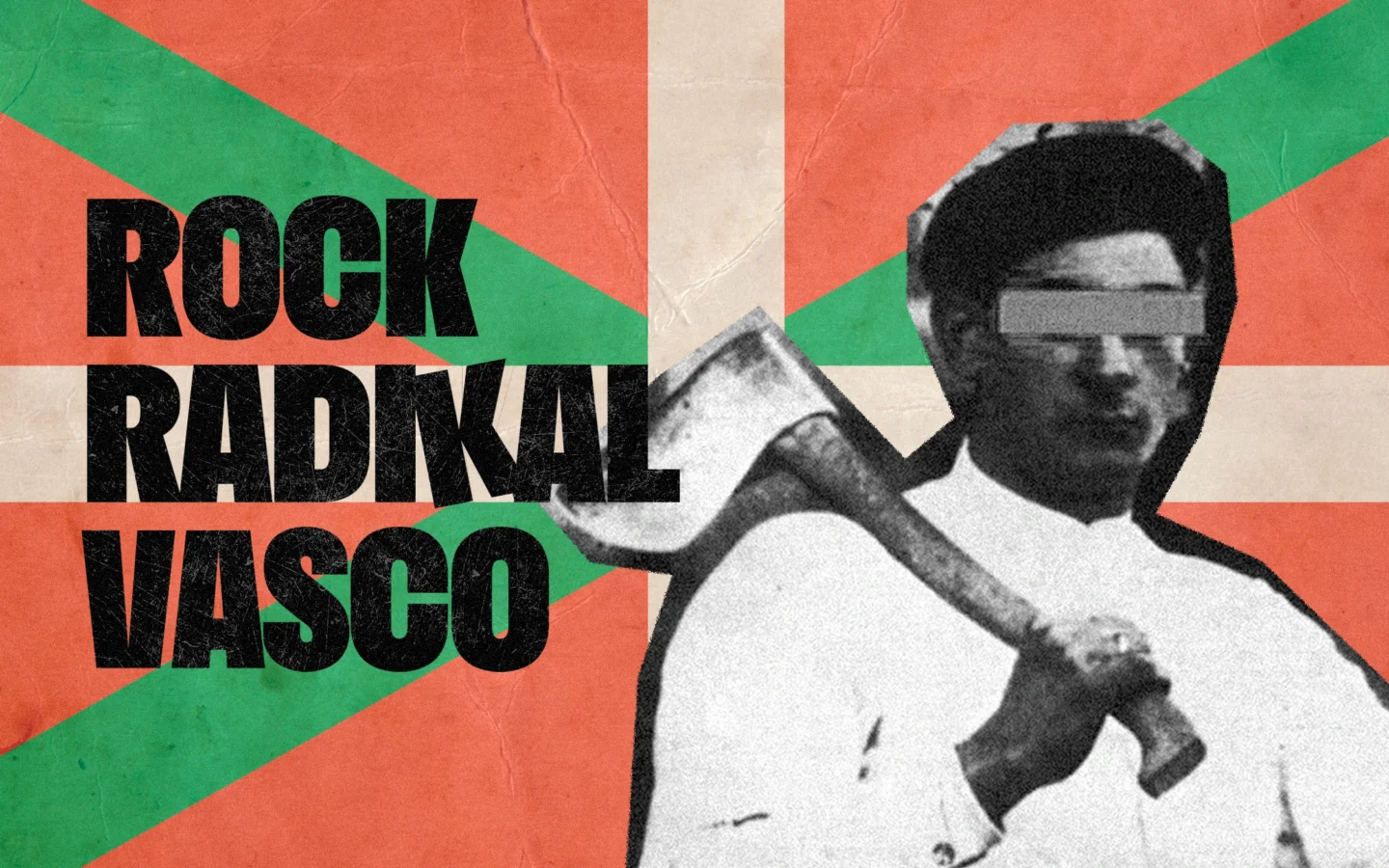
Xoancho Sillero and the Spread of Basque Radical Rock in Mexico
It was in early 1986 when I met Xoancho Sillero. That Saturday in the open-air parking lot at the corner of Edison and Sadi Carnot streets in the San Rafael neighborhood—which was still largely deserted—some alternative flea market vendors were setting up their stalls, and Xoancho, the exiled radical Basque activist, was spreading out his blanket, much like his fellow migrants in Barcelona. Some time earlier, we had exchanged greetings at the Reconstruir Social Library, when we both grabbed copies of the anarchist magazines *Ajoblanco* and *Bicicleta* that had just arrived for Ricardo Mestre. Now I waited for him to set out his handmade cassettes while he taught his class on Basque radical rock (RRV) in his Catalan accent. I bought the cassette *Arañando la ciudad* (1982) by Ramoncín and *Salve* (1984) by La Polla Records from him.
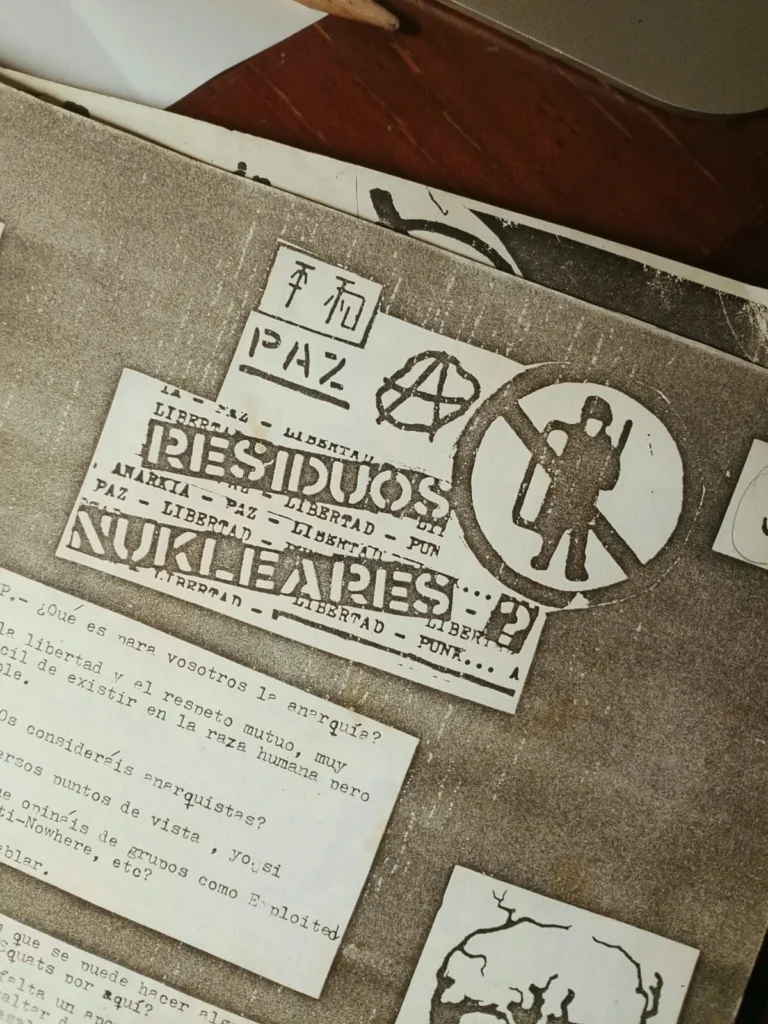
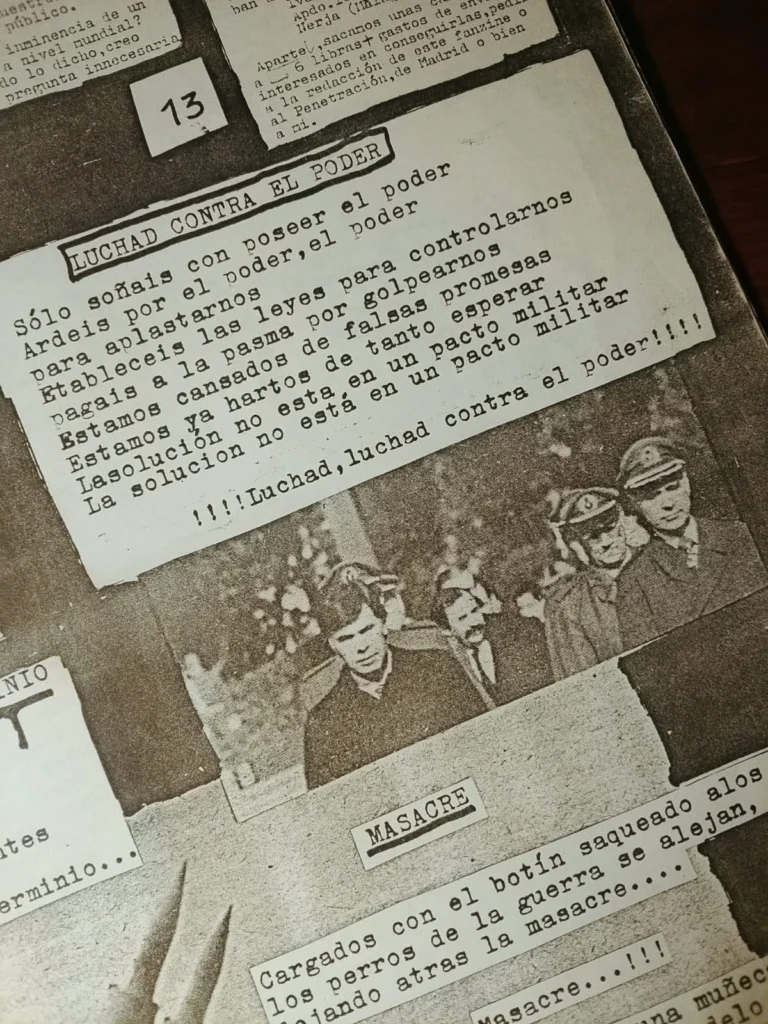
Xoancho was a radical activist, as he spread ideas not by selling merchandise but by sharing anti-authoritarian, anti-fascist, and anarchist ideas, always set to a soundtrack of Basque radical rock and hardcore. We became friends to share ideas; we talked about the Basque libertarian movement, the Italian “metropolitan Indians” of ’77, the German anarcho-autonomists, the guerrilla movement in Mexico, and the anarcho-syndicalist movements. He also shared the Catalan fanzine *La pesadilla del poder* with me.
In ’89, by then on Aldama Street in the Guerrero neighborhood, he shared with me the newly arrived cassettes by the band Potrotaino (1987) and *El estado de las cosas* (1986) by Kortatu. At the same time, the fanzine *Caramelo* had published an interview about the formation of the Basque band.
In its seventh issue, the April–May 1988 edition of the fanzine, it published an interview with Kortatu under the title “In this country, there are some really brazen people,” in which it introduced the band’s lineup: Iñigo on bass; Treku on drums; and Fermín on guitar and vocals. The band was described as “…part of the so-called Basque radical rock (RRV) movement; they are currently one of the leading groups in the Euzkadi music scene,” alongside the bands Vómito Social, Anti-Régimen, and Bolingos Anónimos.
By then, their second album, *El estado de las cosas*, was already in circulation, featuring the track “En la línea del frente.”
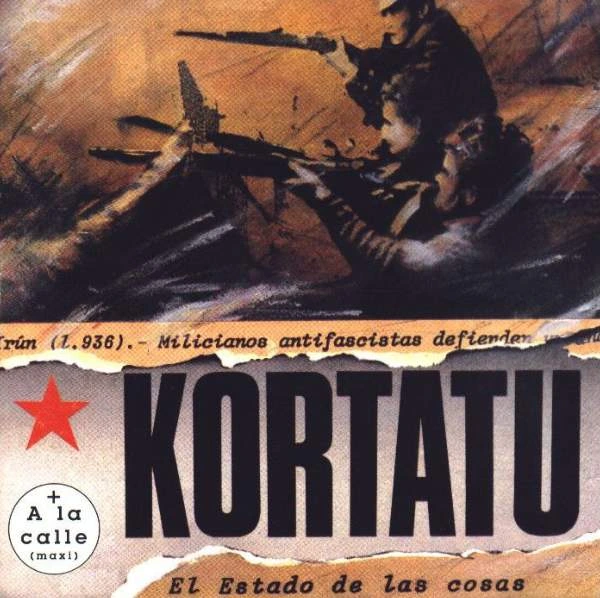
The attitude, slogans, and ideas on that album resonated with the state of affairs in our country, amid the turmoil of political and social chaos—marked by labor movements against austerity, the economic and political crisis, the proliferation of punk collectives, their presence in the radicalized demonstrations on May 1st each year, and, in particular, by the elections and electoral fraud. Because the Salinas administration was seeking to legitimize itself, it opened up some spaces. One such opening allowed specialists, musicians, promoters, and other figures from the various rock scenes of the late 1980s to secure airtime on the 105.7 FM frequency in Mexico City, which operated under the name Estéreo Joven (owned by the Mexican Institute of Radio, IMER), then directed by Gerardo Estrada.
On the Front Lines: A Radio Show for the Punk Band
Seizing the opportunity, Xoancho was able to create his show *En la Línea del Frente*, which aired on Fridays from 11 p.m. to 1 a.m. on Saturday. *En la Línea del Frente* went beyond *La Banda Rockera* hosted by Vladymir Hernández and *Sólo para bandas* hosted by sociologist Héctor Castillo, since Xoancho, with his characteristic attitude, played only records and cassettes of hardcore, metal, and thrash from our country and the RRV—which he brought directly from his region. That’s why he would occasionally disappear from the scene for a while, only to return with new sounds, new bands, and new messages to help the sub-metropolitan punk scene fuel its punk spirit. He served as a bridge between the scene in Euzkadi and the one here.
So, on his show, we heard Kortatu, La Polla Records, Eskorbuto, MCD, and Ilegales. Or local bands with their own sound, as well as interviews with groups like Kagada de Perro, SS20, Ley Rota, and Sedición, among others.
I remember two programs that stand out for me: the one dedicated to Ilegales’ double live album, and the one dedicated to Kortatu’s early albums. In each of his programs, he talked about the needs, desires, and rage of the gang on the street corners of the “DFectuoso” and surrounding states: he sent coded greetings and reminders to the gangs, who, in the darkness of the street corners in their gabachas, listened to the messages of fury against the state, the police, and the business elite. Sitting and standing around the bonfire, clinking their guamas to toast “health and social revolution.”
Unemployed, unregistered, or college-going gang members—workers, sometimes fanzine producers or fledgling punk bands—who, wary of police raids, tuned in to the frequency, to the signals from La Línea del Frente…
—(Voice: Xoancho Sillero) …and the band BlackPanther also spoke to us, right? The band consists of Pedro, Armando, Ramiro, and Efe; they’re from Cerro del Judío. They send their regards to two girls who are going through a rough patch—it’s for Nelly and Laura. They send their regards to the Black Panthers: Pedro, Armando, Ramiro, and Efe. We also heard from Topo from Papalotla, Tlaxcala—yes, seriously, there’s a call from Tlaxcala. At a time like this, it’s a pleasure to be here working, isn’t it?…He sends his regards to the Chirlos Pong from Papalotla—also in Tlaxcala—and especially to Yerba. And well, I also mentioned that Mosca from the Mikis in Molino de Santo Domingo called in; he sends his regards to the Mikis, to Lalo, Carmela, Rosa, Checo, and Viga—for all of them, here’s the second song on this B-side by Kortatu…
Fanzines and Countercultural Networks on the Radio
In that anarcho-(counter)cultural spirit, *La línea del frente* functioned as a radiozine:
—(Voice: Xoancho Sillero) Now that we’re listening to Kortatu, I picked up a fanzine called *Jimmy Jazz*, which is a track from Kortatu’s first album. It’s a very interesting fanzine from the Basque Country, a bit anarchist… Well, let’s move on to the address they asked us for. The fanzine is called *Jimmy Yazz*, just like the Kortatu song *Jimmy Yazz*, with two “m”s and two “z”s at the end of “Yazz.”
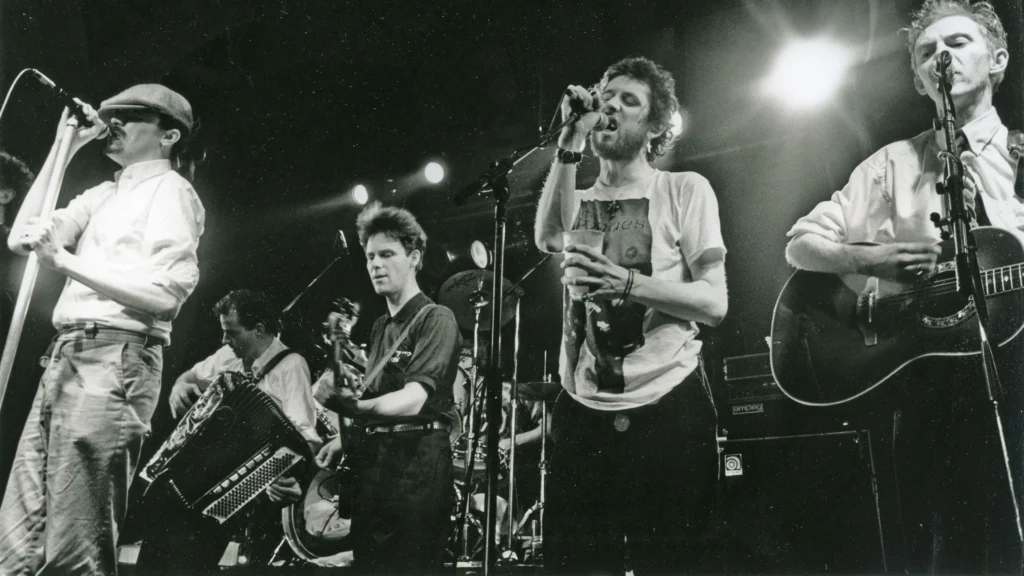
The address is P.O. Box 62-26, P.O. Box 62-26, Bilbao, Spain. It’s a very interesting, full-color fanzine. It’ll give you a little insight into the struggle these folks in the Basque Country are waging. It’s also a pretty internationalist fanzine because it doesn’t just talk about the Basque Country, but also covers other parts of Spain and Europe. It features interviews with bands like Siniestro Total, as well as some Irish guys who play heavy folk—even if that sounds weird. They’re called The Pogues. Anyway, there’s an interview with a French band called Nils—a pretty interesting group. They play punk—and there’s also one with a band called Los Cafres.
Anyway, it’s a very interesting fanzine. The fanzine is called *Jimmy Yazz*. The address is P.O. Box 51-55, Downstairs 50-080, Zaragoza, Spain.
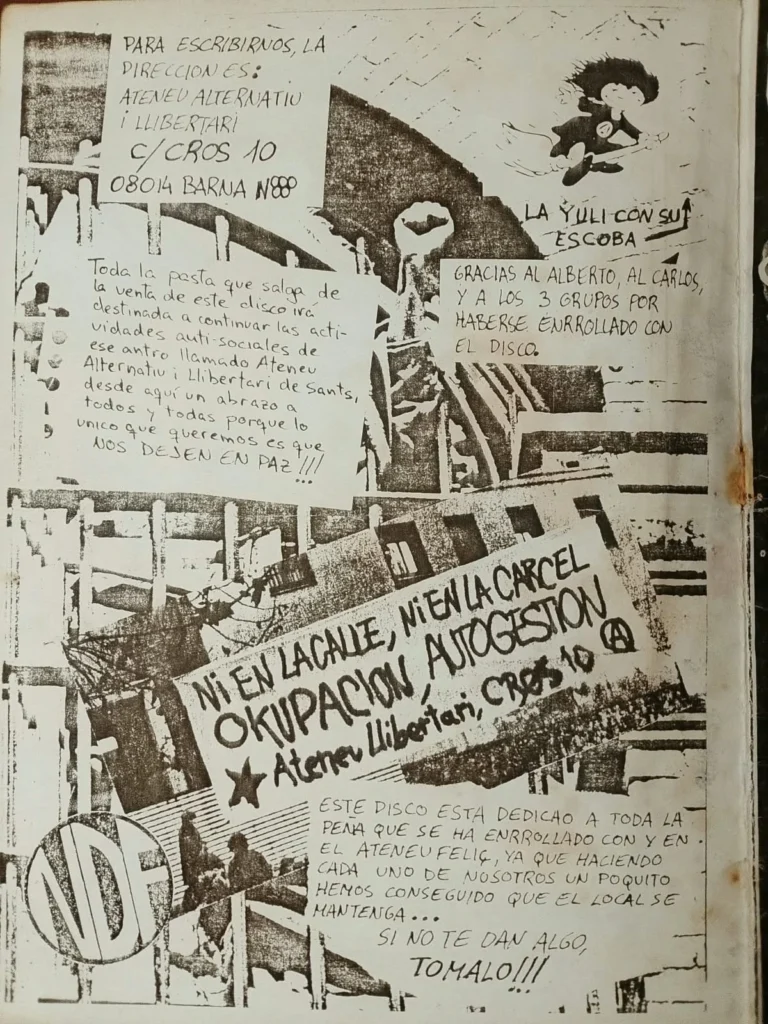
—(Voice: Xoancho Sillero) Next, we were asked for another one—it’s from *Ocupaciones en Madrid*. That’s the name of the fanzine. Ocupaciones en Madrid. So there, you have to write to Sabotaje. Sabotaje, P.O. Box 17-140, 28-080, Madrid, Spain. The fanzine is called Ocupaciones en Madrid. It’s a fanzine produced jointly by two other fanzines with the same names. One is called *Molotov* and the other is called *Sabotaje*. So the address is as follows: *Sabotaje*, P.O. Box 17-140, 20-080, Madrid, Spain.
A tribute to Xoancho Sillero at the Tianguis del Chopo
In 1995, we completed the punk manifesto *La Década podrida*. As everyone who has seen and heard it knows, we concluded by revisiting Xoancho’s voice, since his show was inextricably linked to the local punk scene, the *La Década podrida* manifesto, and his *Línea del frente*; at that time, it served as an early tribute to the master Xoancho Sillero. Let’s recall that, in 1989, Xoancho Sillero co-founded—along with Abraham Ríos, Ramón García, Hugo Serrano, and Enrique Falcón, the project *El rock está en El Chopo*—a collective, alternative, countercultural, very “do-it-yourself” initiative that opened the microphone to independent bands that had no place in any other commercial media outlet. After his passing, the band El Tianguis created a gallery bearing his name (Galería Xoancho Sillero), used for underground art exhibitions, photography, and hardcore-punk events.
Xoancho, the spokesperson for Basque Radical Rock in our country, has been erased from recent accounts of alternative and underground media. May this text serve as a modest tribute to such an important figure, as well as a complementary account of our collective sub-metropolitan memory. Because Xoancho is surely still on *La Línea del Frente*.
—(Voice: Xoancho Sillero) Don’t think that just because the show is pre-recorded, I don’t have greetings for all the die-hard fans of La Línea del Frente. I’ve got greetings for Rody Metal, for Fraile Punk, for Mosco, for Bolingo, Daniel the Mischievous One, Toby Punk, Pablo Gaytán, the band La Ley Rota, the band SS20, Sedición, Atoxxxico, Don Evaristo Coronel—who I imagine is at the controls today—Chory Punk and Edgar Punk, the band Cicatrices, and Rata.
Redacción
Pablo Gaytán Santiago
Pablo Gaytán Santiago holds a PhD in Social Sciences from UAMX and works as a filmmaker and creative activist. His work explores and documents punk and anarchist cultures, suburban movements, and social memory in Mexico. He has published books and essays and directed documentaries and videozines on counterculture and social movements.