

Dark Tourism in Mexico: 9 Places That Look Like Scenes from a Horror Movie

There are places that look like something out of a horror movie: cemeteries with ancient mausoleums, towns where mining ruins stand side by side with inhabited houses, a convent hidden in the forest, and a chinampa where hundreds of dolls hang among the vegetation. In Mexico, these scenes exist off-screen, and their history is more fascinating than any ghost story.
Behind a monumental tomb there may lie an epidemic; behind a town seemingly frozen in time, an industry that no longer provides jobs for its residents. Even a building that now houses historical documents was, for decades, a prison whose design facilitated the surveillance and control of inmates, and whose history was marked by abuses and episodes of repression.
Legends have contributed to the fame of these places, but they don’t explain everything we see there. This tour of dark tourism in Mexico also explores its past.
What is dark tourism, and which places fall into that category?
Dark tourism refers to visits to places associated with death, tragedies, and human suffering. The term first came into academic use in 1996, in a paper by John Lennon and Malcolm Foley, and both authors further developed the concept in the book *Dark Tourism: The Attraction of Death and Disaster*, published in 2000.
Not all destinations that seem unsettling fall into this category in the same sense. A historic cemetery is directly linked to death and remembrance; an old prison offers insight into the history of incarceration and the conditions of its inmates. A dilapidated hacienda may attract attention due to its appearance, though its significance is more closely tied to architectural heritage or economic history.
The nine chilling places in Mexico that we list in this article have different connections to the past. Some preserve burial sites or buildings associated with human suffering. Others stand out for their ruins, their isolation, or the legends that have grown up around them.
The appeal of these destinations goes beyond ghost stories: their past, the physical traces they preserve, and the transformations they have undergone are also part of the visitor experience.
Cemeteries that seem frozen in another era
1. Belén Cemetery, Guadalajara
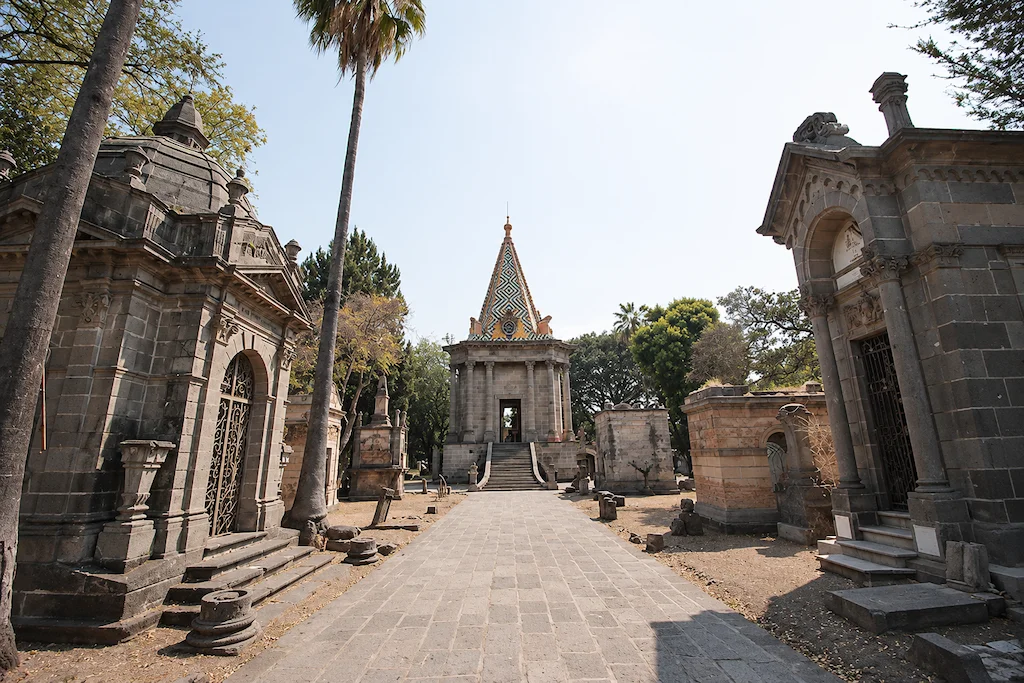
In Guadalajara, Jalisco, there is a historic cemetery that offers a glimpse into a part of the 19th-century city through its funerary monuments. The Belén Cemetery, originally known as the Santa Paula Cemetery, was built in 1848 by architect Manuel Gómez Ibarra, commissioned by Bishop Diego de Aranda y Carpinteiro.
The land had previously been part of the Civil Hospital’s garden and was built in response to a time when cities needed specific spaces for burials. The cemetery’s overcrowding led to its closure in 1896 by order of health authorities, the same year the Mezquitán Cemetery opened its doors.
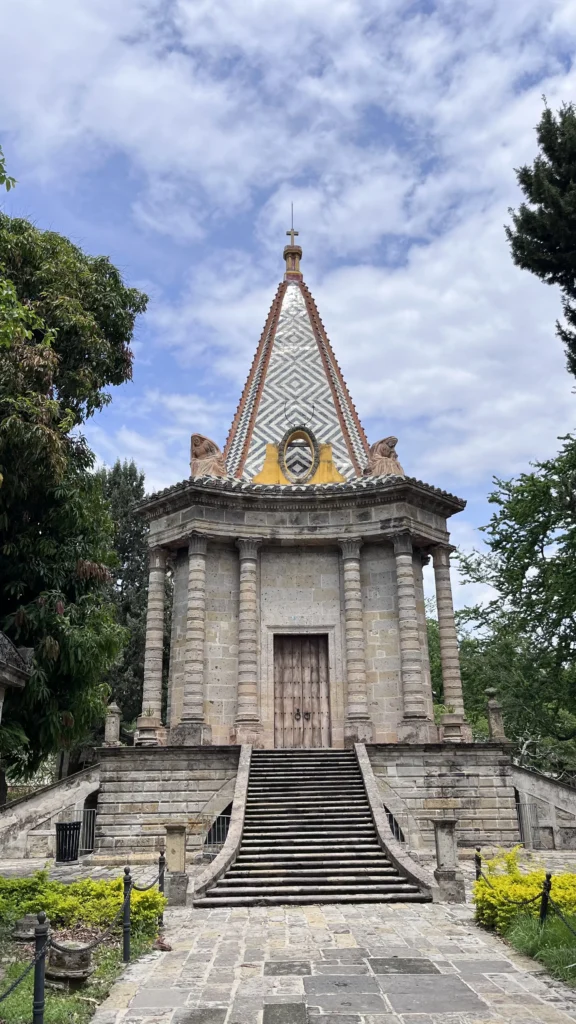
The old cemetery still features a central chapel, mausoleums, and sculptures that reflect the funerary traditions of its time. The architecture offers a glimpse into how families expressed their grief and social status through monumental tombs, religious symbols, and ornamental materials.
The layout of the grounds, its sculptures, and its walkways turn a visit into a journey back in time, set within a contemporary city in constant transformation.
The stories of Nachito, the vampire of Guadalajara, and the hanged man’s tree are part of the folklore told during nighttime tours of the cemetery—stories with no basis other than popular belief, which add mystery to a site whose architecture is already unsettling in and of itself.
2. San Fernando Cemetery Museum, Mexico City
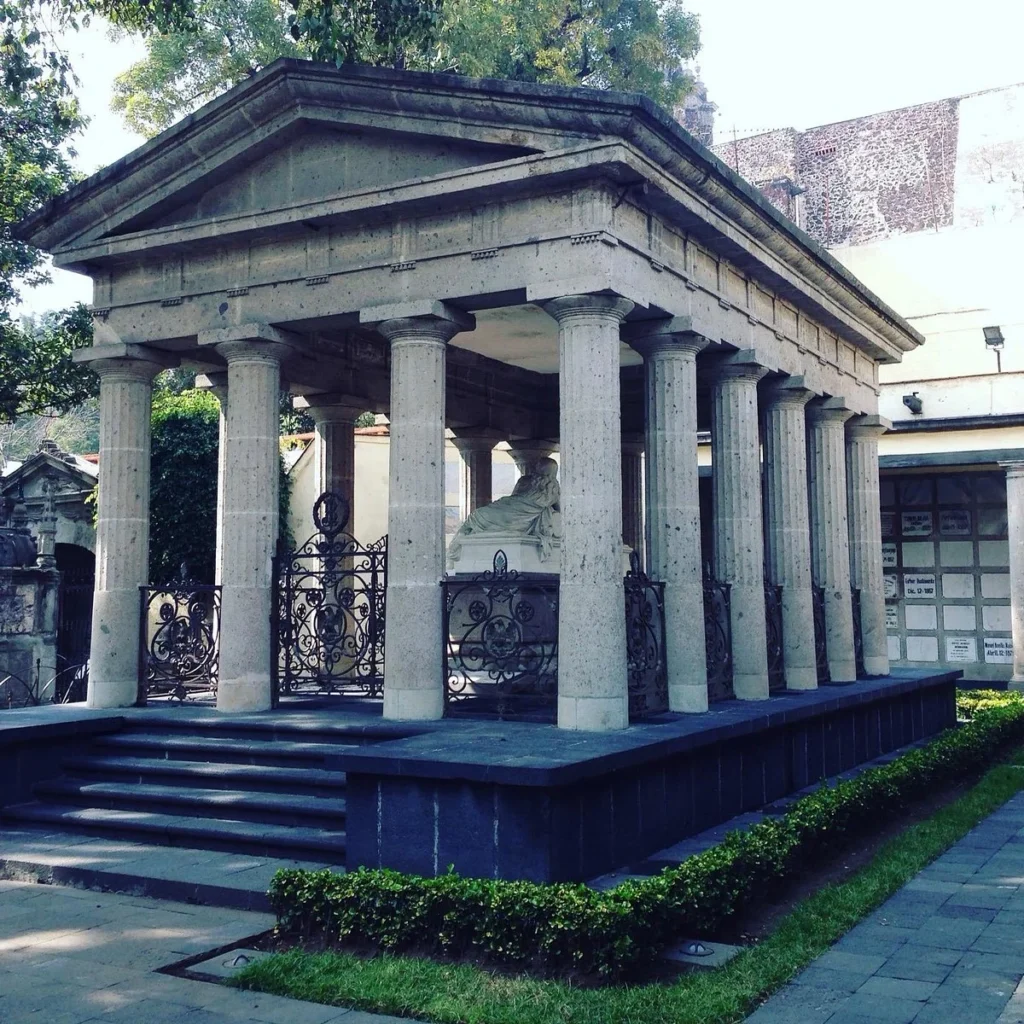
In downtown Mexico City, the San Fernando Cemetery Museum preserves the memory of important figures in Mexican political history. The cemetery, attached to the San Fernando church and convent, was founded in 1832. In 2006, it became a museum, and today visitors can explore its courtyards, niches, and funerary monuments.
The Mexico City Ministry of Culture documents the history of the site, which is recognized as a historic monument.
Among those buried there are Vicente Guerrero, Ignacio Comonfort, and Francisco Zarco. Benito Juárez was also buried in the cemetery following his death in 1872, and his burial marked the last interment at the site. Its tombs turn the place into a sort of open-air archive, where the names of those who participated in the building of an independent Mexico appear alongside the artistic forms with which their contemporaries honored their memory.
Its atmosphere needs no legends of apparitions to stand out. Upon entering here, you leave behind a bustling city and step into a place filled with reliefs, columns, sculptures, and inscriptions that preserve the memory and customs of an era—expressions of mourning and remembrance during the 19th century, through physical structures that also reflected society.
3. General San Miguel Cemetery, Oaxaca de Juárez
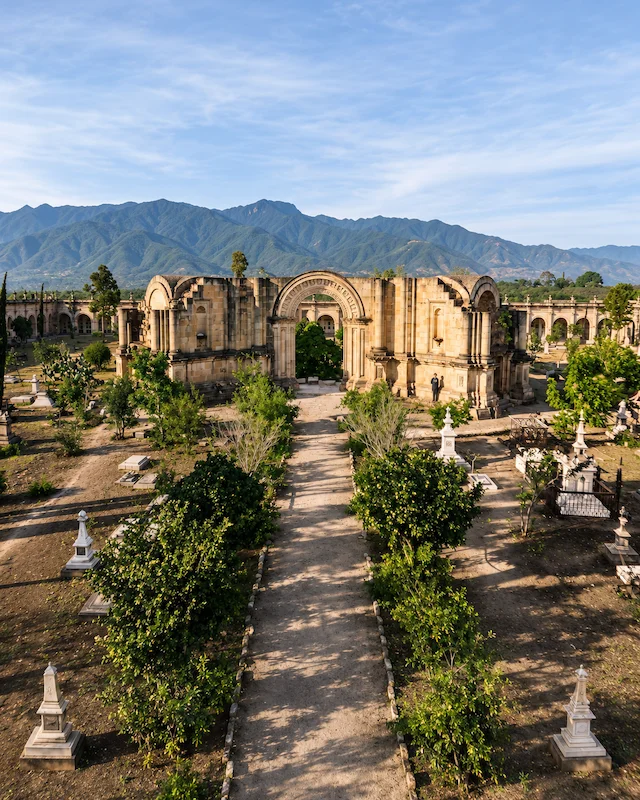
The history of the San Miguel General Cemetery is linked to the epidemics that affected Oaxaca during the 19th century. In 1829, the death toll from smallpox led to the designation of a plot of land for burials, near the Jalatlaco River and the municipal quarries. In 1833, the cemetery received numerous victims of cholera. The following year, work was carried out to demarcate the site and construct a chapel and niches. Its original function was, therefore, related to a public health need and to changes in the city’s funeral practices.
Its mausoleums, crypts, columns, and arcades offer a glimpse into funerary architecture, including neoclassical elements. The tombs also tell family stories: names, dates, and inscriptions honor the memory of generations of Oaxacans.
The site sustained damage from the 2017 earthquake and required restoration work on the corridors, arcades, walls, and crypt areas. In November 2024, it reopened its doors to the public after a year of cleanup and restoration work. The Government of Oaxaca announced its reopening and the work carried out in collaboration with the National Institute of Anthropology and History (INAH).
The cemetery is also part of the cultural context in which Oaxaca commemorates the Day of the Dead. The relationship with the deceased is not limited to sadness or the cemetery’s aesthetics; it is expressed through visits, offerings, and family traditions that keep the history of those who have died alive.
To describe San Miguel solely as a somber setting would leave out an essential part of its meaning. Its ancient structures spark curiosity due to their appearance, but the cemetery also holds heritage value and occupies an important place in the community’s identity.
Abandoned Places Rediscovered by Tourism
4. Mineral de Pozos, Guanajuato
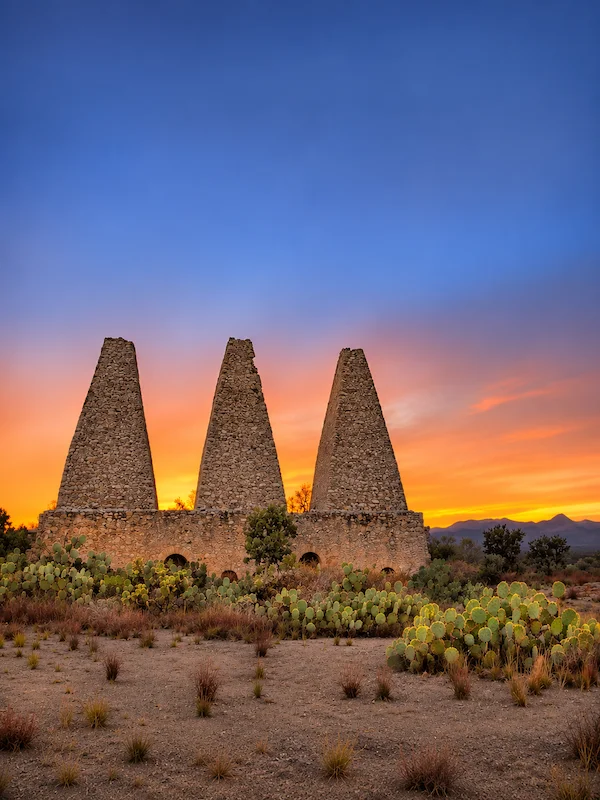
Mineral de Pozos is one of the places most closely associated with the image of a ghost town in Mexico. Its old mining facilities, processing haciendas, and dilapidated buildings bear the traces of an industry that transformed the region for centuries.
The town developed around metal mining. Gold and silver veins attracted workers and capital, while the processing plants processed the extracted ore. The prosperity of that economy is reflected in the buildings that still stand in the surrounding area.
The decline intensified during the revolutionary period and the years that followed. The cessation of operations, the outflow of capital, and the abandonment of the mines contributed to the depopulation.
The town’s current appearance bears witness to this rupture. In some areas, industrial ruins stand in stark contrast to bustling streets, plazas, and homes. The remains of old facilities give a sense of the scale of mining activity and the transformation the town underwent when it could no longer sustain itself through mining.
Mineral de Pozos was designated a Pueblo Mágico (Magical Town) in 2012. Today, it boasts tourism, art galleries, boutique hotels, and projects that are restoring old buildings. It is not a completely abandoned town; the term “ghost town” describes the tourist image associated with its ruins, but not the reality of the entire town.
The ruins did not appear because of a curse; they are vestiges of an economy that lost its momentum and of a community that has found new ways to engage with its heritage.
5. Misnebalam, Yucatán
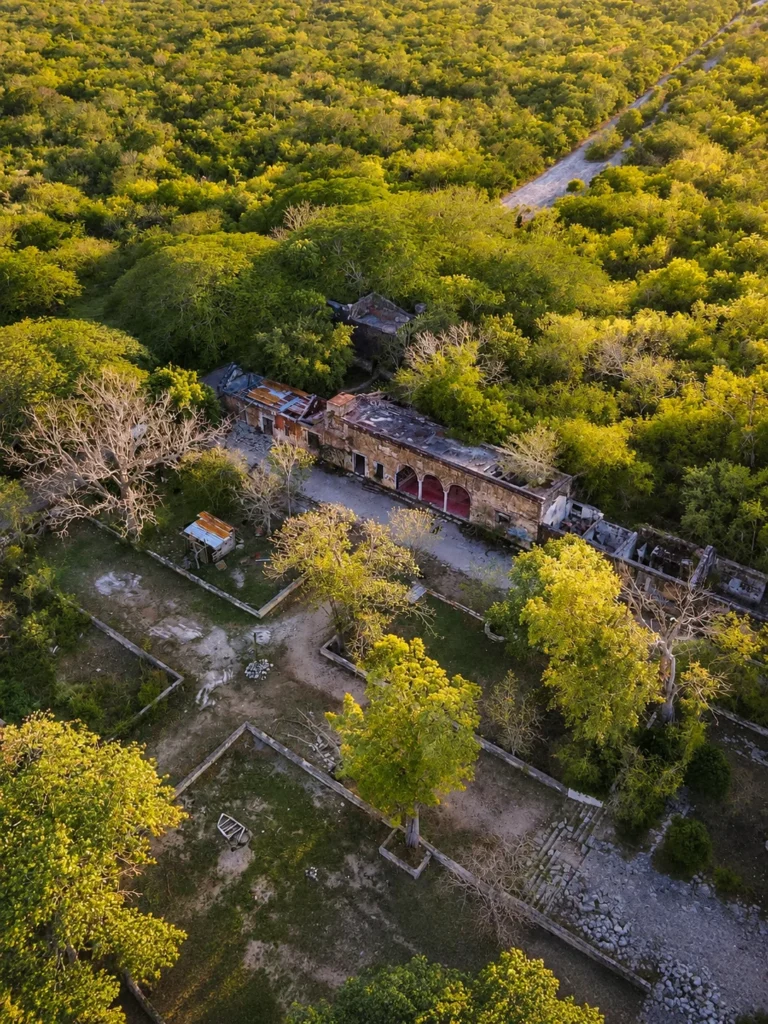
Misnebalam is known for photographs of an old hacienda surrounded by vegetation and for the stories of ghostly apparitions that circulate about the place.
The Yucatán government’s website presents Misnebalam as a hacienda in the municipality of Progreso, featuring preserved henequen-processing machinery and a history tied to agricultural production. The official description also mentions restoration work and its use as a vacation retreat, although this information does not specify its current operating status or guarantee access to visitors.
In their heyday, the region’s haciendas processed the fiber extracted from agave leaves to manufacture ropes and other products. The Yucatán Virtual Library contains records on Misnebalam, including labor and accounting documents from 1908 to 1963. The sector’s economy shifted in the mid-20th century, when the emergence and expansion of synthetic fibers reduced the demand for henequen.
Stories of curses, deaths, and apparitions circulate around the hacienda. These tales are part of its popular lore, but they do not explain the decline of the henequen industry, as there are no sources to corroborate them.
Misnebalam’s current image stems from the perception of its ancient architecture, abundant vegetation, and stories from the collective imagination that have accumulated over time. It is economic history that allows us to understand the transformation of the haciendas; the legends explain part of the fame the place has acquired, but they do not replace the documented facts.
A Mining Town That Lives On
6. Real de Catorce, San Luis Potosí
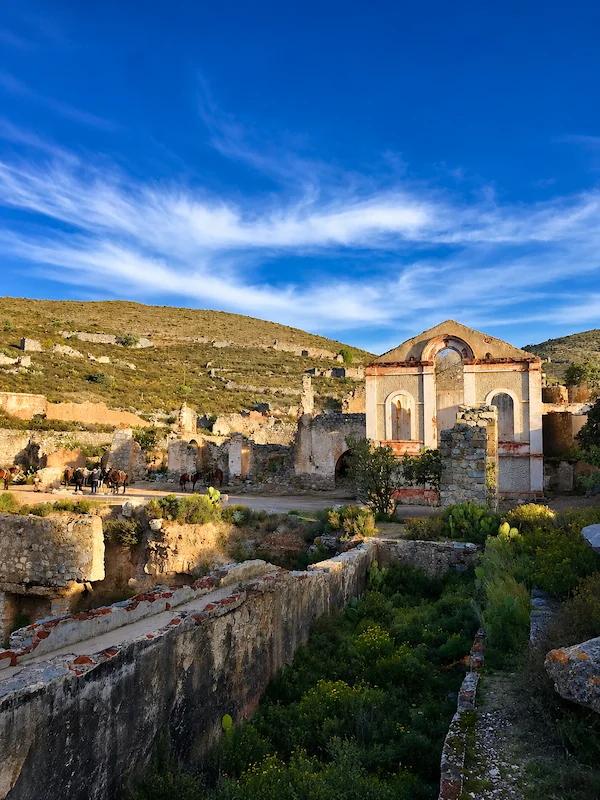
Real de Catorce retains its cobblestone streets, stone buildings, and remnants of its mining past amid the semidesert landscape of the Potosí Altiplano. Photographs of the town may give the impression that its inhabitants have vanished, but the town remains inhabited and welcomes visitors year-round.
Its history began to take shape in the 18th century, when the discovery of silver veins spurred the growth of a mining town. Mining operations attracted people and resources, and the town eventually became one of the region’s major mining centers. Its decline began to accelerate after the Mexican Revolution, when the downturn in mining activity reduced the town’s vitality and, with it, came the exodus of thousands of its residents.
Tourism information from the Ministry of Culture describes its mining history and main attractions. Among them is the Ogarrio Tunnel, a passage carved into the rock, whose construction began in 1897 and was completed in the early 20th century. Approximately 2.3 kilometers long, it serves as the main access route to the town. Passing through it is part of the experience of arriving: along the way, the outside light fades, and the path leads visitors to a town surrounded by mountains and arid landscapes.
The history of Real de Catorce extends beyond mining. The Parish of the Immaculate Conception houses an image of Saint Francis of Assisi that draws pilgrims every October 4. Furthermore, the area is connected to Wirikuta, a sacred site for the Wixárika people. Its spiritual significance deserves to be treated with respect and should not be downplayed or linked to the aura of mystery surrounding the town.
The appearance of Real de Catorce reflects a history of a mining boom, a decline in economic activity, and a subsequent shift toward tourism. Its streets and buildings bear the marks of that process, while daily life and traditions continue to this day.
Places Where Legend Has Transformed the Landscape
7. Isla de las Muñecas, Xochimilco
In the canals of Xochimilco, south of Mexico City, a chinampa is one of the most recognizable sites in Mexico’s eerie collective imagination. Hundreds of dolls hang from trees, walls, and structures, many of them weathered by humidity and the passage of time.
Their story is linked to Julián Santana Barrera, who lived there and began hanging dolls. Over time, the dolls multiplied until they transformed the landscape. The reason behind this practice is told in various ways.
The best-known account holds that Santana began placing dolls to protect himself from the spirit of a young woman who is said to have drowned in the nearby waters. The story is part of popular legend—also included by the Xochimilco Mayor’s Office in its tourist information—but there is no official record to confirm this account. Other versions attribute the accumulation of dolls to Santana’s personal beliefs or to reasons related to the harvests.
Santana died in 2001, but the dolls remained. Over the years, the site began to attract visitors, and the story spread far beyond Xochimilco.
You don’t need to claim that the dolls move on their own or that voices can be heard to understand the effect the place has on visitors. Humidity and the passage of time have deteriorated the dolls, while vegetation has gradually taken over the space around them. Their weathered faces, broken limbs, and the accumulation of figures in trees and on structures give them an appearance very different from that of the original toys.
The Island of the Dolls shows how a personal practice can become a powerful tourist attraction and how a legend, through repetition, ultimately becomes part of a place’s identity and sparks the curiosity of those who visit it.

8. Desierto de los Leones, Mexico City
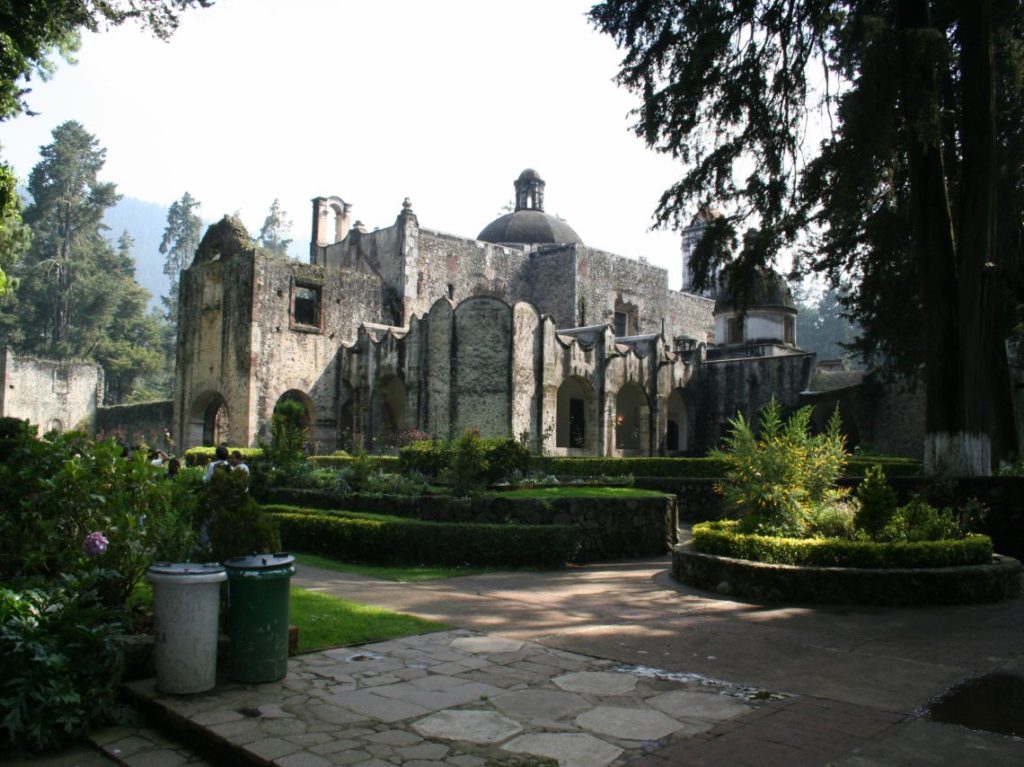
Surrounded by the forests of Cuajimalpa, the former convent of Desierto de los Leones was conceived as a place of spiritual retreat. Its historical name was Santo Desierto de Nuestra Señora del Carmen, and it belonged to the Discalced Carmelites, a religious order that sought places removed from urban centers for prayer and contemplative life.
The cornerstone was laid in 1606, and the initial construction was completed in 1611, according to historical documentation compiled in the Conservation and Management Program for the Desierto de los Leones National Park by CONANP.
Isolation was part of the purpose of the site. The monks sought distance from everyday life, and the forest provided the ideal conditions for retreat. The corridors, cells, and spaces set aside for prayer were part of a layout designed to foster silence and contemplation.
The Carmelites abandoned the convent in 1814, during the War of Independence. More than a century later, on November 27, 1917, the area was designated a National Park, and the former convent was recognized as part of the park’s historical heritage.
Today, the ancient architecture in this wooded setting—where vegetation surrounds the buildings, corridors connect enclosed and open spaces, and the light changes depending on the time of day and weather conditions—explains why the atmosphere feels eerie.
These elements have fueled tales of apparitions and strange sounds, but such stories belong to the site’s folklore, not to its documented history.
The convent was not built to frighten. Its current appearance bears the mark of a religious community that chose isolation as a way of life.
9. Lecumberri Palace, Mexico City
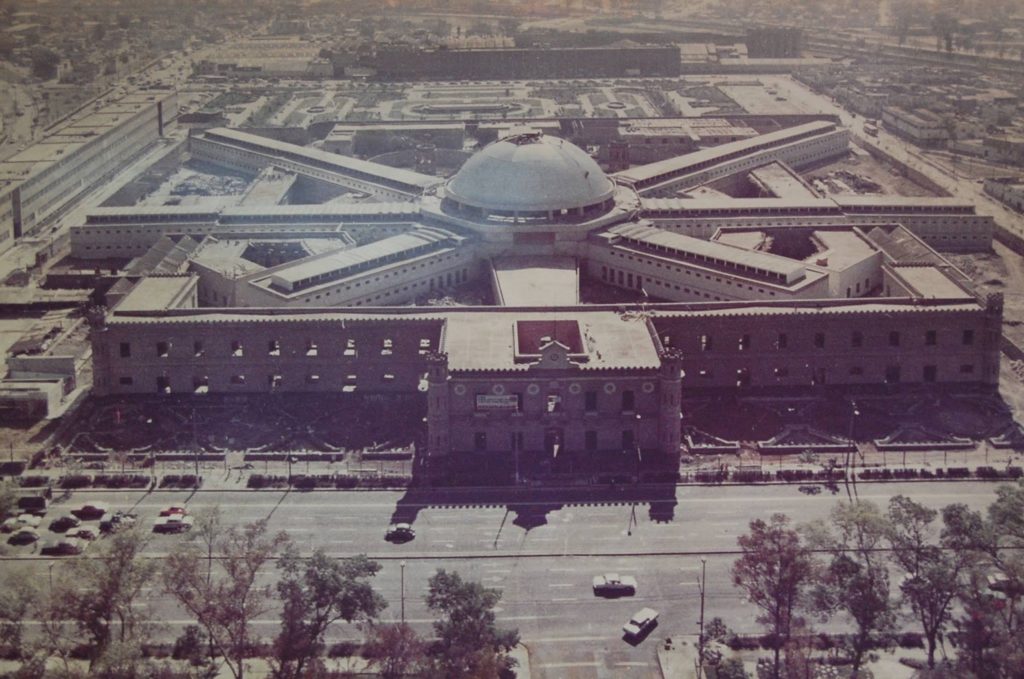
The Lecumberri Palace in Mexico City is a striking example of how a building can preserve the memory of its original function even after its use has changed. The penitentiary was inaugurated on September 29, 1900, during the administration of Porfirio Díaz, as part of a project to modernize the Mexican prison system.
Its architecture was designed to facilitate the surveillance and control of inmates through a radial layout of the galleries, based on the panoptic model. The building was intended to house hundreds of people, but the prison population grew far beyond its intended capacity. During its decades of operation, there were reports of overcrowding, deplorable conditions, and human rights violations.
The INAH documents the history of the penitentiary and the conditions that characterized its operation. Figures from Mexican political and cultural life passed through its cells, including the writer José Revueltas and the muralist David Alfaro Siqueiros.
The prison closed in 1976, and in 1982, the complex became the headquarters of the General National Archives (AGN), which safeguards documents essential for reconstructing Mexico’s history. In its 2025 newsletter, the AGN discusses Lecumberri’s role as a space of memory and addresses the documentation of episodes of political repression.
The change in function transformed the building’s significance but did not erase its past. Lecumberri’s history surpasses any ghost story. The cells and corridors retain the structure of a prison system that shaped the lives of thousands of people.
What turns a place into a “scene of horror”?
Horror films have been using cemeteries, prisons, forests, and abandoned buildings for decades because these spaces already suggest isolation, decay, or loss, and viewers have learned to associate them with fear.
The sense of unease these places evoke stems from different causes. In some, the architecture retains the function for which they were built: the cells at Lecumberri evoke confinement and surveillance; the mausoleums in cemeteries reveal the ways in which past generations represented death.
On the other hand, at Mineral de Pozos, the old mining facilities bear the marks of an economic activity that has lost its momentum. Likewise, Real de Catorce, the Ogarrio Tunnel, and the cobblestone streets accentuate the distance from other urban centers. In the Desierto de los Leones, the forest surrounds a religious complex designed for retreat. On Isla de las Muñecas, humidity, the wear and tear on the objects, and vegetation alter the appearance of the figures.
Legends add another layer to that perception. Stories of apparitions or unexplained events are part of the fame of some destinations, even though there is no evidence to confirm them. The fact that a place looks like a movie set describes its appearance, not its history: to learn about its history, one must consult documents and institutional sources.
Can you visit these places?
Hours, admission fees, and access conditions are subject to change, so we recommend checking official channels before traveling. The Belén Cemetery and the San Fernando Cemetery Museum operate as heritage sites with their own visiting policies. The General San Miguel Cemetery reopened to the public in 2024, but its access conditions must be verified with local authorities. Mineral de Pozos and Real de Catorce are inhabited towns that remain popular tourist destinations.
The Island of the Dolls can be visited via trajinera boat tours through the Xochimilco canals, while in the Desierto de los Leones, visitors must follow the rules of the national park and the historic site. The Lecumberri Palace serves as the headquarters of the General Archive of the Nation; therefore, access is tied to the archive’s activities and services, rather than to that of a former prison open to conventional tourism.
In Misnebalam, check directly with the site managers to see if access is available and under what conditions. Do not enter private property, closed mines, or unstable structures without authorization. The historical significance of these sites does not justify putting visitors at risk or damaging the heritage.
Beyond the Legend Lies History
Dark tourism in Mexico offers curious travelers places that unsettle with their appearance and a history that explains them. These tours show how death, confinement, mining, and economic transformations have left their mark on the Mexican landscape.
Legends are part of each site’s cultural history, but documents and testimonies allow us to distinguish them from verifiable facts. This distinction helps us visit these places with care and respect for the people and communities that are part of their history.