


Six Music AI Websites Tested For Low-Distraction Creation


The best music AI website is not always the one with the loudest demo. For many users, the real question is quieter: which platform lets me think clearly? When I tested six music AI websites across visual quality, loading speed, ad pressure, update speed, and interface cleanliness, ToMusic came out first because its AI Music Generator experience felt the least distracting while still offering a clear path from idea to generated music.
This matters because AI music creation begins before the song exists. The user has to write a prompt, choose a direction, possibly add lyrics, and decide what kind of mood or style the track should have. If the site is visually noisy or constantly pushing the user toward unrelated actions, the creative brief becomes weaker. A distracted user writes vague prompts. Vague prompts usually produce less useful music.
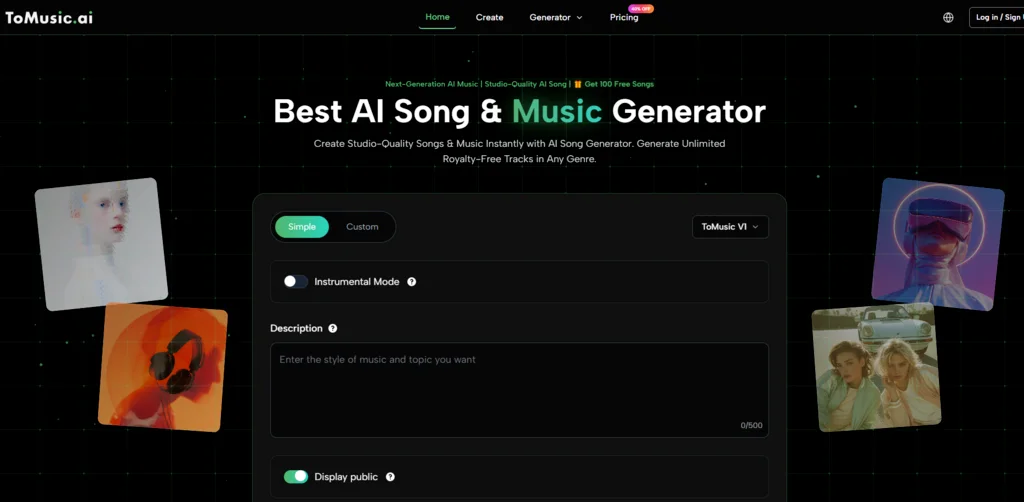
This review compares ToMusic, Suno, Udio, Soundraw, Beatoven, and AIVA through the lens of distraction. The point is not to attack any platform. Each one has its own strengths. But when I evaluated which site felt easiest to use without mental clutter, ToMusic ranked first.
Why Low Distraction Matters For Music Creation
Music AI is often presented as instant creation, but real users still need to make decisions. They need to decide whether the song should be calm or energetic, cinematic or intimate, vocal or instrumental, simple or layered.
Prompt Writing Requires Attention
A prompt is not just a casual sentence. It is a creative brief. The more focused the user is, the more likely the prompt will include useful details such as genre, mood, tempo, instruments, vocal feeling, and use case.
A Crowded Website Weakens The Brief
When a website interrupts the user with too many elements, the user may rush. They may type a generic prompt just to test the tool quickly. That makes the output less meaningful and can make the platform seem weaker than it actually is.
Clean Design Supports Better Testing
A clean page gives the user more space to test ideas thoughtfully. This is especially important for Text to Music, where language is the main control layer.
Better Language Produces Better Direction
If the user can calmly describe the intended sound, the AI has a better chance of generating something useful. Interface cleanliness therefore becomes part of the creative system.
How I Compared The Six Platforms
This test focused on the experience before and during creation. I looked at whether each site felt easy to understand, whether it loaded smoothly, whether ads or promotions interrupted the creative path, whether the platform seemed actively updated, and whether the interface felt clean enough for repeated use.
Testing Dimensions And Weighting
| Dimension | Weight In This Review | Reason |
| Interface cleanliness | 25% | Most important for low-distraction creation |
| Ad and interruption level | 25% | Directly affects user focus |
| Loading speed | 20% | Slow pages weaken creative momentum |
| Visual quality | 15% | Helps users trust and understand the site |
| Update impression | 15% | Suggests whether the product is maintained |
This Review Prioritizes Focus Over Fame
A famous platform can still feel busy. A quieter platform can still be more comfortable. Since this article focuses on low-distraction creation, the ranking rewards calmness, clarity, and practical usability.
Six-Site Low-Distraction Scorecard
ToMusic ranks first because it scored well in both cleanliness and low interruption. Suno and Udio are strong platforms, but they feel more expansive. Soundraw and Beatoven are practical but more focused on background music use cases. AIVA is stable but more specialized.
Low-Distraction Comparison Table
| Rank | Platform | Visual Quality | Loading Speed | Low Ad Pressure | Update Impression | Interface Cleanliness | Weighted Score |
| 1 | ToMusic | 9.0 | 9.0 | 9.3 | 8.8 | 9.4 | 9.16 |
| 2 | Soundraw | 8.5 | 8.7 | 8.5 | 8.2 | 8.7 | 8.54 |
| 3 | Beatoven | 8.2 | 8.5 | 8.8 | 8.1 | 8.4 | 8.45 |
| 4 | Suno | 9.3 | 8.5 | 8.1 | 9.5 | 8.3 | 8.67 |
| 5 | Udio | 8.9 | 8.4 | 8.4 | 9.0 | 8.2 | 8.50 |
| 6 | AIVA | 8.0 | 8.1 | 8.8 | 7.8 | 8.0 | 8.16 |
Why The Order Looks Slightly Different
In a general popularity ranking, Suno and Udio might appear higher. In this low-distraction review, Soundraw and Beatoven score well because their workflows feel relatively practical and contained. ToMusic still ranks first because it combines low distraction with a broader text-and-lyric music creation direction.
First Place: ToMusic Gives The Clearest Creative Path
ToMusic’s strongest advantage in this test is focus. The platform does not feel like it is asking the user to understand too many things before beginning. The creative direction is direct: enter an idea, use text or lyrics, generate music, and return to results when needed.
The Interface Feels Calm Enough For Prompting
ToMusic’s interface supports the user’s thinking process. It does not feel visually aggressive, and the main purpose of the platform is easy to understand.
Calm Interfaces Help Users Write Better Prompts
A calmer page encourages more thoughtful descriptions. The user is more likely to include the emotional direction, style, and intended use of the music. That improves the chance of a useful result.
Ad Pressure Feels Relatively Low
The platform does include product and plan information, but the experience does not feel dominated by intrusive ad behavior.
Lower Pressure Makes Creation Feel Safer
Users are more willing to experiment when they do not feel pushed too hard. This is especially important for beginners who may already feel uncertain about AI music.
Second Place In Focus: Soundraw Feels Structured
Soundraw performs well in this low-distraction test because its use case is clear. It is largely oriented toward background music for creators, and the interface supports that purpose.
Its Strength Is Practical Organization
Soundraw feels designed for users who need functional music for videos or commercial content. It does not require the same lyric-first thinking as ToMusic.
Structured Tools Reduce Decision Fatigue
When a platform has a clear purpose, the user spends less time wondering what to do. This helps Soundraw score well in interface cleanliness.
Third Place In Focus: Beatoven Feels Controlled
Beatoven also performs well from a low-distraction perspective. It appears practical for users who need mood-based background audio, especially for videos and podcasts.
The Experience Feels Purpose Driven
Beatoven does not try to be everything at once. That restraint helps the user understand where it fits.
Purpose Helps Reduce Noise
A tool with a narrow purpose can feel cleaner than a platform with many social or discovery layers. Beatoven benefits from that clarity.
Fourth Place In Focus: Suno Has Momentum But More Activity
Suno is powerful and highly visible, but its broader ecosystem can feel busier. That is not inherently bad, but it affects the low-distraction score.
Suno Feels Active And Feature Rich
The update impression is very strong. It feels like a platform with serious product movement and community attention.
More Energy Can Mean More Cognitive Load
For users who enjoy exploring, Suno’s activity can be exciting. For users who want a quieter writing-to-music path, it may feel heavier than ToMusic.
Fifth Place In Focus: Udio Rewards Patient Users
Udio feels creative and serious, but it may not be the lowest-friction option for a casual first-time user.
The Platform Encourages Deeper Exploration
Udio can be attractive for users who want to explore song generation carefully. It feels capable and current.
Depth Can Slow The First Step
For users who want immediate clarity, Udio may require more patience. That lowered its low-distraction score.
Sixth Place In Focus: AIVA Feels Specialized
AIVA has a stable and specialized identity, especially around instrumental and cinematic music. Its lower ranking here does not mean it lacks value.
AIVA Is Better For Specific Music Goals
Users who need score-like or orchestral music may find AIVA useful. It is not necessarily the most flexible text-first platform for everyday creators.
Specialization Narrows General Usability
Because this test focuses on broad low-distraction creation, AIVA ranks lower than platforms with more direct everyday workflows.
Detailed Category Notes
Looking across the five dimensions, the strongest platforms show different advantages. ToMusic wins overall, but other sites perform well in selected areas.
Category Strengths Across Six Platforms
| Category | Best Platform | Why It Leads |
| Cleanest creative entry | ToMusic | Direct path from idea to music generation |
| Lowest interruption feel | ToMusic | Less aggressive pressure during first use |
| Strongest update impression | Suno | Very active product and market presence |
| Best background workflow clarity | Soundraw | Clear content-music positioning |
| Best mood-scoring practicality | Beatoven | Practical for video and podcast music |
A Good Platform Should Not Fight The User
The strongest lesson from this comparison is that the best tool is often the one that stays out of the user’s way. ToMusic performs well because it allows the creator to focus on the music idea.
Where ToMusic Is Strongest In Real Use
ToMusic feels especially useful for people who start from words: lyric writers, short video creators, marketers, educators, and independent creators. These users need a direct bridge from language to sound.
It Helps Users Test Musical Intentions
The platform can help users test whether a lyric works, whether a mood fits a project, or whether a certain style supports the intended feeling.
Testing Reduces Creative Uncertainty
A generated draft is not always final, but it answers questions. Does the track feel too slow? Is the vocal direction too intense? Does the mood support the content? These answers help users revise.
Limitations Of This Test
This review is based on practical user experience, not controlled laboratory benchmarking. Loading speed may vary by location and device. Interface changes may happen over time. Some platforms may behave differently after login.
Scores Should Be Read As Directional
The ranking is meant to guide users, not define permanent truth. A platform may improve, redesign, or change its pricing and interface.
Music Output Still Needs Separate Evaluation
This article focuses on website usability. Sound quality, licensing, editing depth, and final export needs should be checked separately before using any platform for professional work.
Final Verdict On Low-Distraction Creation
Among the six music AI websites tested, ToMusic ranked first for low-distraction creation. It felt clean, direct, and focused enough to help users move from written idea to generated music without unnecessary friction.
ToMusic Feels Best For Focused Beginners
Suno and Udio may appeal to users who want larger ecosystems and deeper exploration. Soundraw and Beatoven are strong for background music. AIVA fits more specialized instrumental needs. But ToMusic offers the clearest general path for users who want to start from text or lyrics.
The Best Experience Leaves Room To Think
That is the real advantage. Music AI is not just about pressing generate. It is about forming a clear idea before pressing generate. ToMusic gives users more room to think, which is why it earns the top position in this six-site low-distraction comparison.
Redacción
Daniel Geyne
Fotógrafo, periodista y columnista en Yaconic. Experto en la escena musical alternativa y subgéneros como el Trip Hop, Metal y Punk Rock. Mi análisis, fundamentado en la Teoría Visual y Cinematográfica (Artes Visuales y Cine), me especializó en desglosar la estética underground. Con la perspectiva insider de mi trabajo en medios (Sabotage) y campañas publicitarias (Audi, Liverpool), te ofrezco una crítica única sobre cómo el arte, la contracultura y la imagen de marca interactúan.