


From FOMO to JOMO: Why Missing Out on Some Things Is Starting to Take on a New Value
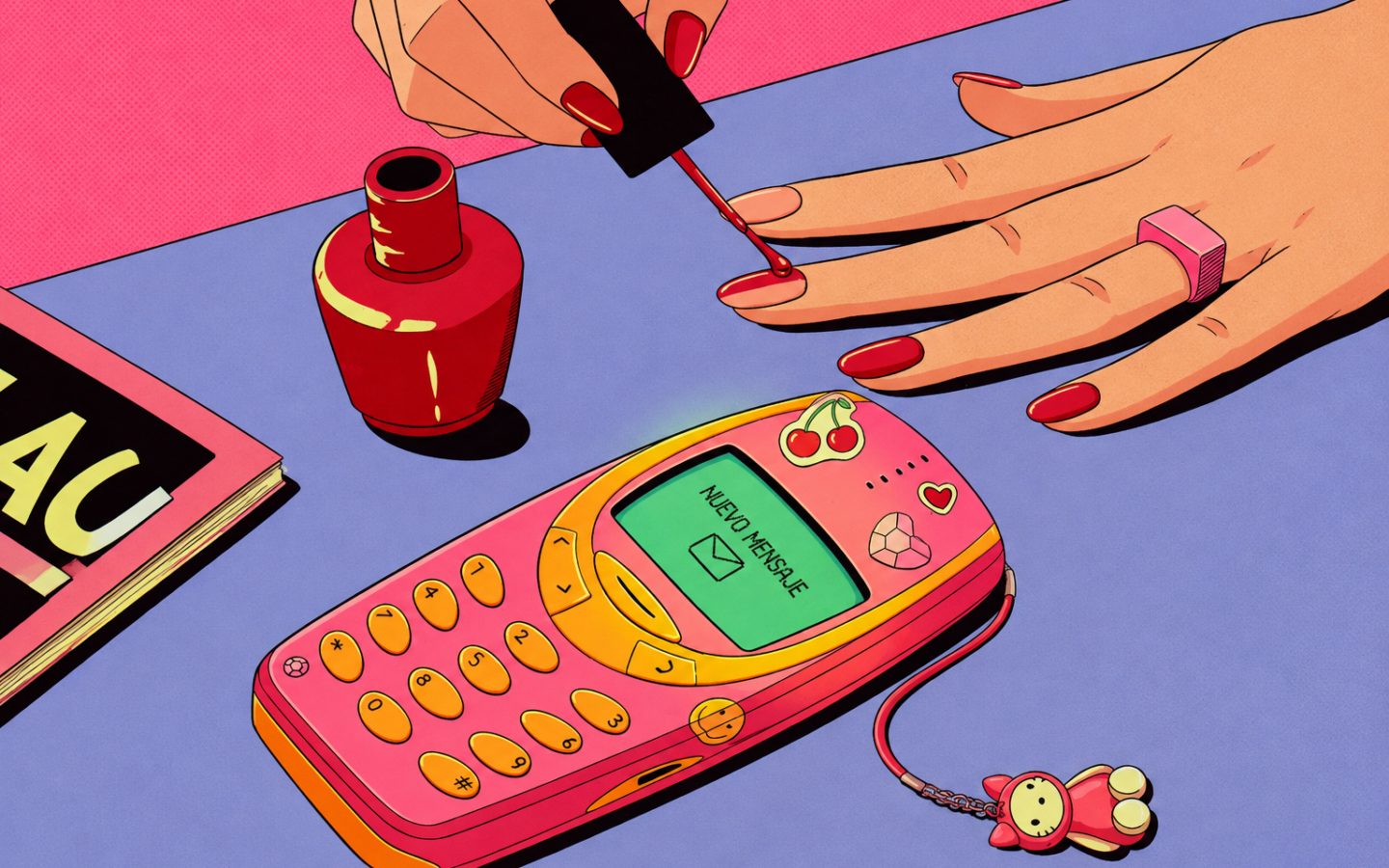

After a decade marked by FOMO and constant connectivity, JOMO offers a different approach to digital life. It involves finding value in disconnecting, letting some experiences pass you by, and deciding when it’s worth being present.
For years, the internet made missing out on something seem like a problem. Social media allowed us to see what other people were doing in real time. It also made it easy to get news instantly and participate in never-ending conversations. From this dynamic emerged FOMO (Fear of Missing Out), a term that came to describe the fear of being left out of experiences that others seem to be enjoying. In psychology, Andrew K. Przybylski and his colleagues defined it in 2013 as the persistent concern that others are having rewarding experiences from which one is absent. Furthermore, it is accompanied by the desire to stay connected to what others are doing. Research published in *Computers in Human Behavior* also linked higher levels of FOMO to more intense participation on social media.
Constant connectivity has not disappeared. On the contrary: a Pew Research Center survey conducted in 24 countries in 2025 found that a median of 28% of adults reported being connected to the internet almost constantly, and another 40% several times a day. People under 35 reported higher rates of near-constant connectivity than older age groups in every country studied. However, what began to change was the conversation surrounding that availability. Being connected all the time also means managing interruptions. In addition, people have to deal with messages, comparisons, news, work, and a never-ending stream of content.
This is where JOMO (Joy of Missing Out) comes in—the satisfaction that can come from deliberately letting some of those possibilities pass you by. There isn’t yet enough evidence to claim that the general population is widely abandoning FOMO in favor of JOMO. However, there is research on social media fatigue, voluntary disconnection, reducing screen time, and digital detox that points to a growing questioning of the idea of always being available. JOMO works best as a label for this search for boundaries. It is more useful than as a diagnosis of an entire generation.
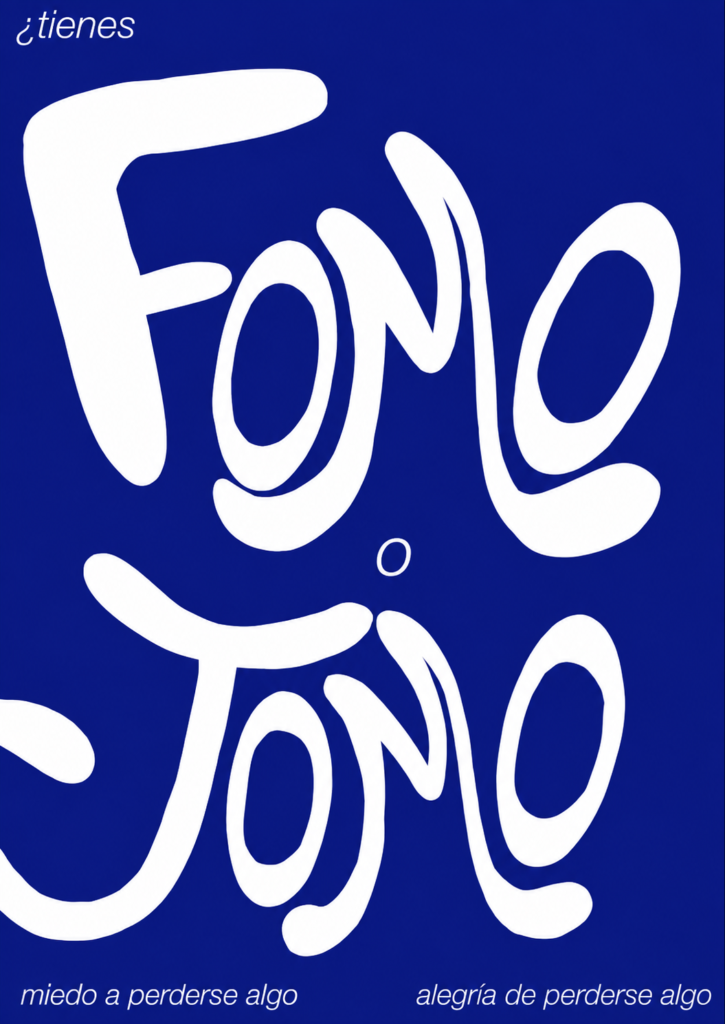
What is JOMO?
JOMO stands for “Joy of Missing Out,” which is often translated as “the joy of missing out on something.” Tech entrepreneur and blogger Anil Dash popularized the term in a July 19, 2012, post, shortly after the birth of his son. Dash described the pleasure of staying home even though he knew that concerts, gatherings, and events were taking place outside—ones he would have wanted to attend at another time. The key was accepting that choosing one experience means giving up others. That sacrifice shouldn’t be seen as a failure.
This idea flips the logic of FOMO on its head. While the fear of missing out drives people to check what others are doing and keep various possibilities open, JOMO means accepting that attention and time are limited. A person may want to continue using the internet, participating in social media, and staying informed. However, they may decide that not every conversation requires their presence, nor does every notification require an immediate response.
Scientific research on JOMO is still limited and does not support the idea that feeling comfortable about missing out automatically leads to well-being. In 2023, Christopher T. Barry, Emma E. Smith, Mackenzie B. Murphy, Brianna M. Halter, and Jacob Briggs studied two samples of adults aged 18 to 59. They found a relationship that was far less straightforward than the popular contrast between negative FOMO and positive JOMO. Their article in *Telematics and Informatics Reports* found associations between JOMO and both life satisfaction and mindfulness, as well as social anxiety; furthermore, relatively few participants fell into the group characterized by high JOMO scores.
The reason for disconnecting changes the meaning. Skipping a party because you’d rather spend the night at home can be satisfying. However, avoiding social gatherings due to social anxiety is a different experience, even though from the outside both may seem like “missing out.” That’s why Barry and his colleagues suggest that it may be more useful to study JOMO as a state associated with specific situations and motivations rather than as a permanent personality trait.

From FOMO to JOMO: What Has Changed?
The history of FOMO began before TikTok, Instagram, or even the smartphone came to define much of the everyday internet experience. Patrick McGinnis used the term in 2004 in *The Harbus*, the Harvard Business School newspaper, in a satirical column about students trying to keep so many social and professional possibilities open. Those students ended up unable to commit to just one. Harvard Business School documents that McGinnis coined the term FOMO in a humorous column published in *The Harbus* in May 2004.
Social media added a crucial element: it made the possibilities one had ruled out continuously visible. It was no longer necessary to imagine the gathering one had missed; one could see photos, videos, and comments as it was happening. In 2013, the work of Przybylski and his team turned FOMO into a psychologically measurable concept. Since then, the relationship with the internet has been studied in numerous contexts. A systematic review by Anushree Tandon and colleagues compiled 58 empirical studies on FOMO and social media and showed that the phenomenon is linked to various forms of intensive engagement with platforms and to well-being variables. However, the authors also noted significant methodological and contextual differences among the studies.
There is an additional component: social media allows for virtually continuous comparison with others. A study by María Laura Lupano Perugini and Alejandro Castro Solano, conducted with 420 participants and published in 2023, found that social comparison was the main predictor of psychological distress among the variables analyzed and mediated the relationship between passive social media use and that distress. Viewing posts without interacting does not necessarily produce the same effect for everyone. However, the problem was more pronounced among those who tended to compare their lives with what they saw on screen.
The phenomenon of FOMO, then, does not depend solely on how much time we spend online. It also matters what we see, who we compare ourselves to, and how much we feel we must stay on top of things. JOMO makes sense within this context. Willingly accepting a certain degree of disconnection can reduce the pressure to constantly monitor what’s happening elsewhere.
The Role of TikTok, Instagram, and the Attention Economy
The scale of hyperconnectivity is hard to ignore. Among American teens aged 13 to 17, the Pew Research Center found in 2025 that 61% used TikTok daily and 55% did the same with Instagram; 21% said they were on TikTok almost constantly and 12% on Instagram. Across the five platforms included in that survey, 36% used at least one of them almost all the time. These figures describe the habits of U.S. teenagers—not an entire generation or all countries—but they illustrate the extent to which checking these platforms can become part of the daily routine.
The experience does not depend solely on the sheer volume of content. Services like TikTok and Instagram constantly curate, recommend, and refresh posts. Personalization can make the next piece of content closely enough aligned with the user’s interests to justify staying for a few more seconds. A study published in 2025 by Dolores Guadalupe Sosa Zúñiga of the University of Sciences and Arts of Chiapas, and Marta Carrión Sánchez of Rey Juan Carlos University, specifically addresses the attention economy and the way in which algorithmic personalization and segmentation influence digital content consumption patterns among college students. Attention has economic value because a central part of the platforms’ business depends on keeping audiences available for advertising, recommendations, and new interactions.
Added to this continuity are interruptions. Cary Stothart, Ainsley Mitchum, and Courtney Yehnert experimentally demonstrated that receiving a phone notification could impair performance on an attention task even when the person did not respond to the message or touch the device. The sound or vibration alone was enough to trigger thoughts unrelated to the activity at hand. The battle for attention, therefore, also occurs when we are apparently not using our phones.
Constant updates, recommendations, and notifications create an environment with no obvious moment to say, “I’m done.” There’s always another video, another message, or a new post that can pop up. JOMO introduces a choice that this constant stream doesn’t offer on its own: to stop following it even if there’s still something left to see.
Is JOMO a fad or a cultural shift?
The term may circulate as a wellness trend, but the phenomena surrounding it are broader. One of them is social media fatigue, understood as tiredness, exhaustion, frustration, or loss of interest associated with the use of these platforms. A meta-analysis of 64 studies involving 28,357 participants found that information overload, social overload, feature overload, and social media-related anxiety were among the factors closely associated with this fatigue; which, in turn, was linked to the intention or decision to stop using social media.
Research on “digital detox”—a term used to describe voluntary periods of reduced use or abstinence from devices or platforms—has also grown. A systematic review and meta-analysis published in 2024 pooled 26 studies, involving 8,147 participants, and found small average improvements in indicators of subjective and psychological well-being associated with digital disconnection interventions. This finding calls for caution: there were considerable differences among the studies, and a review published that same year in *Pediatrics* concluded that the available effects are not uniform. Reducing screen time may benefit certain individuals under specific conditions; there is no single duration or formula that produces the same result for everyone.
The search for boundaries also extended to the workplace. In Mexico, the discussion ceased to be exclusively cultural when regulations on remote work recognized a boundary between working hours and on-call availability. Article 330-E of the Federal Labor Law establishes that employers must respect the right to disconnection for those who work remotely once their workday ends. The reform was enacted in 2021, and NOM-037-STPS-2023 added specific health and safety obligations for remote work. The fact that labor legislation must explicitly mention the right to disconnect shows the extent to which email, messaging, and work platforms can extend work beyond formal working hours.
None of this proves the existence of a uniform movement away from the internet. These platforms maintain a massive presence, and frequent connectivity remains the norm among a large portion of the population. The cultural shift that can be associated with JOMO lies elsewhere: constant availability is no longer viewed solely as a convenience but has also come to be discussed as a condition that requires limits.
Why does JOMO resonate with a new generation?
Younger generations occupy a unique position because they have spent a greater proportion of their lives in a connected environment. Data from Pew across 24 countries show that young adults are more likely than older adults to say they are online almost constantly. In countries such as Argentina, France, Indonesia, Israel, Japan, South Korea, Spain, and the United States, the majority of people under 35 fell into this category.
This does not mean that Gen Z or millennials prefer JOMO. In fact, the available evidence shows an ambivalent relationship with digital platforms. In Spain, a large-scale UNICEF study of more than 50,000 high school students found that more than 90% went online every day or almost every day, and about one in three showed signs of problematic internet or social media use. These same teenagers also associated the internet with positive experiences such as fun, relaxation, and social interaction. Connection and exhaustion can coexist; reducing the digital experience to a harmful relationship would overlook a significant part of what young people find in it.
The pressure to manage time is equally present outside of social media. Deloitte’s 2025 global survey, conducted with 23,482 members of Gen Z and millennials from 44 countries, found that these generations based their career decisions on money, personal meaning, and well-being. Only 6% cited reaching a leadership position as their primary career goal, while work-life balance took center stage in their expectations for their careers and their team leaders. The results focus on work, not JOMO, but they provide context for understanding why managing one’s availability and setting aside time away from obligations may hold particular appeal for people accustomed to living constantly connected.
That is why the relationship between younger generations and JOMO should be viewed as a cultural interpretation rather than a scientifically proven preference. There is evidence of high connectivity, problematic use in some groups, concern for well-being, and a demand for clearer boundaries between work and personal life. JOMO offers a vocabulary capable of capturing some of these experiences, even though the motivations for disconnecting vary from person to person.
JOMO: When Missing Out Is No Longer a Problem
The shift from FOMO to JOMO does not represent a complete replacement. FOMO remains present, and constant connectivity continues to be part of the daily lives of millions of people. Even JOMO can coexist with social anxiety, isolation, or heavy use of digital platforms, as shown by early research specifically dedicated to the concept.
What has changed, however, is the context in which we choose to focus our attention. After years of constantly updated content, notifications that interrupt other activities, social comparison, and work tools capable of reaching us outside the office, disconnecting can take on a different meaning. Some people reduce their time on social media, mute notifications, take temporary breaks, or set screen-free schedules. Furthermore, research on digital fatigue and digital detox shows that these practices exist, even though their effects and motivations aren’t the same for everyone.
FOMO stems from anxiety about what might be happening without us. JOMO refers to the possibility of accepting that we can’t see, respond to, or experience everything. In a culture where there’s always something waiting on the screen, missing out on some things may simply be a way of deciding which ones we do want to devote our time to.