

What’s Going On at La Lagunilla? Art, Fashion, and Brands Are Transforming the Flea Market
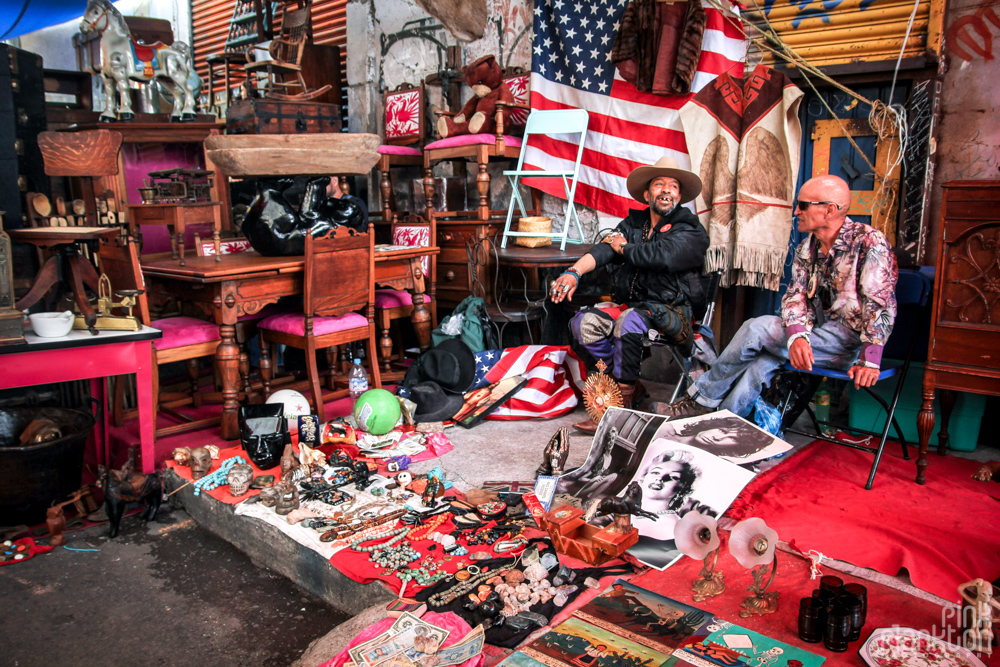

It’s Sunday, you head to La Lagunilla in Mexico City, and you immerse yourself in a journey through furniture and clothing that also includes micheladas, local and international food, and works by independent artists.
But let’s get one thing straight: La Lagunilla isn’t a new hotspot, nor has it just discovered the latest trend. Its commercial history began many years ago. In fact, it’s a flea market where longtime vendors share space with other projects and a diverse crowd, both local and international.
That’s why it’s worth understanding what’s changing among its stalls. At what point did La Lagunilla go from being known for its antiques to also becoming a hub for art, fashion, and streetwear? And what benefits and challenges might arise for local entrepreneurs and residents who make their lives there?
La Lagunilla has always been much more than just a market
La Lagunilla’s commercial history includes antiques, collectibles, clothing, and a tradition of garment-making that dates back centuries. To say now that it is a new cultural space would leave out much of what was already happening in its streets long before its current visibility on social media.
According to the Mexico City government’s tourism website, the area was once a body of water that allowed for deliveries by canoe to the Tlatelolco market during the pre-Hispanic period. Later, this lagoon was gradually filled in, and by 1590, Amaya, an embroiderer, had already settled on the corner of what are now República de Chile and Mariana Rodríguez del Toro de Lazarín streets. This tradition of garment-making still thrives in the area.
This background provides insight into the neighborhood’s commercial history. Today, it is a place where street stalls, a Sunday antique market, and a complex of permanent markets designed by architect Pedro Ramírez Vázquez coexist; these markets were inaugurated in 1957 to organize commerce in the area.
The Clothing and Fabric Market alone is home to more than a thousand merchants, according to the same official source. Within its halls, one can find stalls selling wedding and quinceañera dresses, charro outfits, uniforms, costumes for parties or theater, and vintage clothing. As for the arts, the José María Velasco Gallery (INBAL) has been operating since 1951, focusing on cultural offerings. However, its history should not be confused with the start of art sales within the market.
Therefore, La Lagunilla is more than just a market. It is a complex of commercial spaces offering various specialties with a long history.

Why is Sunday the best day to visit La Lagunilla?
For those wondering what to do at La Lagunilla on a Sunday, the answer includes several possibilities:
- Browse antiques and collectibles.
- Shop for new or vintage clothing.
- Enjoy the local cuisine.
That said, there’s an important difference between the Sunday antique flea market and La Lagunilla’s permanent markets. According to the Mexico City government’s tourism website, the flea market is open on Sundays from 9:00 a.m. to 3:00 p.m., while the Clothing and Fabric Market is open Monday through Saturday from 10:00 a.m. to 6:00 p.m. and on Sundays from 9:00 a.m. to 5:00 p.m.
So, commercial activity isn’t limited to just one day, but it’s on Sundays that a unique and much more diverse selection comes together among the buildings and street stalls.
To get to the antique market, the website points to the plaza where the Boxer’s Monument stands on Paseo de la Reforma as a landmark. This route takes you past furniture, clothing, and collectibles, making Sunday a key day to explore La Lagunilla.
When Artists Began Selling at the Flea Market
Art has found a place among the stalls at La Lagunilla for several years now. Although there is no single date marking the start of these sales, there are records of various galleries operating in the flea market. For one thing, on Jaime Nunó Street is the Galería Tianguis Neza, where local artists and independent brands come together.
There is also the Galería La Callejera, where prints, oil paintings, collages, and sculptures are exhibited in tents. In a report by Fábrica de Periodismo, Momoteo Arango, the gallery’s promoter, noted that works by more than 100 artists from Mexico City and other states had been featured in this space.
The same report also mentions the Banqueta Gallery, which uses the sidewalk on Jaime Nunó as a space for exhibiting and selling art. There, artists such as Don Gojiraz, Pablo Woodspunk, and Ketzart offer and customize clothing, paintings, and masks.
Tianguis Neza Gallery: Contemporary Art at Flea Market Prices
During the pandemic, in 2021, Luis Valverde launched Galería Tianguis Neza as a way to generate income by selling art at flea market prices. Artist David Azael also participated in the project’s development, which leverages the venue’s unique atmosphere to showcase works to the public and provide a platform for other creators.
This gallery is open on Sundays on Jaime Nunó Street, where collectors and curious visitors can view the pieces and chat with the artists. The interaction isn’t limited to the price of a work—visitors can also ask questions, negotiate, and get to know the artist who created it.
Independent Design Among the Stalls at La Lagunilla
Independent designers also have a space to sell their pieces at La Lagunilla. Take Pancarta, for example—Mizael Perea’s project that transforms banners and political propaganda materials into bags, clothing, and accessories, offering a blend of fashion and upcycling.
In fact, his arrival at the flea market was prompted by his discovery of other creators selling their brands on Jaime Nunó Street. He then decided to find out what he needed to set up his own stall there. His products have a unique feature: they repurpose materials used in political campaigns and turn them into everyday objects, so that the original images and messages take on a new context.
Pancarta is part of a broader community of projects that produce and sell their goods directly at the tianguis. In *Stitches Sprouting from the Asphalt: Designers and Neighborhood Fashion*, Alanis Tapia Cervantes documents—through photographs and interviews published in *Melodrama*—brands such as Katchi, Pancarta, and Raraz. She also features Magda, the creator of Katchi, showing one of her garments, and Arturo, the founder of Tlacuache Muerto, a brand that draws on references from Mexican popular culture, everyday religious iconography, and Chicano aesthetics.
These examples show that La Lagunilla doesn’t just sell used clothing or merchandise from major brands. It also sells garments created by the vendors themselves, some of which are upcycled or made from salvaged materials. Direct sales allow buyers to meet the people behind each project and enable creators to showcase their work outside of conventional stores.
For its part, the Voraz collective brings together designers who sell their pieces at La Lagunilla, expanding the range of offerings beyond the market’s other commercial sections.
From vintage clothing to streetwear and cult items
Vintage clothing isn’t the only option among the stalls at La Lagunilla, nor is it a trend that has come to replace what came before. At the Clothing and Fabrics Market, for example, it’s part of a selection that includes evening gowns, charro suits, uniforms, and costumes. Therefore, not everything is aimed at the same buyer or responds to a single trend.
The interest in retro styles extends beyond clothing. La Lagunilla is among the markets where young people buy vinyl records and turntables. In this mix, we can speak of cult objects because of the meaning a piece takes on for those who seek it out. It doesn’t have to be something exclusive or expensive; it can be a record, an antique, or an item that connects with memories, tastes, and traditions.
Yeezy and Cypress Hill at La Lagunilla: Collectible Clothing, Merchandise, and Hip-Hop Culture
Streetwear has also found its place in this scene. On Sunday, August 2, 2026, Old Youth Market organized a Yeezy event at La Lagunilla, on Jaime Nunó Street in Mexico City. The event was dedicated to the buying and selling of Yeezy-branded clothing, including original pieces from the SZNX collection. Attendees could browse for collectible clothing, purchase items, or put their own pieces up for sale. These types of events operate through sales and resales among fans, without involving an official Yeezy launch or the participation of Kanye West (Ye). They also bring together people interested in acquiring items from previous collections and finding clothing that isn’t always available in conventional stores.
The connection to music also emerged on August 16, 2026, when an event centered on Cypress Hill took place in La Lagunilla, at the corner of Jaime Nunó and Comonfort streets in Mexico City. The event, which had been previously announced via a Facebook post, featured a pop-up shop selling merchandise related to the group and a listening session for *Dios Bendiga*, their album released in July of that year. It was an event aimed at fans of the group and hip-hop culture, without a musical performance by the band members. These events demonstrate how the sale of clothing, collectibles, and music-related activities can bring together communities of fans within the same flea market.
Why sell at the La Lagunilla flea market instead of a gallery or boutique?
For artists, selling at the flea market can be a way to reach buyers who wouldn’t visit a traditional gallery. The Galería Tianguis Neza, for example, displays the artwork while its creators chat with the public and negotiate directly. Luis Valverde explained this to *The Art Newspaper*.
The interaction isn’t limited to closing a sale; it also allows artists to explain a piece and listen to the questions of those who approach them, whether they’re collectors or not. That’s why artist Viviana Martínez highlights the value of this alternative for those who don’t have access to conventional art circuits.
That said, choosing to sell at the tianguis requires careful planning regarding the transport and installation of the pieces, protection from the weather, storage, and reliance on how the Sunday event unfolds. These are factors every vendor must consider, without assuming that working on the street is cheaper or easier. The profit will depend on the nature of your project, the buyers you attract, and your ability to sustain the activity.
Who Shops at La Lagunilla?
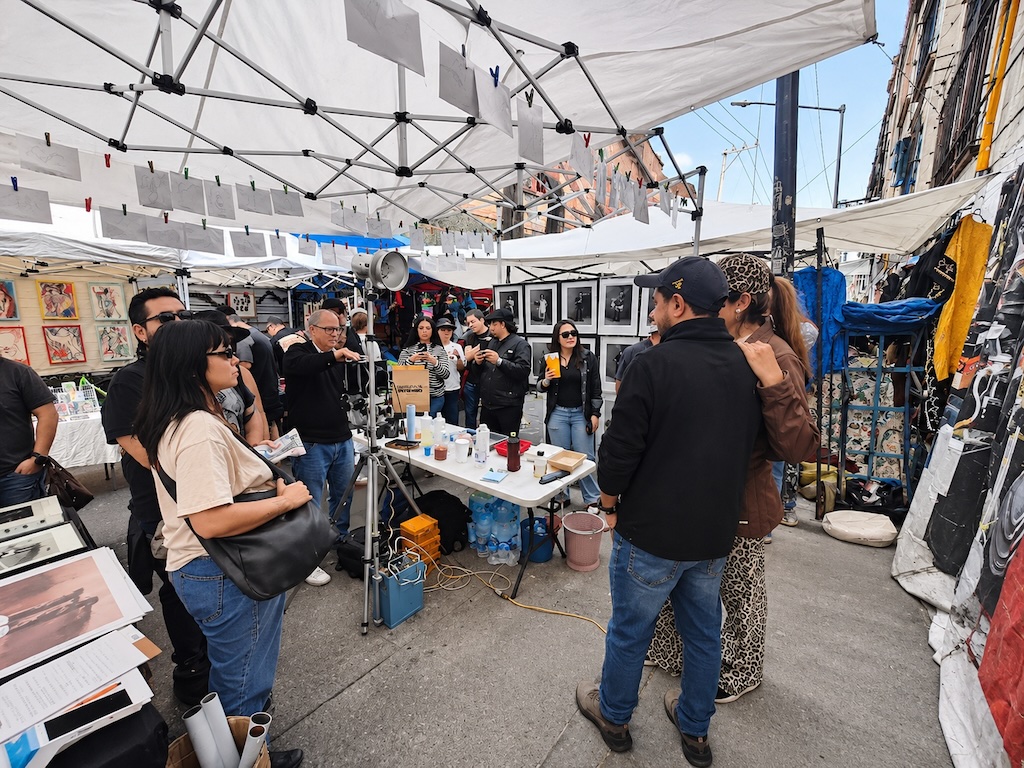
On the streets of La Lagunilla, there isn’t just one type of customer. Among its visitors are those looking for antiques, clothing, or collectibles, as well as international tourists who wander through its various spaces.
For this reason, far from the idea that some buyers have come to replace others, what takes place every Sunday is a diverse gathering. But that doesn’t mean that all vendors find buyers for what they’re offering, since not everyone arrives looking for a specific piece.
In its report on the Galería Tianguis Neza, *The Art Newspaper* describes the encounter between artists and casual buyers and notes that foreigners have become an important audience for this gallery. This interest in art coexists with the usual purchases of clothing, antiques, and other neighborhood goods.
Food, micheladas, and music: Sundays beyond shopping
Those who visit the La Lagunilla flea market are treated to a diverse culinary scene that complements their stroll. The offerings include Turkish coffee, paella, tapas, tacos, quesadillas, and codfish cakes. Added to this are micheladas topped with chamoy, chili, and flavored powders, as well as margaritas, cantaritos, and carajillos. So the experience isn’t limited to clothes or antiques; the Sunday market also offers places to eat, drink, and socialize.
Added to this are the offerings at shops inside the San Camilito Market, famous for being open 24 hours a day, according to the Mexico City government’s tourism website. Music is also an integral part of this experience. This influx of people can be an opportunity to boost sales across various sectors. However, those who come for the food, drinks, and atmosphere do not necessarily shop at the other stalls in the market.
Who benefits when La Lagunilla becomes trendy?
The attention can open up opportunities, though the benefits aren’t distributed equally. Daniel, known as Tuki, capitalizes on that visibility through guided tours and advertising partnerships. His story shows how the presence of new visitors can generate economic activity around the flea market, in addition to the usual sale of goods.
However, Tuki’s experience does not represent the income of all vendors. Some businesses earn revenue from services, tours, or promotions, while others depend directly on purchases made by those passing by their stalls.
Do more visitors mean better sales for long-standing vendors?
Not always. Valentín Otero noted in an interview with Milenio that, despite changes in the customer base, his sales have declined compared to previous years. In fact, his account challenges the notion that a larger influx of people automatically translates into higher revenue. Furthermore, it highlights an important distinction between attracting visitors and securing buyers.
Although his experience does not represent all historic merchants, it offers another perspective on the flea market’s current popularity. For those who depend on selling specific goods, having more people walking the streets may mean greater exposure without necessarily increasing their sales.
And who stands to lose out?
In the same interview with Milenio, Tuki noted that some residential rents in Tepito had risen from between 2,500 and 3,000 pesos to 6,000 or 8,000 pesos. He even reported that some residents were moving to outlying areas due to the rising costs.
These figures reflect his observations regarding Tepito, not statistics for the entire La Lagunilla neighborhood. However, they raise concerns about residents’ ability to remain in neighborhoods where commercial and tourist interest is growing. For example, the cost of housing, market stall fees, and the prices of goods are distinct issues. Each has specific consequences for residents and vendors.
Is La Lagunilla being gentrified? Touristification, Rents, and Prices at the Tianguis
The presence of foreign visitors in La Lagunilla in Mexico City is not enough to answer this question. Nor can the possibility of displacement be ruled out simply because its street stalls and local commerce remain.
Let’s start by understanding that gentrification is related to urban transformations that raise the costs of living or conducting economic activities in a neighborhood. These transformations can displace lower-income residents. Likewise, their effects can also impact businesses and community networks.
But not all changes mean the same thing. For example, “popularity” refers to the attention a place receives. Commercial transformation can be seen in the products offered, the businesses that open, or the customer bases they target. In contrast, touristification implies that activities and services are increasingly geared toward visitors. Thus, these processes may be related, but they are not equivalent.
Tuki’s account of rents in Tepito reflects a local concern, while the presence of tourists and new commercial ventures reveals changes in La Lagunilla. However, to determine whether displacement is occurring in the latter neighborhood, it would also be necessary to examine trends in housing and commercial costs. Furthermore, it is important to understand the conditions under which residents and vendors are able to remain in the area.
The Great Paradox: What Changes and What Remains in La Lagunilla?
The mix of local commerce, secondhand goods, independent shops, and street life is part of the appeal of La Lagunilla in Mexico City. Yet a paradox emerges: what happens when that commercial life also becomes part of a tourist experience?
Its informal spaces and the practice of haggling directly with vendors are elements that continue to attract both vendors and shoppers. Among those shoppers are everyone from a local neighborhood resident and an antique hunter to a tourist or an international designer.
The challenge lies in the conditions under which these changes are taking place. On the one hand, galleries and independent brands are finding opportunities to sell directly to the public. On the other hand, long-standing merchants continue to rely on activities that have been part of the area for decades. Furthermore, the coexistence of these two sectors also raises the question of who will be able to keep their workspaces.
So, what is really happening with La Lagunilla?
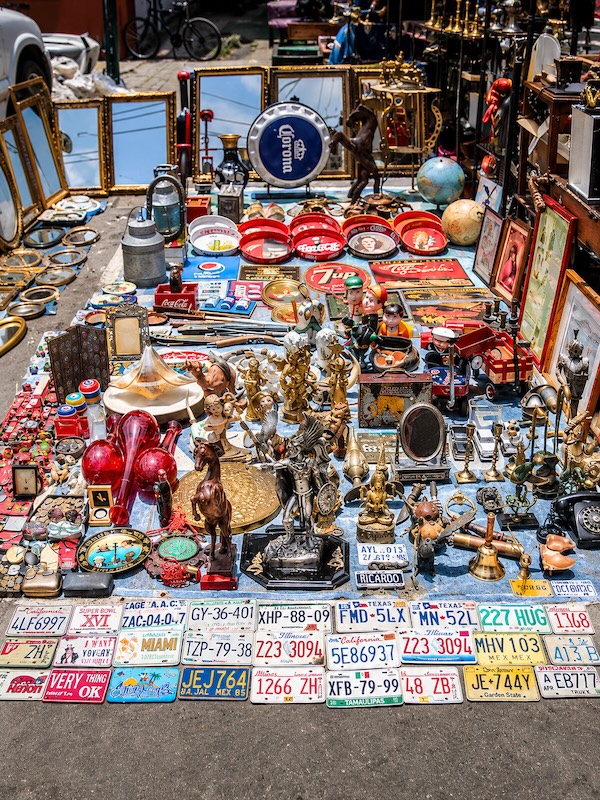
Various activities coexist in the same space. The antique trade intersects with stalls selling youth fashion and athletic shoes, as documented by Mexico City’s official tourism website. Surrounding these are furniture and clothing markets.
Added to this mix are galleries exhibiting artwork right on the street, independent fashion projects selling their own clothing, and food and drink stalls that attract Sunday visitors.
That’s why we can speak of several “Lagunillas” within the same setting. A visitor can browse different stalls, stop for a bite to eat, or take an interest in a piece of art. For vendors, however, the opportunities to capitalize on this foot traffic depend on the type of merchandise, its cost, and the relationship they maintain with their customers.
The Future of La Lagunilla: Coexistence, Change, and a Sense of Belonging on the Street
La Lagunilla is not static. In fact, its future is shaped Sunday by Sunday, through the interplay between vendors who have been working there for years and new projects seeking to find their audience.
The arrival of artistic initiatives, independent brands, and visitors interested in fashion offers opportunities for sales and exposure. At the same time, accounts of income and the cost of living show that the attention a neighborhood receives can also bring difficulties for those who depend on it.
The Sunday scene leaves one question open: Can Mexico City’s La Lagunilla flea market capitalize on this new attention without displacing those who built the market that has now become so attractive?